Once Upon a Time in the West
A mysterious loner seeks revenge against a ruthless land grabber, setting off a high-stakes conflict that reshapes the future of the American West. Other loglines ›
Overview

Unique Selling Point
This screenplay stands out in the Western genre by intertwining personal and societal conflicts, showcasing the struggle for land and water as a metaphor for survival and ambition. The character of Harmonica adds a layer of mystery and depth, appealing to audiences who appreciate complex protagonists. The blend of action, emotional stakes, and moral dilemmas makes it a compelling piece of storytelling that resonates with contemporary themes.
Story Facts
Genres:Setting: Late 19th century, during the expansion of the railroad in the American West, Southern Utah and surrounding areas, including a general store, McBain farmhouse, railroad construction sites, and a train station
Themes: Justice and Revenge, Redemption and Second Chances, Family and Legacy, Greed and Corruption
Conflict & Stakes: The struggle for survival and control over land and resources amidst personal loss and the threat of violence, with the McBain family's safety and future at stake.
Mood: Tense and foreboding, with moments of hope and resilience.
Standout Features:
- Unique Hook: The intertwining of personal vendettas with the broader conflict over land and resources.
- Plot Twist: The revelation of hidden water sources that could change the fate of the characters.
- Distinctive Setting: The harsh yet beautiful landscapes of Southern Utah, enhancing the story's visual appeal.
- Innovative Ideas: A strong female protagonist navigating a male-dominated world.
- Genre Blend: Combines elements of Western, drama, and action, appealing to diverse audiences.
Comparable Scripts: The Revenant, True Grit, The Good, the Bad and the Ugly, Little House on the Prairie, The Searchers, The Magnificent Seven, The Assassination of Jesse James by the Coward Robert Ford, The Ballad of Buster Scruggs, Deadwood
Script Level Analysis
This section delivers a top-level assessment of the screenplay’s strengths and weaknesses — covering overall quality (P/C/R/HR), character development, emotional impact, thematic depth, narrative inconsistencies, and the story’s core philosophical conflict. It helps identify what’s resonating, what needs refinement, and how the script aligns with professional standards.
Screenplay Insights
Breaks down your script along various categories.
Story Critique
Characters
Emotional Analysis
Breaks down the emotional journey of the audience across the script.
Goals and Philosophical Conflict
Themes
Logic & Inconsistencies
Scene Analysis
All of your scenes analyzed individually and compared, so you can zero in on what to improve.
Other Analyses
This section looks at the extra spark — your story’s voice, style, world, and the moments that really stick. These insights might not change the bones of the script, but they can make it more original, more immersive, and way more memorable. It’s where things get fun, weird, and wonderfully you.
Unique Voice
Writer's Craft
Memorable Lines
Tropes
World Building
Correlations
Loglines
Pass / Consider / Recommend Analysis
Claude
Executive Summary
- The development of the McBain family, particularly the relationship between Brett, Amy, and Matt, is a standout strength of the screenplay. The scenes showcase the family's dynamics, Brett's dreams, and the challenges they face, setting up a strong emotional foundation for the story. high ( Scene 3 (INT. HOUSE IN GROVE - KITCHEN - DAY) Scene 4 (EXT. HOUSE IN GROVE - DAY) )
- The introduction of the character Frank and his conflict with the Shoshone tribe is a captivating and well-executed sequence that establishes the high-stakes, morally ambiguous nature of the story. high ( Scene 6 (EXT. BASIN BETWEEN MOUNTAINS NORTH OF PROMONTORY - DAY) )
- The scenes set in the cantina and hotel showcase the screenplay's rich world-building, with a diverse cast of characters, intriguing dynamics, and a heightened sense of tension and danger that permeates the environment. high ( Scene 21 (INT. CANTINA ON ROAD EAST OF PROMONTORY - DAY) Scene 33 (INT. HOTEL AND CANTINA - NIGHT) )
- The final confrontation between Harmonica and Frank is a riveting climax that brings the story to a powerful and emotionally resonant conclusion, with the screenplay's exploration of identity, revenge, and the changing West coming to a head. high ( Scene 52 (INT. HOTEL AND CANTINA - DAY) Scene 58 (EXT. MCBAIN FARMHOUSE - DAY) )
- The screenplay's thematic depth, exploring the moral complexities of its characters and the larger forces shaping the American West, is a significant strength that elevates the story beyond a traditional Western narrative. high
- While the screenplay's world-building is generally strong, there are a few instances where the introduction of new elements, such as the models of the planned town, could be better integrated into the narrative and provide more context for the characters and their motivations. medium ( Scene 22 (EXT. MCBAIN FARMHOUSE - DAY) )
- The transitions between some of the storylines and character arcs could be smoother, ensuring a more cohesive flow and better pacing throughout the screenplay. medium ( Scene 24 (INT. SILVER PENNY SALOON - PINEVILLE - DAY) Scene 19 (EXT. PRISON WAGON FIFTY MILES NORTH OF PINEVILLE - DAY) )
- While the character development is generally strong, there are a few instances where the motivations of certain secondary characters, such as Morton, could be further explored and fleshed out to enhance the depth and complexity of the narrative. medium
- The screenplay could potentially benefit from a more explicit exploration of the changing social and economic landscape of the American West, particularly as it relates to the growing influence of the railroad and its impact on the lives of the characters. medium
- The screenplay's exploration of the relationship between Frank and Morton, and the power dynamics at play, is a notable element that adds depth and complexity to the narrative. high ( Scene 6 (EXT. BASIN BETWEEN MOUNTAINS NORTH OF PROMONTORY - DAY) Scene 35 (INT. TRAIN CAR OUTSIDE OF TOWN - DAY) )
- The introduction and development of the character Harmonica, with his enigmatic backstory and his central role in the conflict, is a standout element that adds intrigue and depth to the screenplay. high ( Scene 21 (INT. CANTINA ON ROAD EAST OF PROMONTORY - DAY) Scene 33 (INT. HOTEL AND CANTINA - NIGHT) )
- The emotional arc of the relationship between Jill, Amy, and the McBain family is a poignant and well-executed element that provides a sense of hope and resolution amid the larger conflict. high ( Scene 57 (INT. MCBAIN FARMHOUSE - DAY) )
- Lack of Diversity While the screenplay does feature some diversity in its cast of characters, such as the Shoshone tribe and the Asian workers, there is room for more representation and exploration of diverse perspectives. The narrative is primarily focused on the experiences of the white characters, and additional development of the supporting characters from underrepresented backgrounds could further enrich the storytelling and provide a more well-rounded depiction of the American West. medium
- Uneven Pacing In a few instances, the pacing of the screenplay could be improved, with some scenes feeling slightly rushed or lacking in necessary details, while others may drag on unnecessarily. Ensuring a more consistent and engaging pace throughout the narrative would help to maintain the audience's attention and investment in the story. medium
GPT4
Executive Summary
- The screenplay effectively establishes a strong sense of place and atmosphere, immersing the audience in the rugged landscape of the American West. high ( Scene Sequence number 1 (INT. GENERAL STORE - SOUTHERN UTAH - NIGHT) Scene Sequence number 60 (INT. MCBAIN FARMHOUSE - DAY) )
- Character development is a significant strength, particularly in the arcs of Jill and Harmonica, who evolve in response to their circumstances. high ( Scene Sequence number 11 (EXT. MCBAIN FARMHOUSE - DAY) Scene Sequence number 49 (EXT. MCBAIN FARMHOUSE - DAY) )
- The dialogue is sharp and engaging, effectively conveying character motivations and enhancing the tension throughout the screenplay. medium ( Scene Sequence number 12 (EXT. TRAIN STATION - DAY) Scene Sequence number 58 (EXT. MCBAIN FARMHOUSE - DAY) )
- The screenplay maintains a consistent tone that balances drama and action, creating a compelling narrative flow. high ( Scene Sequence number 10 (INT. TRAIN CAR OUTSIDE OF TOWN - DAY) Scene Sequence number 55 (INT. HOTEL AND CANTINA - DAY) )
- The use of flashbacks adds depth to the characters, particularly Frank and Harmonica, enriching the backstory and motivations. medium ( Scene Sequence number 37 (EXT. TRAIN CAR - DAY) Scene Sequence number 59 (INT. MCBAIN FARMHOUSE - DAY) )
- Certain scenes could benefit from tighter pacing, particularly in the early sections where exposition is heavy. high ( Scene Sequence number 5 (EXT. ROAD TO PROMONTORY - DAY) Scene Sequence number 30 (INT. GENERAL STORE - DAY) )
- Some character motivations, particularly for secondary characters, could be more clearly defined to enhance their impact on the story. medium ( Scene Sequence number 19 (EXT. PRISON WAGON FIFTY MILES NORTH OF PINEVILLE - DAY) Scene Sequence number 24 (EXT. MCBAIN FARMHOUSE - DAY) )
- The stakes could be raised earlier in the narrative to maintain tension and engagement throughout. medium ( Scene Sequence number 21 (INT. CANTINA ON ROAD EAST OF PROMONTORY - DAY) Scene Sequence number 47 (INT. TRAIN CAR - DAY) )
- The resolution of certain plot threads feels rushed, particularly towards the climax, which could benefit from more buildup. medium ( Scene Sequence number 14 (EXT. PLATFORM OF TRAIN STATION - DAY) Scene Sequence number 48 (EXT. OUTSIDE PROMONTORY - DAY) )
- The emotional stakes could be heightened in key scenes to create a more profound impact on the audience. medium ( Scene Sequence number 22 (EXT. MCBAIN FARMHOUSE - DAY) Scene Sequence number 56 (INT. MCBAIN FARMHOUSE - DAY) )
- There is a lack of diverse perspectives among the characters, particularly regarding the indigenous characters and their experiences. high ( Scene Sequence number 3 (INT. HOUSE IN GROVE - KITCHEN - NIGHT) Scene Sequence number 38 (EXT. MCBAIN FARMHOUSE - DAY) )
- The screenplay could benefit from deeper exploration of the themes of colonialism and its impact on the land and its original inhabitants. high ( Scene Sequence number 6 (EXT. BASIN BETWEEN MOUNTAINS NORTH OF PROMONTORY - DAY) Scene Sequence number 50 (EXT. FARMHOUSE - DAY) )
- There is a missed opportunity to further develop the relationship dynamics between Jill and the other characters. medium ( Scene Sequence number 8 (EXT. MCBAIN FARMHOUSE - DAY) Scene Sequence number 49 (EXT. MCBAIN FARMHOUSE - DAY) )
- The screenplay lacks a clear antagonist's perspective, which could add depth to the conflict. medium ( Scene Sequence number 15 (EXT. SHERIFF'S OFFICE - NOON) Scene Sequence number 35 (INT. TRAIN CAR - DAY) )
- The emotional resolution for some characters feels incomplete, particularly for those who experience loss. medium ( Scene Sequence number 4 (EXT. HOUSE IN GROVE - DAY) Scene Sequence number 52 (INT. HOTEL AND CANTINA - DAY) )
- The opening scene effectively sets the tone and introduces the audience to the world of the screenplay, establishing character relationships early on. high ( Scene Sequence number 1 (INT. GENERAL STORE - SOUTHERN UTAH - NIGHT) Scene Sequence number 58 (EXT. MCBAIN FARMHOUSE - DAY) )
- The climactic confrontation between Harmonica and Frank is well-executed, providing a satisfying payoff to the buildup of tension. high ( Scene Sequence number 10 (INT. TRAIN CAR OUTSIDE OF TOWN - DAY) Scene Sequence number 55 (INT. HOTEL AND CANTINA - DAY) )
- The use of visual storytelling, particularly in action sequences, enhances the overall impact of the screenplay. medium ( Scene Sequence number 37 (EXT. TRAIN CAR - DAY) Scene Sequence number 59 (INT. MCBAIN FARMHOUSE - DAY) )
- The emotional resonance of the characters' journeys is palpable, particularly in the scenes involving loss and resilience. high ( Scene Sequence number 22 (EXT. MCBAIN FARMHOUSE - DAY) Scene Sequence number 56 (INT. MCBAIN FARMHOUSE - DAY) )
- The screenplay's exploration of themes related to water as a precious resource is timely and relevant, adding depth to the narrative. medium ( Scene Sequence number 24 (EXT. MCBAIN FARMHOUSE - DAY) Scene Sequence number 49 (EXT. FARMHOUSE - DAY) )
Gemini
Executive Summary
- The screenplay effectively creates tense and visually engaging action sequences. These scenes are well-paced and offer a good balance of violence and suspense. medium ( Scene 6 Scene 17 Scene 18 Scene 21 Scene 37 Scene 45 Scene 58 Scene 59 )
- The screenplay develops a unique theme of building a town, which sets it apart from traditional western revenge narratives. This theme adds depth and complexity to the story, making it more engaging and thought-provoking. high ( Scene 30 Scene 38 Scene 40 Scene 49 Scene 50 )
- The screenplay features a strong female protagonist, Jill, who is intelligent, resilient, and resourceful. She is not a passive damsel in distress but a woman who takes charge of her own destiny. high ( Scene 20 Scene 21 Scene 22 Scene 23 Scene 24 Scene 27 Scene 32 Scene 33 Scene 36 Scene 51 Scene 52 Scene 54 Scene 57 )
- The screenplay incorporates themes of racial injustice and inequality, making it a relevant and timely story. The portrayal of racial tensions and exploitation in the railroad camp adds a layer of social commentary. medium ( Scene 23 Scene 32 Scene 43 Scene 44 Scene 45 Scene 50 )
- The screenplay features memorable and compelling characters, even if some are not fully developed. Harmonica's mysterious and enigmatic persona is particularly captivating, while the supporting characters, such as Cheyenne and Frank, provide strong contrasts. medium ( Scene 18 Scene 21 Scene 35 Scene 36 Scene 42 Scene 43 Scene 44 Scene 45 Scene 49 Scene 50 Scene 53 Scene 58 )
- The screenplay needs better development of some of its characters. Many characters feel one-dimensional and lack complexity, which diminishes their impact on the story and the audience's emotional engagement. high ( Scene 1 Scene 2 Scene 3 Scene 4 Scene 5 Scene 7 Scene 8 Scene 9 Scene 10 Scene 11 Scene 12 Scene 13 Scene 14 Scene 15 Scene 16 Scene 19 Scene 20 Scene 25 Scene 26 Scene 28 Scene 29 Scene 30 Scene 31 Scene 34 Scene 39 Scene 41 Scene 46 Scene 47 Scene 48 )
- The screenplay relies heavily on dialogue to advance the plot and develop the characters. This often leads to exposition-heavy scenes where characters simply tell each other what they already know or what the audience is already aware of. This weakens the screenplay's narrative and reduces the sense of discovery and tension. high ( Scene 2 Scene 3 Scene 4 Scene 5 Scene 6 Scene 7 Scene 10 Scene 11 Scene 12 Scene 13 Scene 14 Scene 15 Scene 16 Scene 17 Scene 18 Scene 19 Scene 20 Scene 21 Scene 22 Scene 23 Scene 24 Scene 25 Scene 26 Scene 27 Scene 28 Scene 29 Scene 30 Scene 31 Scene 34 Scene 35 Scene 37 Scene 38 Scene 39 Scene 40 Scene 41 Scene 42 Scene 43 Scene 44 Scene 46 Scene 47 Scene 48 Scene 49 Scene 50 Scene 52 Scene 53 Scene 54 Scene 55 Scene 56 Scene 57 Scene 58 )
- The screenplay's pacing feels uneven at times. Some scenes feel rushed and lack the necessary buildup to create impact, while others drag on, slowing down the overall momentum of the story. This can be distracting and disengaging for the audience. medium ( Scene 2 Scene 3 Scene 4 Scene 5 Scene 6 Scene 7 Scene 8 Scene 9 Scene 10 Scene 11 Scene 12 Scene 13 Scene 14 Scene 15 Scene 16 Scene 17 Scene 18 Scene 19 Scene 20 Scene 21 Scene 22 Scene 23 Scene 24 Scene 25 Scene 26 Scene 27 Scene 28 Scene 29 Scene 30 Scene 31 Scene 34 Scene 35 Scene 37 Scene 38 Scene 39 Scene 40 Scene 41 Scene 42 Scene 43 Scene 44 Scene 46 Scene 47 Scene 48 Scene 49 Scene 50 Scene 51 Scene 52 Scene 53 Scene 54 Scene 55 Scene 56 Scene 57 Scene 58 )
- The screenplay could benefit from more subtle and nuanced character development. Some key moments where characters could reveal their inner conflicts or complexities are either glossed over or handled with dialogue that feels heavy-handed and predictable. medium ( Scene 3 Scene 5 Scene 24 Scene 44 Scene 51 )
- The screenplay could benefit from more emotional depth and exploration of the characters' relationships. The relationships between the characters are primarily driven by plot and lack a compelling emotional core that would resonate with the audience. medium ( Scene 1 Scene 2 Scene 3 Scene 4 Scene 5 Scene 6 Scene 7 Scene 8 Scene 9 Scene 10 Scene 11 Scene 12 Scene 13 Scene 14 Scene 15 Scene 16 Scene 17 Scene 18 Scene 19 Scene 20 Scene 21 Scene 22 Scene 23 Scene 24 Scene 25 Scene 26 Scene 27 Scene 28 Scene 29 Scene 30 Scene 31 Scene 34 Scene 35 Scene 37 Scene 38 Scene 39 Scene 40 Scene 41 Scene 42 Scene 43 Scene 44 Scene 46 Scene 47 Scene 48 Scene 49 Scene 50 Scene 51 Scene 52 Scene 53 Scene 54 Scene 55 Scene 56 Scene 57 Scene 58 )
- The screenplay is ambitious in its scope, attempting to combine elements of a traditional western, a thriller, and a social commentary. This ambition makes the screenplay unique and intriguing. This approach could potentially appeal to a broad audience. medium ( Scene 30 Scene 40 Scene 50 Scene 51 )
- The screenplay has a strong sense of visual style and cinematic storytelling. The scenes are detailed and evocative, creating a vivid picture of the western setting and the characters' lives. medium ( Scene 35 Scene 36 Scene 42 Scene 43 Scene 44 Scene 45 )
- The screenplay makes creative use of flashbacks to provide backstory and develop the characters' motivations. These flashbacks offer glimpses into the past, revealing key moments that shape their present actions and conflicts. medium ( Scene 5 Scene 11 Scene 14 Scene 15 Scene 17 Scene 18 Scene 21 Scene 28 Scene 29 Scene 32 Scene 33 Scene 35 Scene 37 Scene 42 Scene 44 Scene 45 Scene 52 Scene 53 Scene 55 Scene 56 Scene 58 Scene 59 Scene 60 )
- Character Development The screenplay struggles to fully develop its supporting characters, particularly the antagonists, resulting in one-dimensional villains and a lack of emotional depth. Many of the characters are driven by simplistic motivations, such as greed and power, and their actions feel predictable rather than surprising. This can leave the audience feeling emotionally detached and unengaged. In some instances, particularly with the villains, the writer could benefit from exploring their backstories or adding nuanced details to their personalities to make them more complex and believable. high
- Pacing The screenplay's pacing feels inconsistent. There are instances where the screenplay rushes through important plot points, leaving the audience wanting more depth or explanation. In contrast, there are also slow patches where the story drags, lacking the momentum to keep the audience fully engaged. The screenwriter should focus on maintaining a balanced and natural flow, building tension and suspense effectively. This could be achieved by adding more scenes that explore character relationships or by cutting out unnecessary information. medium
- Overly Descriptive Dialogue The screenplay relies heavily on dialogue to convey information and advance the plot, often resorting to expository dialogue where characters explicitly state facts that the audience already knows or could infer. This can make the dialogue feel unnatural and detract from the overall flow of the story. Instead of stating information directly, the screenwriter should explore more subtle ways of conveying information through action, visual cues, or implied meaning. high
Summary
High-level overview
Title: The Weight of Dust
Genre: Western Drama
Logline: In the rugged landscape of Southern Utah, a family grapples with loss, loyalty, and the relentless pursuit of a future as they navigate treacherous waters filled with outlaws and a ruthless developer determined to claim their land.
Summary: In a small, dimly lit general store, elderly Jed shares nostalgic banter with store owner Brett McBain, highlighting the camaraderie of small-town life. The narrative shifts to the McBain household, where Brett's children, Amy and Matt, navigate their father's decision to move the family westward after the loss of their mother. As they prepare to leave, tensions mount between Amy's desire to stay with her friends and her responsibilities, and Matt’s yearning for freedom.
As the family embarks on their journey, they encounter the brutal realities of life on the frontier—harsh treatment of railroad workers, revealing societal injustices that complicate their dreams of prosperity. Amidst emotional turmoil, Brett's announcement of his new marriage to Jill intensifies Amy’s feelings of displacement.
Upon arriving at their new farmhouse, the McBain family faces immediate danger from Frank, a ruthless land developer intent on acquiring their property. A violent confrontation ensues, resulting in injury and abduction as Frank seizes control, deeply fracturing the family’s bonds. As Jill grapples with her grief and the threat of Frank’s ambitions, she encounters Cheyenne, a notorious outlaw, forming an uneasy alliance in their shared quest for justice.
The story unfolds with the brutal power dynamics between railway workers, the aspirations for a new town reliant on a vital water source, and the struggle against Frank’s menacing grip. Cheyenne rises as an unlikely hero, but his actions reveal the moral complexities of survival in a lawless world.
As Jill unites with Cheyenne and Harmonica, a mysterious figure with a personal vendetta against Frank, they orchestrate a plan to reclaim what is theirs. The narrative crescendos into a tense showdown between Frank and Harmonica, precipitated by deep-rooted resentments and tragic histories.
Themes of resilience, identity, and the haunting echoes of the past permeate the film, culminating in a violent and poetic climax that forces characters to confront their choices and the future they can forge.
In a poignant conclusion, Jill and Amy resolve to honor Brett's legacy, embracing the challenges that lie ahead, as the sound of a train whistle fades into the distance—a symbol of hope and the relentless passage of time.
Once Upon a Time in the West
Synopsis
In the rugged landscape of Southern Utah, the story unfolds around the McBain family, who are seeking a new life on a piece of land that holds the promise of wealth due to its hidden water supply. The patriarch, Brett McBain, dreams of building a prosperous future for his children, Amy and Matt, as they embark on a journey to settle in a remote farmhouse. However, their aspirations are threatened by the ruthless Frank, a man driven by greed and a desire for power, who learns of the land's potential and will stop at nothing to claim it for himself.
As the McBains settle into their new home, tensions rise when Brett refuses to sell the land to Frank, who attempts to intimidate him into submission. The situation escalates tragically when Frank and his gang brutally murder Brett and Matt, leaving Amy and Jill, Brett's new wife, to fend for themselves. In the aftermath, Amy is captured by Frank's men, while Jill is left to navigate the dangers of the Wild West alone.
Enter Harmonica, a mysterious drifter with a vendetta against Frank. He arrives in town just as the McBains' lives are shattered, and he becomes an unlikely ally to Jill. Harmonica's past is shrouded in mystery, but his skills with a gun and his determination to seek justice make him a formidable force against Frank's tyranny. As he teams up with Cheyenne, a charismatic outlaw with his own agenda, they devise a plan to rescue Amy and take down Frank once and for all.
The narrative weaves through themes of revenge, survival, and the quest for justice, culminating in a climactic showdown between Harmonica and Frank. As the dust settles, the surviving characters must confront their pasts and decide what kind of future they want to build in the wake of violence and loss. The film concludes with a sense of hope as Jill and Amy begin to rebuild their lives, determined to honor Brett's dream of a thriving community.
The film is a rich tapestry of character-driven storytelling, exploring the complexities of morality in a lawless land, and the lengths to which individuals will go to protect their loved ones and their dreams.
Scene by Scene Summaries
Scene by Scene Summaries
- In a dimly lit general store in Southern Utah, elderly Jed engages in light-hearted banter with store owner Brett McBain about aging and a dog named Scratch. Their friendly exchange reflects camaraderie and nostalgia. After their conversation, Jed leaves, and Brett locks up, counts the day's receipts, and secures the money in a safe before exiting.
- In the McBain house at night, siblings Amy and Matt finish dinner as their father, Brett, prepares to leave for a few hours. He instructs Amy to look after Matt, who then tries to convince her to sneak out to a bonfire with friends. Their disagreement highlights the tension between Amy's sense of responsibility and Matt's desire for freedom. As Brett walks through the quiet town and enters a small house, the scene captures the struggle between duty and the allure of adventure.
- Brett returns home to comfort his dog Scratch before counting money and preparing for bed. The next morning, he informs his children, Matt and Amy, about their upcoming move. Amy reacts negatively, worried about leaving her friends and the responsibilities she has taken on since their mother's passing. Brett reassures her, emphasizing that the move is part of a plan he made with their mother. Matt expresses his love for Brett, reinforcing their family bond. Despite Amy's protests, Brett insists on the move and instructs them to pack their belongings.
- As Matt and Amy pack their belongings into a wagon, Brett arrives to help and reminds them to bring enough water for their journey. The landscape shifts from hills to desert mountains as they set off. Amy becomes upset after tearing her dress, but Brett reassures her with promises of a prettier dress in the future. Matt jokes about Brett's dreams of wealth, and the siblings share a hopeful smile, highlighting their bond amidst the challenges.
- As Brett and his family journey westward, they witness the brutal treatment of railroad workers by a foreman, underscoring the harsh realities of their environment. Brett attempts to comfort his children, particularly Amy, after revealing his new marriage to Jill, which causes emotional strife, especially for Amy who feels replaced. Amidst the desolate landscape, Brett emphasizes the importance of a hidden water supply that could secure their future, hinting at both challenges and opportunities ahead.
- In a tense standoff, Frank confronts Shoshone Indians Yutu and Nocona, demanding they vacate their land for the railroad. Despite their claims of ownership, Frank threatens violence, showcasing his ruthless nature. Nocona offers information about a hidden water source, which intrigues Frank. He allows Nocona to leave but warns of dire consequences if the water does not exist, highlighting the power dynamics and desperation in the encounter.
- Brett encounters a malfunctioning wagon wheel while driving up a mountain road, but with the help of his children, Amy and Matt, he successfully repairs it. As they continue their journey, Brett proudly points out their new farmhouse in the valley, expressing excitement about their new home, while Amy inquires about the responsibilities that come with it.
- Brett arrives at the McBain farmhouse with his children, reassuring Amy about their safety as they unload the wagon. Meanwhile, in the Silver Penny Saloon, Cheyenne overhears three outlaws plotting to capture him. After a tense confrontation, he reveals his identity and swiftly eliminates the outlaws before leaving the chaotic scene behind.
- Cheyenne exits the saloon and is confronted by the Sheriff and his deputies, who attempt to arrest him. Cheyenne laughs off the arrest, displaying a defiant attitude. Meanwhile, two cowboys observe the McBains' intentions to settle in the area and decide to inform Frank. In a nearby train car, Morton anxiously paces as Frank discusses a plan involving a man named Choppy. The scene is tense yet humorous, ending with Frank instructing one of the cowboys to meet Choppy, hinting at future actions.
- In a tense conversation inside a train car, Frank urges Morton to purchase a farmhouse with a vital water supply, but Morton hesitates due to financial concerns. As Morton discovers the land has already been bought, Frank accuses him of greed and threatens to pursue the current owners himself, highlighting their conflicting priorities and unresolved power struggle.
- As Brett helps Amy and Matt unpack at the McBain farmhouse, their peaceful day turns into a nightmare when Frank and his men arrive, seeking to buy the land. Brett's refusal leads to a violent confrontation, resulting in him being shot in the arm and Matt being shot while trying to assist his father. Scratch, the family dog, attempts to protect them but is also shot. In a desperate act of bravery, Amy grabs a shotgun and manages to shoot one of Frank's men, but she is ultimately shot in the arm and captured by Frank, who taunts her as he drags her away, leaving the family's fate uncertain.
- At a train station, Little Dove, a Native American woman, engages in conversation with the Ticket Operator about an impending storm. As a strong breeze stirs up dust, she shields her eyes and closes a window. The atmosphere becomes tense when the door suddenly bursts open, prompting her to cautiously approach it, leaving the audience in suspense.
- In a dusty depot, Cowboy One impatiently inquires about a train's arrival, but when the ticket operator offers to wire ahead, Cowboy One reacts violently, shooting him in the gut. Cowboy Two joins in, shooting the operator in the chest. They then destroy the telegraph machine before Cowboy One spots Little Dove approaching the depot.
- At a train station, Choppy ambushes Little Dove, leading to a violent fight where she stabs him but is ultimately overpowered. Despite his injuries, Choppy decides to spare her life at Cowboy One's suggestion. Instead of killing her, the cowboys tie her up and send her off into the desert on a horse, while they relax on the platform, showcasing a cruel indifference to her fate.
- Deputy Quill rushes to inform Sheriff Buckner that Little Dove has arrived injured and distressed after being attacked by three men who also killed the ticket operator. Buckner tends to her wounds and vows to seek justice by gathering a posse to pursue the attackers, setting off towards the depot with urgency.
- At a desolate, sand-covered train station, Sheriff Buckner and his deputies search for suspects. The tension escalates when Deputy Two is ambushed and killed by Cowboy One, leading to a chaotic shootout. Cowboy One escapes, injuring Deputy Three in the process. Deputy Quill rushes to assist the critically wounded Deputy Three, highlighting the urgency and danger of the situation.
- At a tense train station, Sheriff Buckner confronts Choppy and his gang, demanding they surrender their weapons. The standoff escalates into a violent shootout, during which the outlaws use the platform for cover, ultimately causing the overhang to collapse on the deputies. As the lawmen are incapacitated, Choppy executes the survivors and takes Buckner's badge as a trophy. The gang then drags the fallen lawmen into supply sheds, locking them away as the sandstorm subsides.
- At a tense train station, Choppy and two other cowboys prepare for a confrontation as a train arrives. The mysterious Harmonica appears, challenging the cowboys, leading to a standoff that escalates into a violent shootout. Harmonica skillfully defeats all three cowboys, sustaining a shoulder wound in the process. After ensuring their demise, he retrieves his gun and rides away.
- In a tense scene outside a prison wagon transporting the defiant criminal Cheyenne to Denver, he mocks the Sheriff and his deputies as they navigate a narrow mountain road. A gunshot echoes, heightening the tension. Meanwhile, inside a train car, Jill reads a heartfelt letter from Brett, revealing his love and longing after the loss of his wife. The scene shifts from the foreboding atmosphere of the prison wagon to Jill's introspective moment, ending with her putting away the letter as the train's brakes are applied.
- At a train station, Jill, a sophisticated woman from New Orleans, waits for her husband while managing her three bags. She initially declines Hank's offer to help but defends him against a rude man's derogatory comment. After realizing her husband is not coming, Jill accepts Tiva's offer for a ride, leading her to a rundown cantina that she finds distasteful.
- In a dusty cantina, Tiva, a Native American, is denied water by a prejudiced bartender. Jill enters, orders water for Tiva, and challenges the bartender's racism. Harmonica, a mysterious figure, intervenes to protect Tiva and confronts Cheyenne, a rugged man in handcuffs. A tense standoff ensues, showcasing Harmonica's skill as he disarms Cheyenne's men. The scene reveals a complex relationship between Harmonica and Cheyenne, ending with Jill thanking Harmonica for retrieving her necklace, though he claims his actions were to test Cheyenne's character.
- Jill McBain arrives at her farmhouse to find a crowd mourning the brutal murders of her husband Brett and son Matt. Overwhelmed with sorrow, she searches for her missing daughter Amy while grappling with doubts about the suspected fugitive Cheyenne's guilt. As night falls, Jill's despair deepens while she rummages through her family's belongings, ultimately collapsing in heartbreak on the bed.
- In a tense night scene, Harmonica violently interrogates Chester, a frightened man, demanding information about Frank. Despite being physically assaulted and choked, Chester insists he knows nothing beyond arranging a meeting and blames Cheyenne for an incident at McBain's farm. Harmonica leaves Chester beaten on the floor, transitioning to Jill, who searches the McBain farmhouse, alert to the sound of a harmonica.
- Jill McBain, carrying an empty pail, meets Cheyenne and his men at her farmhouse. As they light a fire together, they discuss the accusations against Cheyenne regarding the murder of Jill's family and her concern for a missing girl. Tension rises as Jill contemplates a knife while Cheyenne expresses disdain for the person who framed him. They share personal revelations about their pasts, revealing a complex dynamic of sorrow and reluctant cooperation. The scene concludes with Jill hesitantly offering a picture of the missing girl to Cheyenne, who suggests she seek safety at a hotel.
- In a luxurious train car outside of town, Morton confronts Frank about the violent massacre of a family, expressing concern over the repercussions. Frank dismisses Morton's worries, revealing their control over the town after the sheriff's death and the capture of a girl. Morton complicates their plans by mentioning the land deed is in Mrs. McBain's name, prompting Frank to suggest violence against her. Amy enters, defying Frank's crude advances and asserting her independence and ownership of the land. The tension escalates as Frank threatens her, but she stands her ground before leaving, while Frank prepares to meet arriving riders.
- Seven riders in brown dusters arrive at a train car, where Jake, a cautious cowboy, informs Frank about Cheyenne's men and the widow's location. Frank, a reckless leader, dismisses Jake's concerns about Harmonica and pushes him to take action. The tension escalates as Jake hesitates, but Frank's insistence to confront the situation leaves Jake with no choice. The scene is charged with urgency and danger, culminating in Frank flicking a match at Jake, signaling his expectation for action.
- As Jill prepares to leave the McBain farmhouse, she is confronted by Harmonica, who insists on escorting her to town for her safety from Frank. Feeling manipulated and used as bait, Jill reluctantly climbs into the wagon, but Harmonica forcibly pulls her down and rips her dress, asserting control over the situation. The tension escalates as Jill questions Harmonica's intentions, leading to a confrontation that highlights their conflicting desires for freedom and safety.
- In a tense scene outside the McBain farmhouse, Jill, unaware of the danger, retrieves water from a well while Harmonica remains vigilant. As two armed men on horseback approach, Harmonica quickly pushes Jill to the ground and draws his gun, shooting the attackers before they can strike. The scene highlights Harmonica's protective instincts and ends with him calmly resuming his composure after neutralizing the threat.
- In this tense scene, Cheyenne and his men hide in the brush outside a farmhouse while Harmonica assists Jill after a confrontation. Despite Harmonica's warnings about safety, Jill insists on staying to gather supplies. Cheyenne admires Harmonica's shooting skills but reveals he cannot accompany them into town due to being framed for a crime. As Jill retrieves a wagon, Cheyenne's men position themselves around it, highlighting the danger of the situation. The scene concludes with Cheyenne and his men riding off, leaving Harmonica and Jill to continue their journey.
- Jill visits a general store to gather supplies for her farm, discussing her determination to protect her land with Harmonica and hinting at a strategic auction plan. After returning to the McBain farmhouse, she unloads her supplies, unaware that Frank is stealthily approaching. Meanwhile, Frank eliminates two of Cheyenne's men who are watching Jill, setting the stage for an impending confrontation. The scene is filled with a tense atmosphere as Jill's resolve clashes with the violent threat posed by Frank.
- At the McBain farmhouse, Jill prepares tea when Frank arrives uninvited, forcing his way inside despite her protests. A violent struggle ensues as Frank overpowers Jill, tearing her dress and attempting to assert dominance over her. Jill fights back with a knife but is ultimately disarmed and assaulted. Despite the physical threat, she asserts her identity and reveals her knowledge of the land's ownership, hinting at potential leverage against Frank. The scene is dark and tense, highlighting the conflict between Jill's resilience and Frank's predatory nature, ending with uncertainty about the outcome.
- Jill, after watching Frank ride away, quickly dresses and heads towards town, where she meets Cheyenne, who expresses concern for her well-being following Frank's visit. Despite Cheyenne's protective instincts, Jill reassures him of her resilience. The scene shifts to a hotel and cantina, where Cheyenne's men, along with Harmonica, arrive, creating a tense atmosphere as they tie up their horses, foreshadowing further developments.
- In a dimly lit hotel cantina, Chester drinks heavily before joining a card game. As Jill expresses her fear of Frank's men, a rough-looking man makes lewd advances towards Mai-Lin, leading to a violent confrontation. Harmonica intervenes, saving Mai-Lin and engaging in a shootout with the aggressor. Amidst the chaos, Jill demands to meet Frank, showcasing her strength, while Harmonica ensures her safety by arranging a secure room for her. The scene is filled with tension, fear, and the theme of protection.
- As Jill walks down Main Street with Cheyenne's men, Harmonica watches from a distance. Inside a train car, Chester tries to prove his loyalty to Frank, who grows increasingly suspicious. Harmonica, hidden above, prepares to confront Frank. When the train departs, Frank disarms Harmonica and tests Chester's trustworthiness by throwing him out of the car, leading to a tense moment where Chester struggles to get up while Cheyenne clings to the undercarriage. Frank's violent rejection of Chester culminates in a gunshot as Chester lands in the dirt, signaling a dangerous turn in their relationships.
- In a tense interrogation scene, Frank confronts Harmonica about the deaths of several men, revealing a power struggle between them. Despite being tortured, Harmonica remains defiant, using his wit to manipulate Frank's desperation for a land deed. As Frank's frustration mounts, he realizes he needs Harmonica alive, leading to a decision to keep him captive for now, despite the violence inflicted upon him.
- As Frank gives orders to dispose of Chester's body and keep watch over a cripple, Cheyenne clings to the bottom of the train. Inside, Harmonica is tied up while Morton oversees Frank's men. Cheyenne disrupts the scene by shooting through the window, creating chaos and freeing Harmonica. He confronts Morton, mocking his condition, while Harmonica signals for the train to stop as Cheyenne's men approach, setting the stage for an impending confrontation.
- In a tense and action-packed scene, Cheyenne leads his men in an assault on a moving train. As they approach, a Gatling gun operator opens fire, causing casualties among Cheyenne's crew. Demonstrating stealth and determination, Cheyenne climbs onto the train car, navigates towards the gunner, and successfully eliminates the threat, ensuring his men's survival.
- Frank arrives at McBain's farmhouse, breaks in, and discovers plans for a town. He instructs his accomplices to capture a girl while he heads to town. At the hotel and cantina, he inquires about Mrs. McBain but is met with evasive responses from the bartender. Harmonica confronts Frank, revealing that Mrs. McBain is unwilling to see him. A tense exchange ensues, highlighting the conflict between Frank and Harmonica. Ultimately, Frank leaves the cantina without the answers he sought, the situation unresolved.
- Frank and his men enjoy coffee by a campfire when Mushon arrives with a young woman, whose name Frank dismisses. The scene shifts to a train car where Frank, seated in Morton's chair, discusses an upcoming land auction. Despite Morton's anxiety about the auction, Frank reassures him that the land won't go for much and takes a stack of cash from Morton to secure it, highlighting his control over the situation.
- Frank arrives at a hotel with Amy, whom he has captured, to participate in an auction for land. Despite Frank's threats, Amy refuses to sign the deed. The auction begins with low bids until Harmonica surprises everyone by bidding five thousand dollars, challenging Frank's control. Jill intervenes to protect Amy, leading to Frank's departure after losing the auction. The group discusses the land's potential, particularly its water supply, and plans to investigate further, marking a shift in their focus towards reclaiming the land.
- Harmonica encounters a dozen armed men led by Mushon while heading to the McBain farmhouse. Despite the threat, he remains calm and negotiates to keep his gun, asserting his determination. Mushon, initially confrontational, ultimately agrees to Harmonica's terms, leading him further east with the other men following behind.
- Mushon brings Harmonica to a railroad line where workers toil under harsh conditions, overseen by a brutal overseer who enforces racial discrimination. Harmonica is forced to work and endures physical punishment for defiance, while Mushon instructs the overseer to avoid serious harm. The scene highlights the grim realities of labor and racial injustice, culminating in Harmonica learning about the segregated sleeping arrangements that further emphasize the oppressive environment.
- In a bleak night at a railroad camp, a wagon delivers unappetizing soup, which Harmonica reluctantly accepts despite his disgust. After the workers retire, he shares a tent with two Chinese men and a shivering boy. Showing unexpected compassion, Harmonica covers the boy with his blanket, highlighting a rare moment of tenderness amidst the harsh living conditions.
- Harmonica shares a quiet breakfast by the fire with a young boy, who thanks him for a blanket. The scene shifts to the overseer's brutal enforcement of labor on the railroad workers, culminating in the shooting of a man who resists. As Harmonica prepares to confront the overseer, Paco arrives on horseback to inform Cheyenne about the situation, prompting Cheyenne to organize a rescue plan for Harmonica. The scene captures the tension between Harmonica's kindness and the overseer's violence, setting the stage for impending conflict.
- Cheyenne and his men confront the railroad overseer to rescue Harmonica, leading to a violent uprising among the workers. After Cheyenne shoots the overseer, chaos ensues as workers revolt against the foremen. Harmonica joins the fight, and together they prepare to escape, urging the workers to inform their bosses of Cheyenne's actions.
- In a tense exchange inside a train car, Frank confronts Morton about reclaiming land after a failed auction. Despite Morton's skepticism and aversion to violence, Frank demands $10,000 to settle matters in town. A flashback reveals Frank's troubled childhood, shaping his hardened demeanor. The scene highlights the conflict between Frank's determination and Morton's reluctance, ending with Frank's resolve to protect what is his, reflecting on the injustices faced by his father.
- Frank exits a train car with four men, leaving four behind, as they ride off. Inside, Morton manipulates Frank's men by offering them cash instead of a card game, hinting at a dangerous plot against Frank. Cisco questions the game but ultimately decides to take the money, reflecting a shift in loyalty. The scene is tense and suspenseful, highlighting the conflict between loyalty and greed, as the men pocket the cash and ride off toward town, leaving the potential for betrayal unresolved.
- In a tense moment halfway to town, Frank expresses his dissatisfaction with their current situation and orders his men to ride to Pineville for reinforcements. He requests five or six men to wait for him at the train. Frank checks in with Mushon, who confirms he has successfully completed a previous task, which pleases Frank and alleviates some of his concerns. The scene captures Frank's strategic mindset as he navigates the challenges ahead.
- Paco informs Cheyenne about a vital underground water source near the McBain farmhouse, essential for the railroad's plans. They uncover McBain's vision for a new town, prompting Jill to seek more workers. Harmonica confronts and shoots a railroad foreman abusing laborers, successfully rallying them to help build the town. Cheyenne asserts control over the situation, sending men with Jill for her safety as tensions rise between the oppressed workers and the railroad.
- Jill returns from town with eager workers, while Cheyenne motivates them with visions of profit from building a station. The Chinese workers immediately begin their labor, contrasting with Jill's reserved observation from the farmhouse porch. Cheyenne shares his excitement with Harmonica, who humorously corrects him, while Paco expresses skepticism about the workers' purpose. The scene captures a bustling atmosphere filled with optimism and differing perspectives on leadership and motivation.
- In the McBain farmhouse kitchen, Jill and Cheyenne engage in a playful yet provocative exchange. Cheyenne rips the sleeves off Jill's dress, suggesting that a more revealing appearance will motivate the workers. Initially shocked, Jill embraces the idea, cutting more from her dress to show cleavage. She informs Cheyenne of her plans to go to the hotel with Harmonica and asks him to oversee the workers. Cheyenne compliments her, revealing his admiration, while he prepares to meet with Frank's men, marking a shift in their dynamic.
- In a tense hotel cantina, Jill and Harmonica discuss a recent auction, with Jill toasting to Harmonica's success, which he downplays as part of her scheme. The atmosphere shifts when Frank enters, confronting Harmonica about a significant deal. Their dialogue is charged, with Frank attempting to assert dominance while Harmonica remains calm and hints at deeper stakes. The scene culminates in Frank rifling through cash on the table before leaving, leaving the conflict unresolved and the tension palpable.
- Harmonica watches Frank from a hotel window as he cautiously approaches the bank, aware of hidden threats. After warning Jill, who is in a bubble bath, Harmonica intervenes by shooting a hidden assailant, prompting a violent exchange between Frank and other shooters. The tension escalates as both men demonstrate their sharpshooting skills, culminating in a standoff filled with taunts and glances. Ultimately, Frank departs warily, leaving the underlying conflict unresolved.
- In a tense hotel confrontation, Jill, wrapped in a towel and covered in suds, expresses her disgust towards Harmonica for saving a man who betrayed them. Harmonica coldly defends his actions, claiming he merely prevented a murder, which escalates the conflict between their differing moral views. Amidst the charged atmosphere, Harmonica's lustful gaze towards Jill adds complexity to their interaction. The scene concludes with Harmonica instructing Jill to get dressed, shifting their focus from confrontation to preparation for departure.
- Frank arrives at a train car to find the aftermath of a massacre, with the bodies of his men scattered around. Inside, he confronts Morton, who is crawling toward a mud hole, and engages in a tense exchange where he grapples with the decision to kill Morton or let him suffer. Ultimately, Frank chooses mercy in a twisted sense, leaving Morton to wallow in his despair as he walks away, symbolizing abandonment and the heavy burden of their shared past.
- Cheyenne arrives at the McBain farmhouse, greeted by Jill and Amy, who discuss Harmonica's actions outside. The atmosphere shifts as Frank arrives on horseback, leading to a tense confrontation with Harmonica. Both men reflect on their past and intentions, building an unresolved conflict that hints at an impending showdown. The scene captures a blend of domestic warmth and foreboding tension, culminating in a standoff between Harmonica and Frank.
- In the McBain farmhouse, Jill expresses her gratitude for Cheyenne's father and seeks Amy's collaboration to fulfill his dream. Initially resistant, Amy eventually agrees to work with Jill, leading to a heartfelt moment of connection as they navigate their shared grief. The scene captures the emotional bond forming between them, culminating in an embrace that symbolizes their commitment to honoring Amy's father's legacy.
- In a tense showdown outside the McBain farmhouse, Frank and Harmonica circle each other, each poised for a deadly confrontation. As Frank removes his coat, flashbacks reveal his troubled past, including a poignant moment with a young boy and a tragic event involving his brother. The atmosphere is thick with anticipation as they prepare to draw their weapons. In a swift climax, Harmonica shoots Frank, leaving him shocked and surprised.
- In a tense confrontation at the McBain farmhouse, a gravely injured Frank struggles to holster his gun before collapsing. Harmonica stands over him, silent and menacing, and forces a harmonica into Frank's mouth, triggering a flashback of a young boy. As Frank recognizes the moment from his past, he nods and dies, leaving Harmonica to reflect on their shared history.
- In the McBain farmhouse kitchen, Jill and Amy share a moment with Cheyenne, who expresses doubts about his and Harmonica's suitability for Jill. Harmonica arrives, briefly interacts with Jill, and announces his departure, leaving her feeling wistful. Cheyenne also decides to leave after a light moment with Jill. As Jill and Amy head outside to fetch water for the workers, they pass by Frank's body, prompting a moment of reflection for Amy, which Jill encourages her to move past. The scene concludes with the sound of a train whistle as they walk away together, determined to honor their father's legacy.
Visual Summary
Images and voice-over from your primary video
Final video assembled from the sections below.

Ordinary World
In a small farmhouse, Jill McBain and her children, Amy and Matt, live a simple life, reflecting on their past and the loss of their mother. They are unaware of the impending challenges that will disrupt their lives.

Call to Adventure
Brett McBain, Jill's husband, announces their move to a new home, which causes tension as Amy expresses her fears about leaving her friends and responsibilities.

Refusal of the Call
Amy resists the idea of moving, arguing with her father about the importance of her friends and the life they are leaving behind.

Meeting the Mentor
Harmonica, a mysterious figure, enters the scene, offering guidance and support to Jill as she navigates her new reality.

Crossing the Threshold
The family moves to their new home, but their hopes are shattered when they encounter Frank, who threatens their safety and seeks to claim the land.

Tests, Allies, and Enemies
As the family settles in, they face challenges from Frank and his men, while forming alliances with Cheyenne and Harmonica, who help them navigate the dangers.

Approach to the Inmost Cave
Jill and her allies prepare for a confrontation with Frank, strategizing to protect their land and loved ones.

Ordeal
In a climactic confrontation, Harmonica faces off against Frank, leading to a tense standoff that tests their resolve and skills.

Reward (Seizing the Sword)
Harmonica triumphs over Frank, symbolizing the victory of justice and the protection of the land.

The Road Back
With Frank defeated, Jill and her allies begin to rebuild their lives and the community, focusing on the future.

Dramatic Question
Will Jill and her allies be able to protect their land and build a future amidst the challenges they face?
📊 Script Snapshot
What's Working
Where to Focus
📊 Understanding Your Scores
Each axis shows your script's raw score (0–10) in that category. We recently upgraded the AI models behind these categories, so percentile rankings are temporarily unavailable while we re-score our reference library.
Hover over each axis on the radar chart to see what that category measures and why it matters.
Analysis: The screenplay demonstrates strong character development, particularly in the arcs of Amy, Brett, and Harmonica, who exhibit depth and complexity throughout their journeys. However, some supporting characters, like Cowboy One and Cowboy Two, lack distinctiveness, which could enhance overall engagement. The emotional resonance is heightened through the characters' struggles and transformations, but refining certain arcs could deepen audience connection.
Key Strengths
- Amy's character arc is particularly compelling, showcasing her transformation from a responsible sister to an independent individual who embraces her identity.
- Harmonica's journey from a solitary figure seeking revenge to a protector of the community adds depth to the narrative, making him a relatable protagonist.
Analysis: The screenplay establishes a compelling premise that intertwines themes of family, loss, and survival in a harsh Western setting. However, there are opportunities to enhance clarity and engagement by refining character motivations and the stakes involved in the narrative.
Key Strengths
- The interplay between family dynamics and external threats creates a compelling narrative that keeps the audience invested.
Analysis: The screenplay 'Once Upon a Time in the West' exhibits a strong narrative structure with well-defined character arcs and effective pacing that maintains audience engagement. However, there are areas for improvement, particularly in the clarity of certain plot points and the resolution of conflicts, which could enhance the overall impact of the story.
Key Strengths
- The character arcs, particularly for Jill and Amy, are well-developed and resonate emotionally with the audience.
Analysis: The screenplay effectively conveys its themes of resilience, justice, and the complexities of human relationships within a harsh landscape. The character arcs are well-developed, allowing for a deep exploration of personal and societal struggles. However, there are areas where the thematic elements could be more tightly woven into the narrative to enhance clarity and impact.
Key Strengths
- The character arcs, particularly those of Jill and Harmonica, effectively illustrate themes of resilience and justice, enhancing the emotional depth of the narrative.
Analysis: The screenplay 'Once Upon a Time in the West' showcases a rich tapestry of visual imagery that effectively captures the emotional depth and thematic complexity of its characters. The vivid descriptions of settings and character interactions create a strong sense of place and atmosphere, enhancing the overall storytelling. However, there are opportunities to further elevate the visual storytelling through more innovative and dynamic imagery.
Key Strengths
- The vivid descriptions of the McBain farmhouse and the contrasting harsh desert landscape effectively establish the emotional stakes for the characters, particularly Jill and Amy. The imagery surrounding their interactions conveys a strong sense of familial bonds and the weight of their circumstances.
Analysis: The screenplay effectively elicits emotional responses through its complex characters and their arcs, particularly the themes of loss, resilience, and the struggle for identity. However, there are opportunities to enhance emotional depth by further exploring the characters' internal conflicts and relationships, particularly in moments of vulnerability and connection.
Key Strengths
- The character arcs, particularly Jill's transformation from grief to empowerment, resonate deeply with the audience, showcasing her resilience and determination.
Areas to Improve
- Some emotional moments, particularly in scenes of conflict, could benefit from deeper exploration of characters' internal struggles, enhancing the stakes and audience investment.
Analysis: The screenplay effectively presents conflict and stakes, particularly through the character dynamics and escalating tensions between the McBain family and Frank. However, there are opportunities to enhance the narrative tension by deepening character motivations and integrating more personal stakes throughout the story.
Key Strengths
- The dynamic between Jill and Cheyenne showcases a compelling blend of tension and potential alliance, enhancing the stakes for both characters.
Analysis: The screenplay 'Once Upon a Time in the West' showcases a rich tapestry of characters and a compelling narrative that intertwines themes of family, loss, and survival. Its originality lies in the depth of character arcs and the nuanced portrayal of relationships, particularly in the context of a Western setting. The screenplay creatively blends traditional Western tropes with modern sensibilities, offering fresh perspectives on familiar themes.
Expand to see detailed analysis
View Complete AnalysisScreenplay Story Analysis
Note: This is the overall critique. For scene by scene critique click here
-
Character Brett McBain
Description Brett's character is established as a caring father, yet he seems to dismiss his children's feelings about moving. His insistence on moving for financial gain feels inconsistent with his earlier warmth and concern for his family.
( Scene 2 (INT. MCBAIN HOUSE — NIGHT) Scene 4 (EXT. HOUSE IN GROVE - DAY) ) -
Character Frank
Description Frank's motivations shift abruptly from wanting to intimidate the Shoshone to being overly confident about acquiring the land. This inconsistency undermines his character as a ruthless antagonist.
( Scene 6 (EXT. BASIN BETWEEN MOUNTAINS NORTH OF PROMONTORY - DAY) Scene 10 (INT. TRAIN CAR OUTSIDE OF TOWN - DAY) )
-
Description The transition from Brett's family moving to the farmhouse to the discovery of water on the land feels rushed. The narrative does not adequately explain how the family goes from being unaware of the land's value to suddenly being in a position to exploit it.
( Scene 5 (EXT. ROAD TO PROMONTORY - DAY) Scene 49 (EXT. MCBAIN FARMHOUSE - DAY) )
-
Description There is a lack of clarity regarding how Frank's men are able to track Jill and the McBains so effectively. The narrative does not provide sufficient explanation for their knowledge of the family's movements.
( Scene 12 (EXT. TRAIN STATION - DAY) Scene 22 (EXT. MCBAIN FARMHOUSE - DAY) )
-
Description Cheyenne's dialogue often feels overly confident and flippant, which contrasts with the serious tone of the surrounding events. This inconsistency can detract from the authenticity of his character.
( Scene 9 (EXT. MAIN STREET - PINEVILLE - DAY) Scene 11 (EXT. MCBAIN FARMHOUSE - DAY) )
-
Element Character's insistence on moving for financial gain
( Scene 2 (INT. MCBAIN HOUSE — NIGHT) Scene 4 (EXT. HOUSE IN GROVE - DAY) )
Suggestion Streamline Brett's dialogue about moving to focus on one clear motivation rather than repeating similar sentiments across multiple scenes.
Characters in the screenplay, and their arcs:
| Character | Arc | Critique | Suggestions |
|---|---|---|---|
| Amy | Amy's character arc begins with her as a responsible and obedient older sister, deeply entrenched in her family duties and protective of her brother. As the narrative unfolds, she faces challenges that force her to confront her fears of change and her reluctance to let go of her past. Through her interactions with others, particularly Jill, she learns to navigate her conflicting emotions and gradually becomes more open to new experiences and relationships. By the end of the feature, Amy transforms into a courageous and independent individual who stands up for her beliefs and embraces her own identity, finding a balance between her family responsibilities and personal aspirations. | While Amy's character arc is compelling, it may benefit from a clearer progression of her internal conflicts and resolutions. The transitions between her various emotional states could be more pronounced, allowing the audience to witness her growth in a more tangible way. Additionally, her relationships with other characters, particularly her brother and Jill, could be further developed to highlight the impact of these connections on her transformation. The stakes of her journey could also be raised to enhance the tension and urgency of her decisions. | To improve Amy's character arc, consider incorporating pivotal moments that challenge her beliefs and force her to make difficult choices. These moments could be tied to her relationships, such as a significant conflict with Matt that tests her protective instincts or a moment of vulnerability with Jill that encourages her to open up. Additionally, introducing external pressures, such as family crises or societal expectations, could heighten the stakes and provide a clearer impetus for her growth. Finally, ensure that her emotional transitions are marked by specific events or realizations that resonate with the audience, making her journey feel more authentic and relatable. |
| Matt | Throughout the screenplay, Matt undergoes a significant character arc. He begins as a rebellious youth, eager to assert his independence and challenge the status quo. However, as the narrative unfolds, he learns the importance of family bonds and the value of support and optimism in overcoming challenges. By the climax, Matt's character evolves from a self-centered teenager to a more mature individual who understands the significance of unity and love within his family. This transformation is marked by moments of self-reflection and growth, ultimately leading him to embrace responsibility while still retaining his playful spirit. | While Matt's character arc is engaging, it may benefit from deeper exploration of his internal conflicts. The transition from rebellion to maturity feels somewhat abrupt, and the screenplay could enhance this journey by incorporating more pivotal moments that challenge his impulsive nature. Additionally, the balance between his playful demeanor and serious growth could be better defined, ensuring that his humor does not overshadow his development. | To improve Matt's character arc, consider introducing specific challenges that force him to confront the consequences of his rebellious actions. This could include a scenario where his impulsiveness leads to a significant family crisis, prompting him to reevaluate his priorities. Additionally, incorporating mentorship moments with his father could provide a deeper emotional connection and highlight the lessons he learns. Finally, ensure that his playful nature remains a consistent thread throughout his growth, allowing for a more nuanced portrayal of a young man learning to balance fun with responsibility. |
| Brett | Brett's character arc begins with him as a determined and practical father, focused solely on providing for his family and ensuring their financial stability after the loss of his wife. As the story unfolds, he learns to embrace optimism and the potential for new experiences, fostering a sense of hope in his children. His journey culminates in a moment of bravery where he confronts a significant threat to his family, solidifying his role as a protective figure. By the end of the feature, Brett evolves from a solely pragmatic provider to a well-rounded father who balances practicality with emotional support, ultimately finding strength in vulnerability and connection with his children. | Brett's character arc is compelling, showcasing a realistic progression from a practical, determined father to a more emotionally connected and protective figure. However, the arc could benefit from deeper exploration of his internal struggles and the impact of his late wife's absence on his parenting style. While his evolution is evident, the screenplay could further emphasize the emotional stakes involved in his decisions, making his journey more relatable and impactful for the audience. | To improve Brett's character arc, consider incorporating flashbacks or moments of reflection that highlight his memories of his late wife and how they influence his parenting. This could add depth to his character and provide context for his initial pragmatism. Additionally, introducing challenges that force Brett to confront his vulnerabilities—such as moments of doubt or fear regarding his ability to provide for his family—could create a more nuanced portrayal. Finally, allowing for moments of connection with his children that showcase their growth together would enhance the emotional resonance of his journey. |
| Frank | Throughout the screenplay, Frank's character arc follows a trajectory from a ruthless and power-hungry antagonist to a more complex figure grappling with his past and the consequences of his actions. Initially, he is portrayed as a menacing figure who uses violence and intimidation to assert control over the McBain family and others in his pursuit of land and resources. As the story progresses, Frank's interactions with Morton and Harmonica reveal deeper layers of his character, showcasing his vulnerabilities and the motivations behind his ruthless behavior. Ultimately, Frank faces a pivotal moment where he must confront the consequences of his actions and the impact of his relentless pursuit of power. This confrontation leads to a moment of self-reflection, forcing him to choose between continuing down a path of destruction or seeking redemption for his past mistakes. | While Frank's character arc presents an interesting journey from a one-dimensional antagonist to a more nuanced figure, it risks falling into familiar tropes of redemption without fully exploring the complexities of his motivations. The screenplay could benefit from a deeper exploration of his backstory and the emotional scars that drive his ruthless behavior. Additionally, the resolution of his arc may feel rushed if not given adequate buildup, potentially undermining the impact of his transformation. | To improve Frank's character arc, consider incorporating flashbacks or dialogue that reveals key moments from his past, providing context for his motivations and actions. This could help the audience empathize with him, even as they recognize his flaws. Additionally, allow for more gradual development of his relationships with other characters, particularly Morton and Harmonica, to create a more organic evolution in his character. Finally, ensure that the climax of his arc is earned through a series of choices that reflect his internal struggle, leading to a resolution that feels both satisfying and true to his complex nature. |
| Cheyenne | Cheyenne's character arc follows his journey from a confident and reckless outlaw to a more nuanced and responsible leader. Initially, he is driven by a desire for power and recognition, often challenging authority and engaging in confrontations. As the story progresses, he faces the consequences of his actions, particularly when he is framed for a crime he didn't commit. This injustice ignites a sense of defiance within him, pushing him to fight not just for himself but for those he cares about. Through his interactions with Jill and Amy, Cheyenne begins to confront his vulnerabilities and the moral dilemmas of his past. By the climax, he emerges as a brave and strategic leader, willing to risk everything to protect his allies and stand against injustice. Ultimately, Cheyenne's journey culminates in a realization that true strength lies not just in his skills as a gunslinger but in his ability to inspire and unite others for a common cause. | Cheyenne's character arc is compelling, showcasing a transformation from a reckless outlaw to a responsible leader. However, the arc could benefit from deeper exploration of his internal conflicts and motivations. While his loyalty and protective instincts are evident, the screenplay could further develop the emotional stakes surrounding his relationships with Jill and Amy. Additionally, the transition from his rebellious nature to a more responsible leadership role may feel abrupt without sufficient buildup or moments of self-reflection. The stakes of his past actions and their impact on his present choices could be more pronounced to enhance the audience's connection to his journey. | To improve Cheyenne's character arc, consider incorporating more flashbacks or moments of introspection that reveal his troubled past and the events that shaped his worldview. This could help the audience understand his motivations and the reasons behind his defiance. Additionally, create pivotal moments where Cheyenne must choose between his old ways and the new path he is forging, allowing for a more gradual and believable transformation. Strengthening his relationships with Jill and Amy through shared experiences or challenges can also deepen the emotional resonance of his journey. Finally, introducing a mentor or rival figure who challenges Cheyenne's beliefs could provide further conflict and growth opportunities, making his eventual transformation more impactful. |
| Morton | Throughout the screenplay, Morton begins as a calculating and authoritative figure, focused solely on securing the land deed and maintaining his position of power. As the story progresses, he faces moral dilemmas that challenge his pragmatic worldview. His loyalty to Frank is tested, leading him to question the lengths he is willing to go to protect his interests. By the climax, Morton experiences a significant transformation, realizing that his manipulative tactics and self-serving nature have alienated him from potential allies. In the resolution, he seeks redemption by making a sacrifice that prioritizes the greater good over his own ambitions, ultimately leading to a more nuanced understanding of power and responsibility. | Morton's character arc presents a compelling journey from a self-serving manipulator to a more self-aware individual. However, the transition may feel abrupt if not adequately foreshadowed. The screenplay risks portraying Morton as a one-dimensional antagonist if his motivations and internal conflicts are not explored in depth. Additionally, his transformation may lack emotional weight if the stakes are not sufficiently high or if the consequences of his actions do not resonate with the audience. | To improve Morton's character arc, consider incorporating more backstory that reveals his motivations and fears, allowing the audience to empathize with him. Introduce pivotal moments that challenge his beliefs and force him to confront the consequences of his actions earlier in the narrative. This could include interactions with other characters that highlight his vulnerabilities or moments of doubt. Additionally, ensure that his transformation is gradual, with clear turning points that illustrate his internal struggle. Finally, consider giving Morton a personal stake in the outcome that ties into his character development, making his eventual sacrifice feel more impactful. |
| Cowboy One | Throughout the screenplay, Cowboy One begins as a fiercely loyal member of Choppy's gang, driven by a ruthless ambition and a desire for power. As the story progresses, he faces increasing challenges that test his loyalty and combat skills. His initial confidence is shattered during a confrontation with Harmonica, leading him to question his place within the gang and the cost of his violent lifestyle. By the climax, he experiences a moment of introspection, realizing that his blind loyalty and reliance on violence have left him vulnerable. In the resolution, he either chooses to break away from Choppy's influence, seeking redemption, or succumbs to his violent nature, leading to his downfall. | While Cowboy One's character is well-defined as a ruthless outlaw, his arc lacks depth and emotional resonance. The transition from a loyal gang member to a questioning individual feels abrupt and could benefit from more gradual development. Additionally, his motivations and internal conflicts are not fully explored, making it difficult for the audience to connect with him on a deeper level. The character risks becoming a one-dimensional villain without a compelling backstory or relatable struggles. | To improve Cowboy One's character arc, consider incorporating flashbacks or moments of vulnerability that reveal his past and the reasons behind his violent tendencies. This could create a more nuanced portrayal, allowing the audience to empathize with his struggles. Additionally, introducing a pivotal relationship or conflict with another character could serve as a catalyst for his transformation, providing a clearer motivation for his eventual choices. Finally, ensure that his internal conflict is woven throughout the narrative, allowing for a more gradual and believable evolution in his character. |
| Cowboy Two | Throughout the screenplay, Cowboy Two begins as a loyal follower of Cowboy One, showcasing his skills in gunfights and his readiness to engage in violence. However, as the story progresses, he faces challenges that force him to confront his reliance on others. In a pivotal moment, he is presented with an opportunity to either follow Cowboy One's orders blindly or take a stand for himself. Ultimately, he chooses to follow Cowboy One, leading to his defeat at the hands of Harmonica. This moment serves as a tragic realization of his lack of individuality and the consequences of his blind loyalty. | Cowboy Two's character arc lacks depth and development, making him feel more like a sidekick than a fully realized character. His reliance on Cowboy One and lack of distinct personality traits prevent audiences from forming a strong connection with him. The arc does not provide a satisfying transformation or growth, as he remains static throughout the story, ultimately leading to his defeat without any significant change or realization. | To improve Cowboy Two's character arc, consider giving him a backstory that explains his loyalty and motivations. Introduce moments where he grapples with his identity and the consequences of his blind following. Allow him to have a moment of choice where he can either support Cowboy One or break away to forge his own path. This could lead to a more dynamic confrontation with Harmonica, where he either redeems himself or faces the consequences of his choices. Additionally, incorporating interactions with other characters could help flesh out his personality and make him more relatable to the audience. |
| Choppy | Choppy begins as a feared and ruthless outlaw, reveling in his violent reputation and the power it brings him. Throughout the screenplay, he faces increasing challenges from Harmonica, who represents a threat to his dominance. As the story progresses, Choppy's arrogance blinds him to the growing skills and determination of his opponent. In the climax at the train station, his underestimation of Harmonica culminates in a showdown that leads to his demise. Choppy's arc reflects a classic rise and fall narrative, where his initial confidence and brutality ultimately lead to his downfall due to his inability to adapt and recognize the strength of his adversary. | While Choppy's character is well-defined as a ruthless antagonist, his arc could benefit from deeper exploration of his motivations and vulnerabilities. Currently, he appears one-dimensional, primarily driven by aggression and arrogance. This lack of complexity may make it difficult for the audience to fully engage with his character. Additionally, his downfall feels somewhat predictable, as it follows a conventional villain trajectory without significant internal conflict or growth. | To improve Choppy's character arc, consider adding layers to his backstory that explain his ruthless nature. Perhaps he has a traumatic past that fuels his aggression, or he has lost someone important to him, making his violent behavior a defense mechanism. Introducing moments of doubt or vulnerability could create a more nuanced character, allowing the audience to empathize with him, even as they root for Harmonica. Additionally, incorporating a moment of realization or a choice that reflects his internal struggle before his demise could add depth to his arc, making his eventual downfall more impactful. |
| Sheriff Buckner | Throughout the screenplay, Sheriff Buckner undergoes a significant character arc. Initially, he is portrayed as a steadfast protector of the law, unwavering in his beliefs and methods. However, as the story unfolds, he faces a series of moral dilemmas that challenge his rigid views on justice. These challenges force him to confront the complexities of human nature and the gray areas of morality. By the climax, Buckner learns to balance his authoritative nature with empathy and understanding, ultimately evolving into a more nuanced leader who recognizes the importance of compassion in law enforcement. This transformation not only strengthens his bond with his deputies but also fosters a deeper connection with the community he serves. | While Sheriff Buckner's character arc is compelling, it risks becoming predictable if not executed with sufficient depth. The transition from a rigid lawman to a more empathetic leader may feel rushed or superficial if not supported by strong narrative elements. Additionally, the arc could benefit from more personal stakes that tie his transformation to his backstory or relationships, making his journey more relatable and impactful. | To improve Sheriff Buckner's character arc, consider incorporating flashbacks or dialogue that reveal his past experiences and motivations, providing context for his initial rigidity. Introduce a personal conflict or relationship that challenges his views on justice, such as a deputy facing a moral crisis or a community member whose actions force him to reconsider his approach. This would create a more organic evolution of his character. Additionally, ensure that key moments of realization are well-paced and emotionally resonant, allowing the audience to fully appreciate his growth by the end of the feature. |
| Harmonica | Harmonica begins as a hardened and solitary figure, driven solely by revenge and a desire for justice. Throughout the screenplay, he encounters various challenges that force him to confront his past and the emotional scars that fuel his quest. As he protects those around him, particularly Jill, he begins to develop a sense of community and belonging, which softens his stoic demeanor. By the climax, Harmonica must choose between his thirst for vengeance and the opportunity for redemption and healing. Ultimately, he learns to channel his pain into a more constructive purpose, embracing his role as a protector rather than a lone avenger. The arc concludes with Harmonica finding a sense of peace and acceptance, symbolized by his harmonica playing, which transforms from a tool of intimidation to a means of connection and expression. | While Harmonica's character is rich and layered, the arc could benefit from clearer emotional beats that illustrate his transformation. The screenplay may risk portraying him as a one-dimensional avenger if his internal struggles and growth are not adequately explored. Additionally, the reliance on his stoicism might make it challenging for the audience to connect with him on a deeper emotional level, potentially leading to a lack of empathy for his plight. | To improve Harmonica's character arc, consider incorporating more moments of vulnerability that reveal his internal conflicts and emotional struggles. This could include flashbacks to his past or interactions with other characters that challenge his worldview. Additionally, introducing a mentor or a foil character who embodies the opposite of Harmonica's values could create tension and facilitate his growth. Finally, ensure that his transformation is gradual, with clear milestones that showcase his evolving relationships and shifting motivations, ultimately leading to a more satisfying and relatable resolution. |
| Jill | Jill's character arc begins with her as a sophisticated yet sorrowful woman, haunted by her past and the loss of her husband. As the story progresses, she faces various challenges that test her resilience and independence. Initially, she is cautious and grapples with her grief, but as she confronts powerful adversaries and navigates the complexities of her environment, she evolves into a strong-willed leader. By the climax, Jill fully embraces her role as a protector of her land and community, showcasing her growth from vulnerability to empowerment. The arc culminates in her standing up against oppression, asserting her independence, and finding a renewed sense of purpose, ultimately leading to her acceptance of her past and a commitment to building a better future. | While Jill's character arc is compelling, it may benefit from deeper exploration of her internal conflicts and motivations. The transition from vulnerability to empowerment is clear, but the screenplay could enhance her journey by providing more nuanced moments that showcase her struggles and triumphs. Additionally, the relationships she forms with other characters, particularly Amy and Harmonica, could be further developed to highlight how these connections influence her growth. The emotional stakes could be raised by incorporating more scenes that depict her grappling with her past choices and the impact they have on her present. | To improve Jill's character arc, consider adding scenes that delve into her backstory, particularly her experiences as a former prostitute, to provide context for her resilience and determination. Incorporating flashbacks or reflective moments could help the audience understand her internal struggles better. Additionally, enhancing her relationships with supporting characters can create more emotional depth; for instance, showing how her bond with Amy evolves as they face challenges together could highlight her nurturing side. Finally, introducing moments of doubt or failure in her journey could make her eventual triumph more impactful, allowing the audience to connect with her on a deeper level. |
Identified Themes
| Theme | Theme Details | Theme Explanation | ||||||||||||
|---|---|---|---|---|---|---|---|---|---|---|---|---|---|---|
|
Justice and Revenge
|
The story revolves around a series of violent confrontations driven by revenge and a desire for justice. Frank's actions are fueled by a desire to reclaim what he believes was unjustly taken from him, while Harmonica acts as a force of justice, protecting the innocent and seeking retribution for those who have wronged him.
|
This theme explores the complexities of seeking justice, the dangers of unchecked revenge, and the moral dilemmas that arise when individuals are forced to choose between their own desires and the greater good. | ||||||||||||
Strengthening Justice and Revenge
|
||||||||||||||
|
Redemption and Second Chances
|
Several characters, including Harmonica, Cheyenne, and Jill, are presented with opportunities for redemption and second chances. Harmonica uses his skills to protect the innocent and seek justice, demonstrating a desire to atone for past sins. Cheyenne seeks to rebuild his life and leave his criminal past behind, while Jill strives to create a new future for herself and her daughter.
|
This theme highlights the transformative power of hope, the resilience of the human spirit, and the possibility of finding redemption even in the face of adversity. | ||||||||||||
|
Family and Legacy
|
The story centers around a family facing hardship and seeking a new beginning. Brett McBain's death leaves his children to navigate a challenging future, while Jill arrives in town with the hope of finding her own place and fulfilling her husband's dreams. The importance of family, the legacy of loved ones, and the enduring power of hope are explored throughout the story.
|
This theme emphasizes the importance of family bonds, the enduring impact of past experiences, and the desire to honor the legacies of those who have come before. | ||||||||||||
|
Greed and Corruption
|
The story reveals the corrupting influence of greed and power, with Frank and Morton's ruthless pursuit of land and wealth leading to violence and destruction. The exploitation of workers by the railroad and the prejudice faced by certain groups further highlight the destructive nature of greed and the need for ethical conduct.
|
This theme explores the dark side of human nature, the destructive consequences of unchecked ambition, and the importance of fairness and equality. | ||||||||||||
Screenwriting Resources on Themes
Articles
| Site | Description |
|---|---|
| Studio Binder | Movie Themes: Examples of Common Themes for Screenwriters |
| Coverfly | Improving your Screenplay's theme |
| John August | Writing from Theme |
YouTube Videos
| Title | Description |
|---|---|
| Story, Plot, Genre, Theme - Screenwriting Basics | Screenwriting basics - beginner video |
| What is theme | Discussion on ways to layer theme into a screenplay. |
| Thematic Mistakes You're Making in Your Script | Common Theme mistakes and Philosophical Conflicts |
| Goals and Philosophical Conflict | |
|---|---|
| internal Goals | The protagonist's internal goals evolve from a desire for revenge against past injustices to a more complex understanding of justice, mercy, and personal sacrifice. Throughout the screenplay, they grapple with themes of duty, familial loyalty, and personal redemption. |
| External Goals | Initially focused on acquiring land and wealth, the protagonist's external goals shift towards protecting family and community, ultimately culminating in a battle against oppressive forces. |
| Philosophical Conflict | The overarching philosophical conflict revolves around the tension between vengeance and justice, as well as the moral implications of power dynamics in a lawless society. This conflict intertwines with the protagonist's journey, as they seek to align personal motivations with a broader moral framework. |
Character Development Contribution: The evolution of both internal and external goals reflects the protagonist's transition from an individualistic quest for revenge to a reconciled understanding of justice that includes empathy and collaboration.
Narrative Structure Contribution: The goals and conflicts drive the plot forward, creating a framework for tension and resolution that culminates in climactic moments leading to character confrontations and revelations.
Thematic Depth Contribution: The interplay of goals and conflicts deepens the screenplay's themes of morality, the nature of justice, and the impact of one's choices on community, underscoring the complex human experience in a harsh world.
Screenwriting Resources on Goals and Philosophical Conflict
Articles
| Site | Description |
|---|---|
| Creative Screenwriting | How Important Is A Character’s Goal? |
| Studio Binder | What is Conflict in a Story? A Quick Reminder of the Purpose of Conflict |
YouTube Videos
| Title | Description |
|---|---|
| How I Build a Story's Philosophical Conflict | How do you build philosophical conflict into your story? Where do you start? And how do you develop it into your characters and their external actions. Today I’m going to break this all down and make it fully clear in this episode. |
| Endings: The Good, the Bad, and the Insanely Great | By Michael Arndt: I put this lecture together in 2006, when I started work at Pixar on Toy Story 3. It looks at how to write an "insanely great" ending, using Star Wars, The Graduate, and Little Miss Sunshine as examples. 90 minutes |
| Tips for Writing Effective Character Goals | By Jessica Brody (Save the Cat!): Writing character goals is one of the most important jobs of any novelist. But are your character's goals...mushy? |
Scene Analysis
Ask for more
Everything above was written for you before you arrived. These are the things you can set running yourself, on the whole script or on one scene at a time.
Inside any scene — 5 more things you can do
- Ask about the scene A chat that already has that scene's full text and its whole analysis, so you don't have to explain anything first. unlimited
- Questions to explore In Craft Read: questions written about your scene, tagged Fix, Learn or Explore. One click sends the question to the chat. included
- Suggested moves In Scene Mechanics, under “If you want to work on it”: specific changes for the thing that scene is missing, each with what it gains and what it costs you. included
- Improve scene Generates a rewritten version of the scene for you to read against your own. uses credits
- Beat Tweak Breaks the scene into its beats and lets you change them one at a time, rather than rewriting the whole thing. uses credits
How these scenes compare to produced screenplays
📊Understanding Your Percentile Rankings
Your scene scores are compared against professional produced screenplays in our vault (The Matrix, Breaking Bad, etc.). The percentile shows where you rank compared to these films.
Example: A score of 8.5 in Dialogue might be 85th percentile (strong!), while the same 8.5 in Conflict might only be 50th percentile (needs work). The percentile tells you what your raw scores actually mean.
Hover over each axis on the radar chart to see what that category measures and why it matters.
| Story Content | Character Development | Scene Elements | Audience Engagement | Technical Aspects | ||||||||||||||||
|---|---|---|---|---|---|---|---|---|---|---|---|---|---|---|---|---|---|---|---|---|
| Click for Full Analysis | Overall | Concept | Plot | Originality | Characters | Character Changes | Internal Goal | External Goal | Conflict | Opposition | High stakes | Story forward | Twist | Emotional Impact | Dialogue | Engagement | Pacing | Formatting | Structure | |
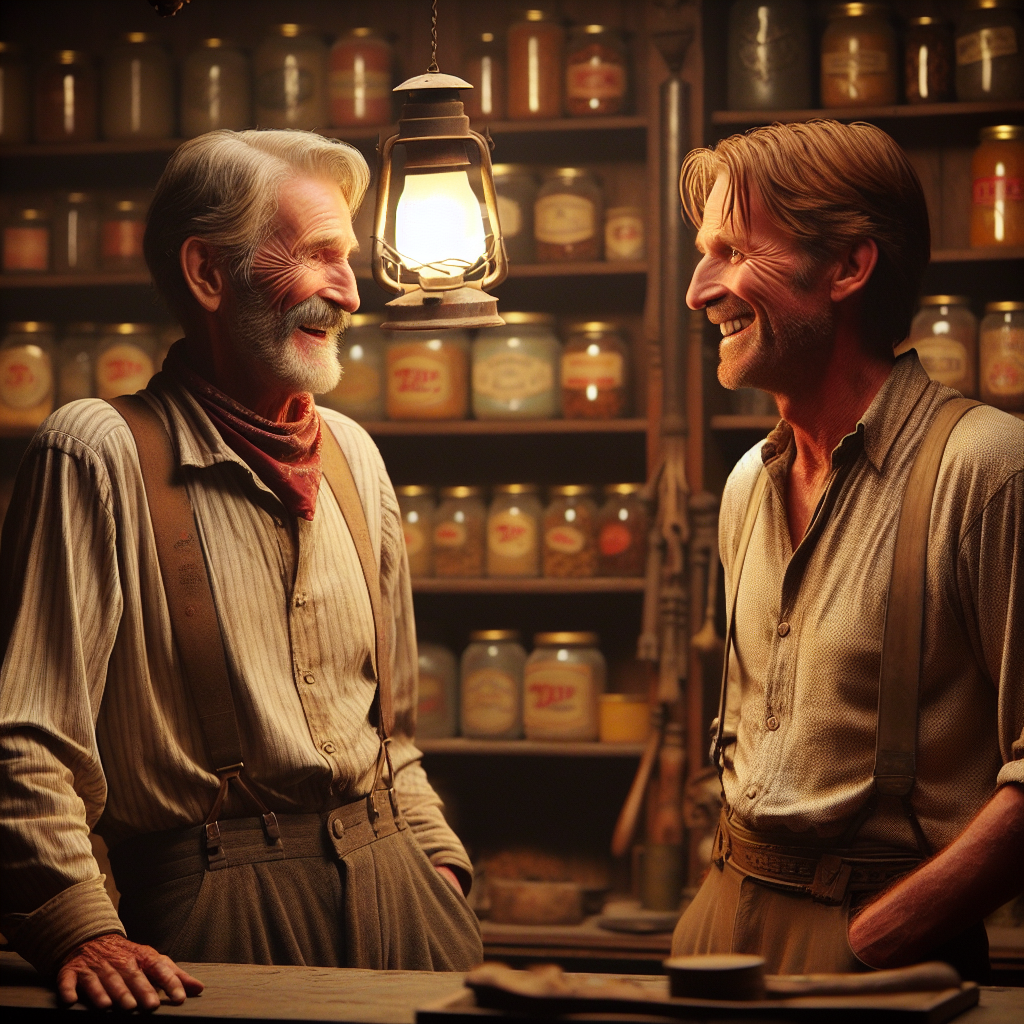 1 - Nighttime Banter at the General Store | 8 | 8 | 7 | 8 | 9 | 4 | 8 | 7 | 3 | 5 | 2 | 5 | 6 | 6 | 8 | 9 | 9 | 9 | 9 | |
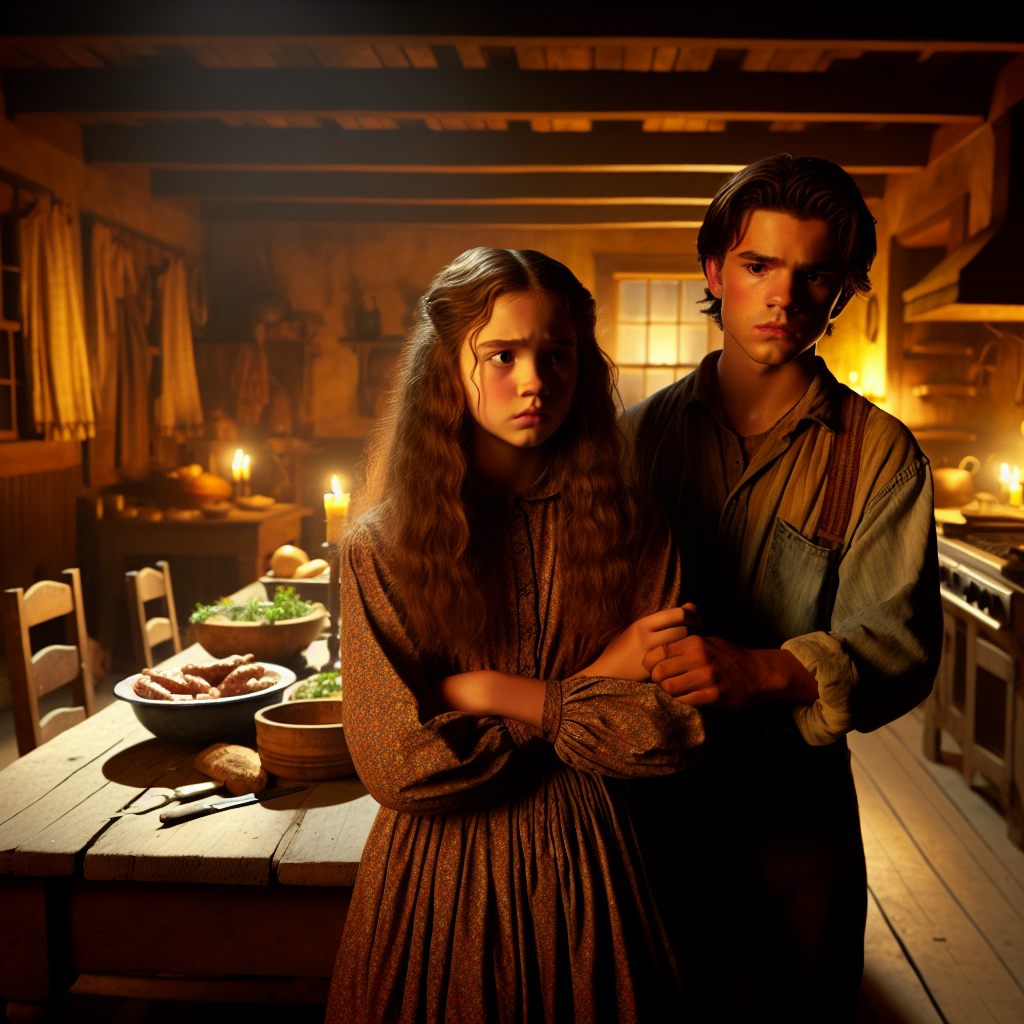 2 - A Night of Choices | 8 | 8 | 7 | 7 | 9 | 6 | 8 | 7 | 7 | 7 | 6 | 8 | 7 | 7 | 7 | 9 | 8 | 8 | 8 | |
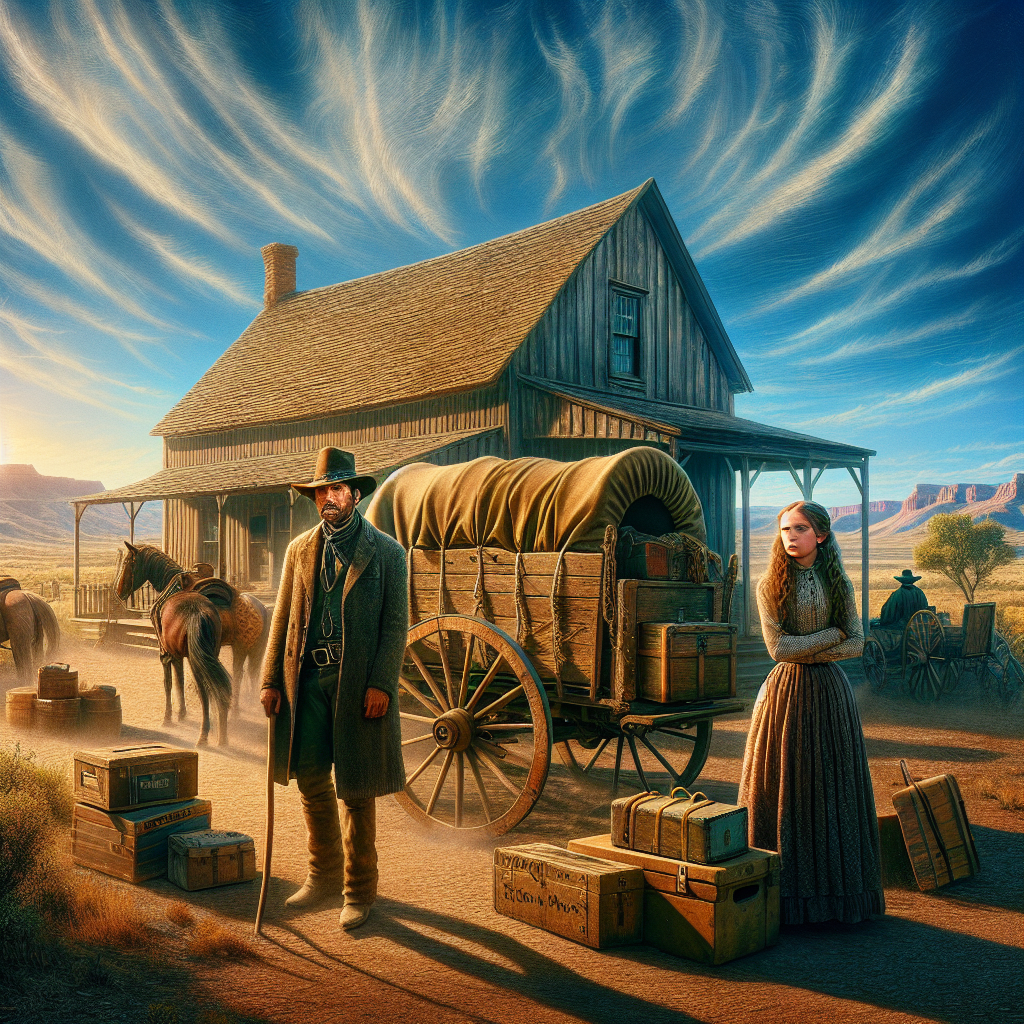 3 - A New Beginning | 8 | 8 | 8 | 6 | 9 | 8 | 8 | 7 | 7 | 7 | 7 | 8 | 7 | 9 | 8 | 9 | 8 | 8 | 8 | |
| 4 - Journey into Hope | 8 | 8 | 7 | 7 | 8 | 7 | 8 | 7 | 4 | 7 | 5 | 8 | 6 | 9 | 8 | 8 | 8 | 9 | 9 | |
|
5 - Desert Struggles and Family Tensions
| 8 | 8 | 8 | 9 | 8 | 7 | 8 | 7 | 8 | 7 | 8 | 9 | 8 | 9 | 7 | 9 | 8 | 8 | 8 | |
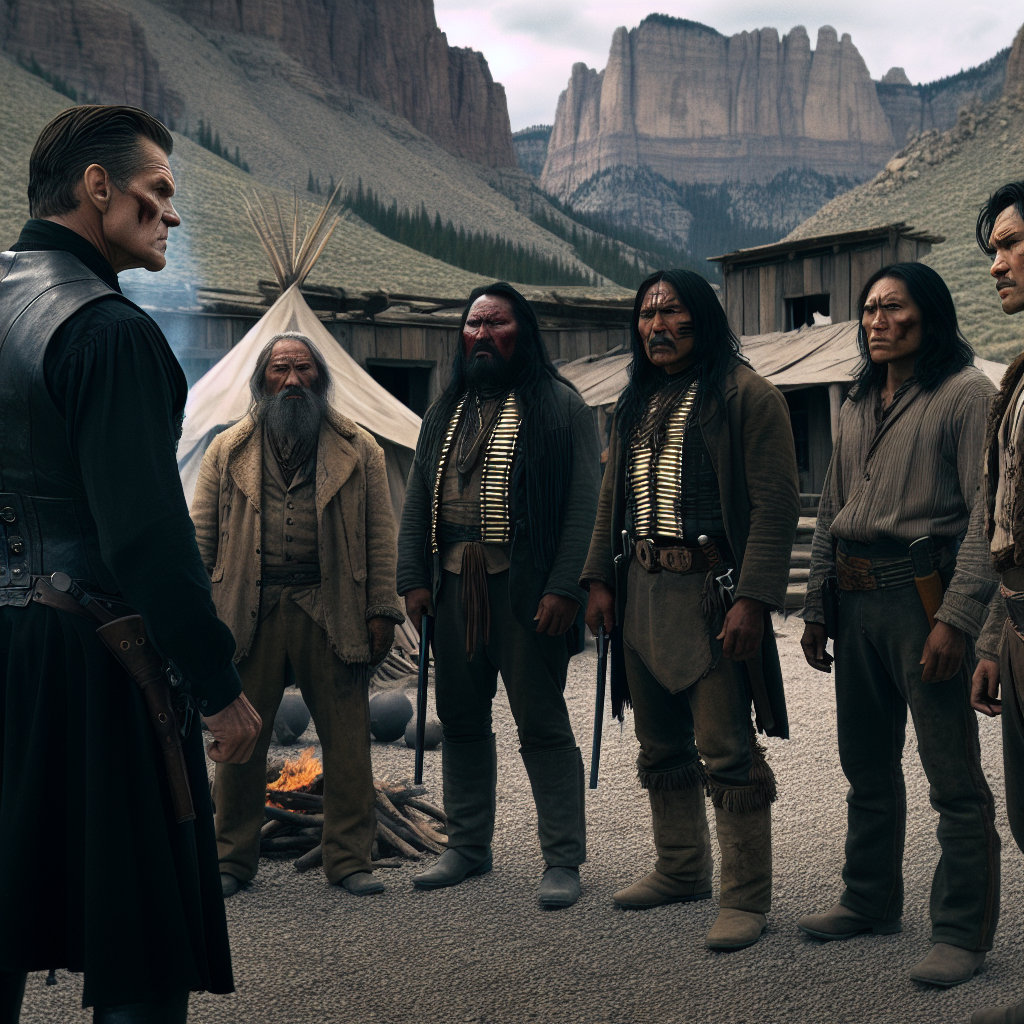 6 - Confrontation Over Land and Water | 8 | 8 | 8 | 9 | 7 | 6 | 8 | 7.5 | 9 | 8 | 9 | 9 | 8 | 7 | 7 | 9 | 8 | 8 | 8 | |
| 7 - Journey to the New Home | 8 | 8 | 8 | 7 | 8 | 7 | 8 | 7 | 6 | 7 | 6 | 8 | 6 | 8 | 7 | 9 | 8 | 8 | 8 | |
| 8 - Confrontation at the Silver Penny Saloon | 8 | 8 | 7 | 9 | 8 | 6 | 9 | 8 | 9 | 9 | 9 | 8 | 8 | 7 | 7 | 9 | 9 | 9 | 9 | |
| 9 - Confrontation on Main Street | 8 | 8 | 8 | 9 | 8 | 7 | 8 | 9 | 9 | 8 | 9 | 9 | 8 | 7 | 7 | 9 | 8 | 8 | 8 | |
| 10 - Tensions Over Water Rights | 8 | 9 | 8 | 8 | 8 | 7 | 8 | 7 | 9 | 8 | 8 | 9 | 8 | 7 | 9 | 9 | 8 | 9 | 9 | |
|
11 - Descent into Chaos
| 9 | 9 | 9 | 7.5 | 9 | 8 | 8 | 7.5 | 10 | 8 | 10 | 9 | 8 | 9 | 8 | 9 | 8.5 | 8 | 8 | |
| 12 - Storm Approaches | 8 | 8 | 8 | 7 | 8 | 7 | 8 | 7 | 9 | 7 | 9 | 9 | 7 | 7 | 8 | 8 | 8 | 9 | 9 | |
| 13 - A Deadly Wait | 8 | 8 | 8 | 9 | 8 | 6 | 8 | 7 | 9 | 8 | 9 | 8 | 9 | 7 | 7 | 9 | 8 | 8 | 8 | |
| 14 - Desert Reckoning | 8 | 8 | 8 | 9 | 8 | 6 | 8 | 7 | 9 | 8 | 9 | 8 | 8 | 7 | 7 | 9 | 9 | 8 | 8 | |
| 15 - A Call for Justice | 8 | 8 | 8 | 8 | 8 | 7 | 9 | 8 | 9 | 8 | 9 | 9 | 7 | 8 | 7 | 9 | 8 | 9 | 9 | |
| 16 - Ambush at the Train Station | 8 | 7 | 9 | 8 | 8 | 6 | 8 | 9 | 9 | 8 | 9 | 9 | 8 | 7 | 7 | 9 | 9 | 9 | 9 | |
| 17 - Showdown at the Train Station | 8 | 8 | 8 | 9 | 8 | 6 | 8 | 9 | 9 | 8 | 9 | 9 | 8 | 7 | 7 | 9 | 9 | 9 | 9 | |
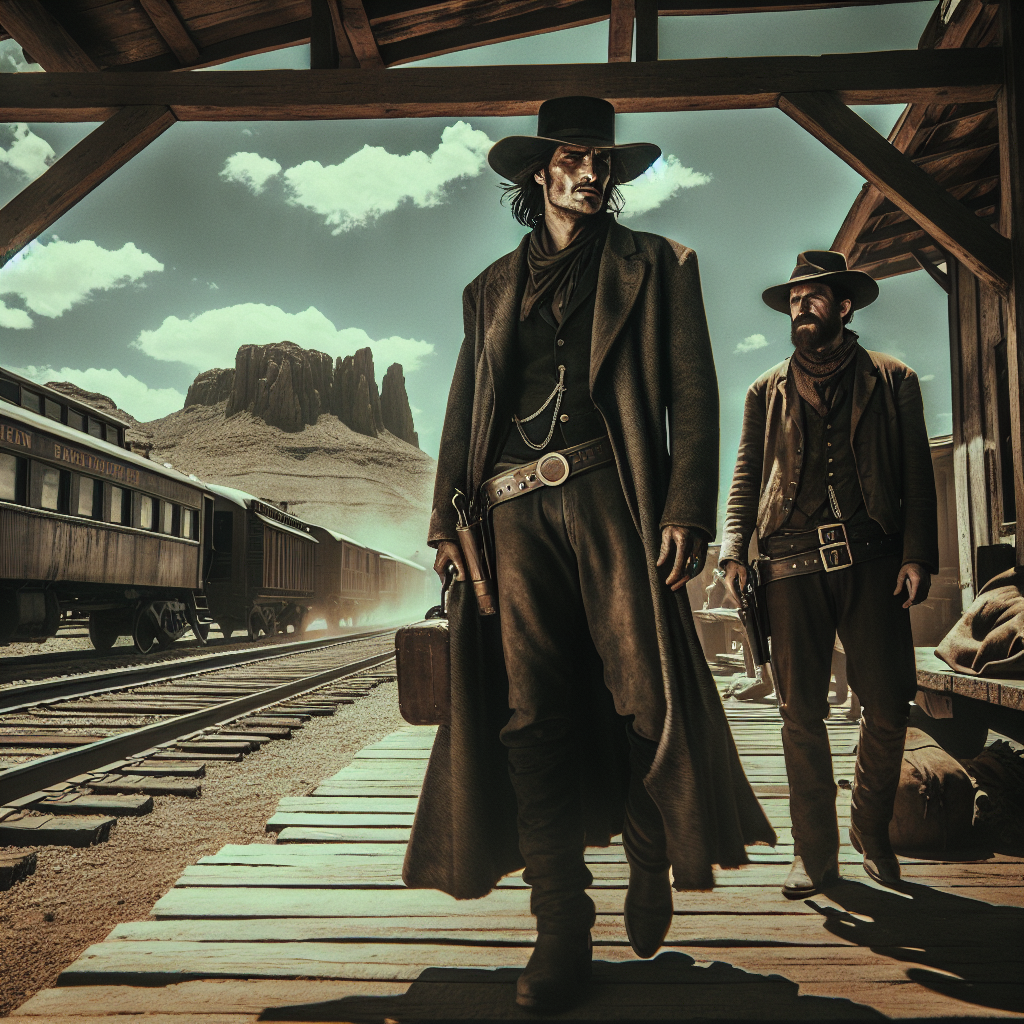 18 - Showdown at the Train Station | 9 | 9 | 9 | 9 | 8 | 7 | 8 | 9 | 9 | 9 | 9 | 9 | 9 | 8 | 7 | 9 | 9 | 9 | 9 | |
| 19 - Contrasting Fates | 8 | 8 | 8 | 8 | 8 | 7 | 8 | 7 | 9 | 8 | 9 | 9 | 8 | 8 | 7 | 9 | 9 | 9 | 9 | |
| 20 - A Chance Encounter at the Train Station | 8 | 8 | 8 | 8 | 7 | 6 | 8 | 7 | 8 | 7 | 7 | 8 | 7 | 7 | 6 | 9 | 8 | 8 | 8 | |
| 21 - Confrontation in the Cantina | 9 | 8 | 9 | 9 | 9 | 7 | 8 | 7 | 9 | 8 | 8 | 9 | 8 | 8 | 8 | 9 | 8 | 8 | 8 | |
| 22 - A Mother's Grief | 8 | 7 | 8 | 8 | 8 | 7 | 9 | 8 | 8 | 8 | 8 | 8 | 8 | 9 | 7 | 9 | 9 | 9 | 9 | |
| 23 - Brutal Interrogation | 9 | 8 | 9 | 9 | 9 | 8 | 9 | 8 | 9 | 8 | 9 | 9 | 8 | 9 | 8 | 9 | 9 | 8 | 8 | |
| 24 - Tension at the McBain Farmhouse | 8 | 8 | 7 | 9 | 9 | 8 | 8 | 7 | 7 | 8 | 7 | 8 | 8 | 9 | 8 | 9 | 9 | 8 | 8 | |
| 25 - Confrontation in the Train Car | 8 | 8 | 8 | 9 | 8 | 7 | 8 | 7 | 9 | 8 | 9 | 9 | 8 | 8 | 9 | 9 | 8 | 8 | 8 | |
| 26 - Confronting the Threat | 9 | 8 | 9 | 8 | 9 | 7 | 8 | 9 | 9 | 8 | 9 | 9 | 8 | 8 | 8 | 9 | 9 | 9 | 9 | |
| 27 - Confrontation at the Farmhouse | 8 | 8 | 7 | 8 | 9 | 8 | 8 | 7 | 8 | 8 | 8 | 8 | 7 | 9 | 8 | 8 | 8 | 9 | 9 | |
| 28 - A Sudden Threat | 8 | 8 | 8 | 8 | 8 | 7 | 8 | 9 | 9 | 8 | 8 | 8 | 8 | 7 | 7 | 9 | 9 | 9 | 9 | |
| 29 - Tension at the Farmhouse | 8 | 8 | 8 | 9 | 9 | 8 | 8 | 7.5 | 9 | 8 | 9 | 9 | 8 | 9 | 8 | 9 | 8 | 8 | 8 | |
| 30 - Tension at the Farmhouse | 8 | 8 | 8 | 9 | 8 | 7 | 8 | 7 | 9 | 8 | 9 | 9 | 8 | 8 | 8 | 9 | 8 | 8 | 8 | |
| 31 - Struggle for Control | 9 | 9 | 8 | 9 | 9 | 8 | 8 | 7 | 9 | 8 | 9 | 9 | 8 | 9 | 8 | 9 | 8 | 8 | 8 | |
| 32 - Tension at Twilight | 8 | 8 | 8 | 8 | 9 | 8 | 8 | 7 | 9 | 8 | 9 | 9 | 7 | 9 | 8 | 8 | 9 | 9 | 9 | |
| 33 - Night of Tension and Courage | 8 | 8 | 8 | 8 | 8 | 7 | 9 | 8 | 9 | 8 | 9 | 9 | 8 | 8 | 8 | 9 | 9 | 9 | 9 | |
| 34 - Betrayal on the Train | 8 | 8 | 8 | 9 | 8 | 8 | 9 | 8 | 9 | 8 | 9 | 9 | 8 | 8 | 9 | 9 | 9 | 9 | 9 | |
| 35 - Standoff in the Train Car | 9 | 8 | 9 | 9 | 9 | 8 | 9 | 8 | 9 | 8 | 9 | 9 | 8 | 8 | 9 | 9 | 8 | 8 | 8 | |
| 36 - Reckoning on the Train | 9 | 8 | 9 | 9 | 9 | 8 | 8 | 7 | 9 | 8 | 9 | 9 | 8 | 8 | 8 | 9 | 9 | 8 | 8 | |
| 37 - Train Heist Showdown | 9 | 8 | 9 | 8 | 9 | 8 | 8 | 9 | 9 | 8 | 9 | 9 | 8 | 7 | 7 | 9 | 9 | 9 | 9 | |
| 38 - Confrontation at the Cantina | 8 | 8 | 8 | 7 | 9 | 7 | 8 | 9 | 9 | 8 | 9 | 8 | 8 | 7 | 9 | 9 | 8 | 9 | 9 | |
| 39 - The Land Deal | 8 | 8 | 8 | 8 | 8 | 7 | 8 | 7 | 9 | 7 | 9 | 8 | 7 | 7 | 9 | 9 | 8 | 8 | 8 | |
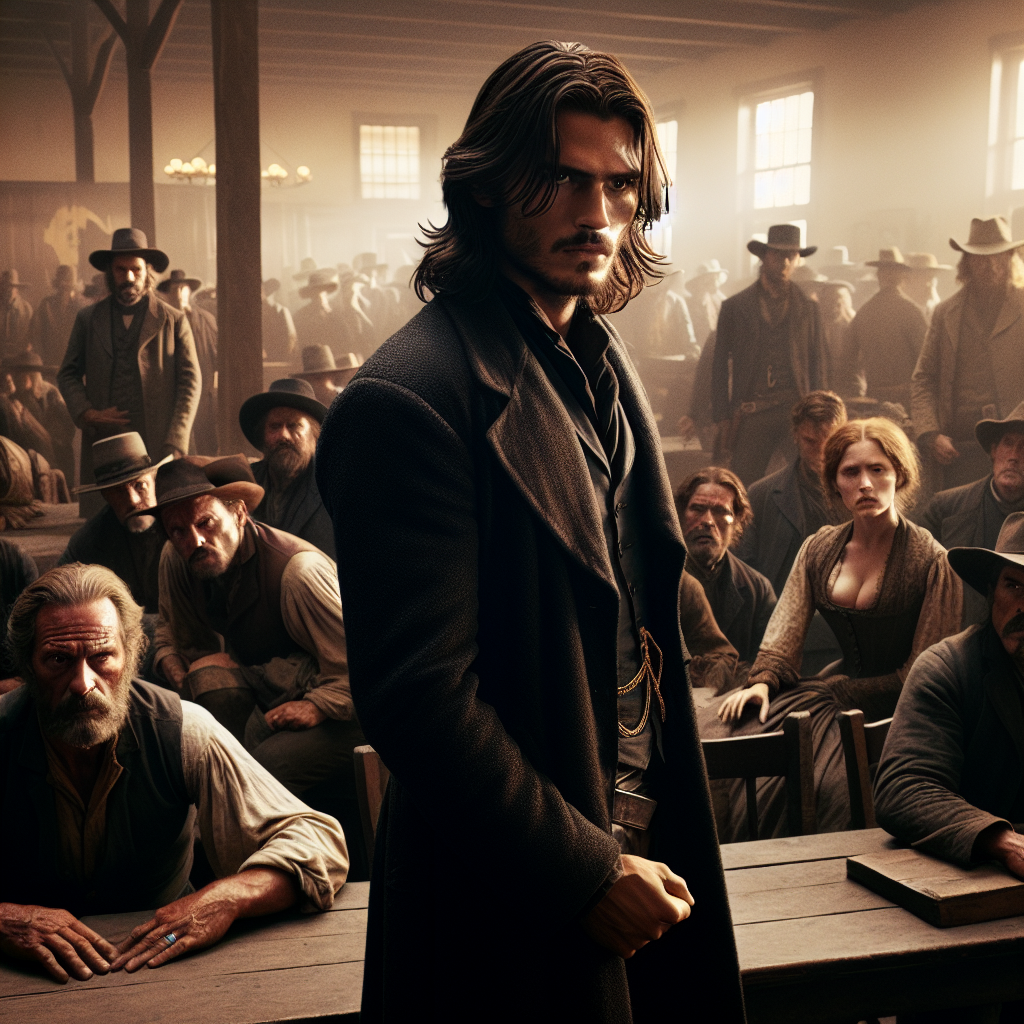 40 - The Auction Showdown | 8 | 9 | 8 | 9 | 8 | 7 | 9 | 8 | 9 | 8 | 9 | 9 | 8 | 8 | 8 | 9 | 8 | 8 | 8 | |
| 41 - Standoff on the Road | 8 | 8 | 8 | 7 | 8 | 7 | 8 | 7 | 9 | 8 | 8 | 9 | 8 | 7 | 7 | 9 | 9 | 8 | 8 | |
| 42 - Under the Weight of Oppression | 8 | 8 | 8 | 8 | 7 | 7 | 8 | 7 | 9 | 8 | 8 | 9 | 8 | 7 | 7 | 9 | 8 | 9 | 9 | |
| 43 - A Moment of Kindness | 8 | 8 | 7 | 9 | 9 | 7 | 8 | 7 | 7 | 7 | 7 | 7 | 7 | 8 | 7 | 9 | 8 | 8 | 8 | |
| 44 - A Breakfast Interrupted | 8 | 8 | 8 | 9 | 9 | 7 | 8 | 7 | 9 | 8 | 8 | 9 | 8 | 8 | 7 | 9 | 8 | 8 | 8 | |
| 45 - Revolt on the Railroad | 9 | 8 | 9 | 8 | 9 | 8 | 8 | 9 | 9 | 8 | 9 | 9 | 8 | 8 | 8 | 9 | 9 | 9 | 9 | |
| 46 - Confrontation in the Train Car | 8 | 8 | 8 | 9 | 9 | 7 | 8 | 7 | 8 | 7 | 8 | 9 | 8 | 7 | 8 | 9 | 8 | 8 | 8 | |
| 47 - Betrayal on the Tracks | 8 | 7 | 8 | 8 | 9 | 7 | 8 | 7 | 9 | 8 | 9 | 9 | 8 | 7 | 8 | 9 | 9 | 9 | 9 | |
| 48 - Reinforcements and Resolutions | 8 | 7 | 9 | 8 | 8 | 7 | 8 | 7 | 9 | 7 | 9 | 9 | 7 | 8 | 7 | 9 | 9 | 8 | 8 | |
| 49 - Building a Future | 8 | 9 | 8 | 9 | 8 | 8 | 9 | 8 | 8 | 8 | 9 | 9 | 8 | 7 | 9 | 9 | 8 | 8 | 8 | |
| 50 - A Day's Work and Dreams | 8 | 8 | 8 | 9 | 8 | 7 | 8 | 9 | 6 | 8 | 6 | 8 | 7 | 7 | 7 | 9 | 8 | 9 | 9 | |
| 51 - Provocative Strategies | 8 | 8 | 8 | 9 | 9 | 8 | 8 | 7 | 7 | 7 | 7 | 9 | 7 | 7 | 8 | 9 | 8 | 8 | 8 | |
| 52 - Tension at the Cantina | 8 | 8 | 8 | 8 | 9 | 7 | 8 | 7 | 9 | 8 | 9 | 8 | 8 | 8 | 9 | 9 | 8 | 8 | 8 | |
| 53 - A Tense Standoff | 9 | 8 | 9 | 8 | 9 | 8 | 9 | 8 | 9 | 8 | 9 | 9 | 8 | 8 | 8 | 9 | 9 | 9 | 9 | |
| 54 - Moral Reckoning | 8 | 7 | 8 | 8 | 9 | 7 | 9 | 8 | 9 | 8 | 8 | 9 | 8 | 8 | 8 | 9 | 8 | 9 | 9 | |
| 55 - Descent into Despair | 8 | 8 | 8 | 9 | 8 | 7 | 8 | 7 | 9 | 7 | 8 | 9 | 8 | 7 | 8 | 9 | 8 | 8 | 8 | |
| 56 - Tension at the McBain Farmhouse | 9 | 9 | 9 | 9 | 9 | 8 | 8 | 9 | 9 | 9 | 9 | 9 | 8 | 8 | 9 | 9 | 8 | 8 | 8 | |
| 57 - Building a Legacy | 8 | 8 | 7 | 9 | 9 | 7 | 8 | 7 | 6 | 7 | 6 | 7 | 7 | 8 | 7 | 9 | 8 | 8 | 8 | |
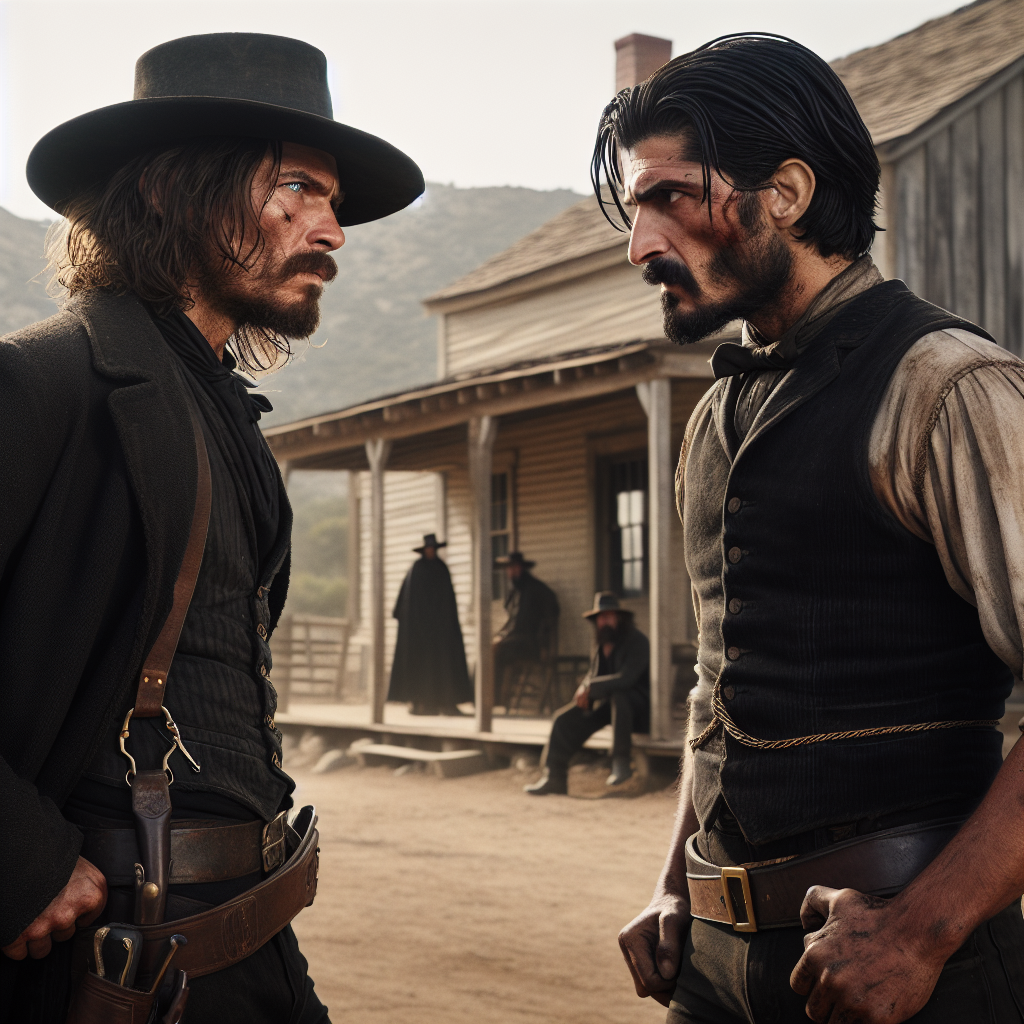 58 - The Final Standoff | 9 | 9 | 8 | 8 | 9 | 8 | 8 | 7 | 9 | 8 | 9 | 9 | 8 | 9 | 8 | 9 | 8 | 8 | 8 | |
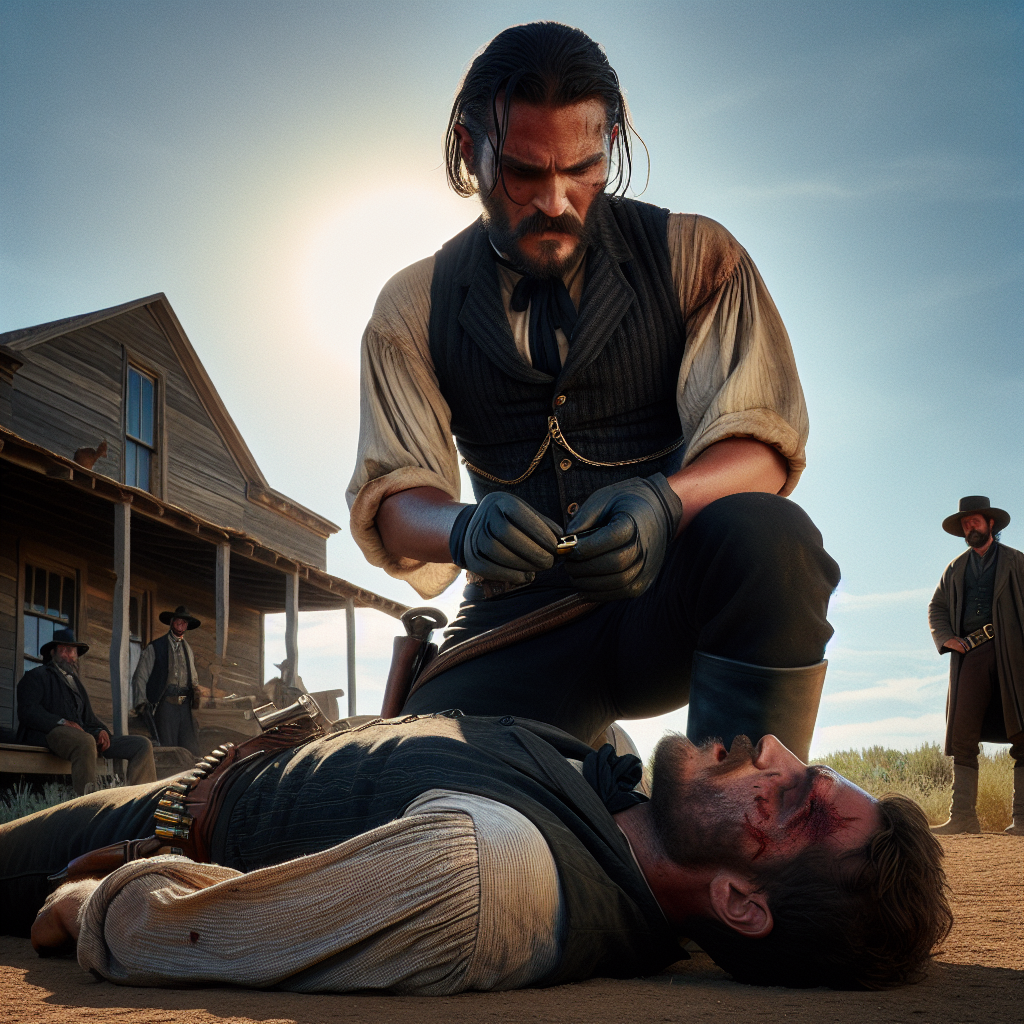 59 - Echoes of the Past | 9 | 9 | 9 | 9 | 9 | 8 | 9 | 8 | 9 | 8 | 9 | 9 | 8 | 9 | 8 | 9 | 8 | 8 | 8 | |
 60 - Bittersweet Departures | 8 | 8 | 7 | 9 | 8 | 7 | 8 | 7 | 4 | 7 | 5 | 7 | 7 | 8 | 7 | 9 | 8 | 8 | 8 | |
- Physical environment: The screenplay is set in the American West during the late 19th century, primarily in a rural, frontier setting characterized by dusty landscapes, sprawling deserts, rugged mountains, small towns, and isolated farmhouses. The environment is often harsh and unforgiving, with limited resources and constant danger. The presence of railroads and the construction of new towns symbolizes the rapid expansion and development of the west.
- Culture: The screenplay depicts a diverse cultural landscape, encompassing cowboys, Native Americans, Chinese immigrants, and European settlers. The cultural clash between these groups is evident, reflecting the struggles for power, land, and resources. The Wild West culture of violence, lawlessness, and survival is prevalent, with codes of honor, vendettas, and a strong sense of individualism shaping characters' actions.
- Society: The societal structure is primarily hierarchical and often ruthless. Power dynamics are prominent, with wealthy figures like Morton and Frank wielding considerable influence and exploiting others for their gain. The presence of law enforcement, often ineffective and corrupt, reflects the limited order in the lawless frontier. The societal fabric is also characterized by racial prejudice and social inequality, with the exploitation of Native Americans and Chinese immigrants, who are often treated as lesser citizens.
- Technology: The screenplay portrays a world transitioning between traditional and modern technologies. Railroads, trains, and Gatling guns symbolize progress and the growing reach of industrialization. However, most characters rely on basic tools, horses, and traditional methods of transportation. The contrast between these technologies highlights the changing landscape of the West and the clash between traditional ways of life and the encroaching forces of modernization.
- Characters influence: The world elements shape the characters' experiences and actions in numerous ways. The harsh environment influences their survival strategies and pushes them to act ruthlessly to secure resources. The societal structures and power dynamics shape their motivations and alliances, often forcing them to make difficult choices and navigate treacherous power dynamics. The cultural clashes create tensions and conflicts that drive the narrative. The characters' past experiences and backgrounds often inform their actions, as they grapple with the complexities of the frontier.
- Narrative contribution: The world elements contribute to the screenplay's narrative by creating a sense of urgency, danger, and conflict. The setting of the Wild West, with its lawless atmosphere and constant threats, provides a backdrop for the unfolding events and motivates the characters' actions. The presence of railroads and land development provides a central conflict point for the story, driving the characters' motivations and shaping their relationships. The cultural clashes create a dynamic and compelling narrative, with characters navigating a complex web of allegiances and betrayals.
- Thematic depth contribution: The world elements contribute to the screenplay's thematic depth by exploring themes of survival, justice, power, and identity. The harsh environment challenges the characters' humanity and forces them to confront their moral compasses. The societal structures and cultural clashes highlight the consequences of greed, exploitation, and prejudice. The characters' struggles for land and resources reflect the larger social and economic forces shaping the West. Ultimately, the screenplay uses the world elements to create a complex and thought-provoking portrait of a period in American history marked by both progress and violence.
| Voice Analysis | |
|---|---|
| Summary: | The writer's voice is gritty and realistic, favoring authentic dialogue that reveals the characters' inner turmoil and motivations. The narrative style is descriptive and visually evocative, painting a stark picture of the Wild West and its harsh realities. The dialogue is often terse and blunt, reflecting the characters' stoicism and the unforgiving nature of their environment. The writer's voice infuses the screenplay with a sense of moral ambiguity, exploring themes of power, justice, and survival through the lens of human complexity and flawed characters. |
| Voice Contribution | The writer's voice contributes to the script by creating a stark and authentic atmosphere that draws the audience into the heart of the Wild West. It deepens the emotional impact of the story by highlighting the characters' inner struggles and motivations through realistic dialogue and their interactions with each other. The writer's skillful blend of gritty realism and descriptive prose paints a vivid picture of a world where survival is paramount and morality is often tested. The moral ambiguity of the characters and the starkness of the Wild West setting adds depth and complexity to the themes of power, justice, and the human condition. |
| Best Representation Scene | 10 - Tensions Over Water Rights |
| Best Scene Explanation | This scene encapsulates the writer's voice through its tense dialogue, revealing the characters' motivations and conflicts. The scene is filled with tension and subtext, creating a sense of intrigue and suspense. Frank's determination to reclaim the land and Morton's calculating response showcase the power dynamics and moral dilemmas that drive the narrative. The sharp and blunt dialogue, combined with the focus on power and ambition, perfectly reflects the writer's signature style. |
Style and Similarities
The screenplay exhibits a strong Western influence, characterized by gritty dialogue, intense action, and morally ambiguous characters. There's a focus on power dynamics and the harsh realities of survival in a lawless setting.
Style Similarities:
| Writer | Explanation |
|---|---|
| Quentin Tarantino | Tarantino's influence is prevalent throughout the screenplay, particularly in the use of sharp dialogue, tension-filled scenes, and morally ambiguous characters. His penchant for violence and unexpected twists is also evident in many scenes. |
| Cormac McCarthy | McCarthy's influence is prominent in the screenplay's portrayal of bleak landscapes, morally complex characters, and themes of survival and redemption. His signature sparse prose and gritty realism are also reflected in several scenes. |
| Sergio Leone | Leone's influence shines through in the screenplay's Western genre tropes, atmospheric settings, and character-driven narratives. The focus on visual storytelling and tense standoffs is also reminiscent of Leone's classic Westerns. |
Other Similarities: While Tarantino, McCarthy, and Leone are the most dominant influences, other writers like John Hughes, Coen Brothers, and Kelly Reichardt add subtle layers to the screenplay's overall style. For instance, the exploration of family dynamics and emotional complexities can be attributed to John Hughes's influence, while scenes featuring unique character dynamics and dark humor suggest the influence of the Coen Brothers. Kelly Reichardt's subtle approach to character interactions and emotional depth is also evident in some scenes.
Top Correlations and patterns found in the scenes:
| Pattern | Explanation |
|---|---|
| High Stakes Drive Emotional Impact | Scenes with high stakes tend to have a strong emotional impact. The higher the score in 'High Stakes', the more likely the 'Emotional Impact' score is also high. This suggests the screenplay effectively utilizes tension and consequence to evoke emotional responses from the audience. |
| Violence and Tension Are Intertwined | Scenes marked as 'Violent' and 'Tense' frequently occur together, indicating a deliberate pattern of using physical threat to heighten the overall tension. This suggests a focus on action-driven suspense. |
| Confrontational Scenes Boost Dialogue | Confrontational scenes tend to have higher dialogue scores. This suggests the screenplay uses dialogue effectively to drive conflict and propel the narrative forward during these intense moments. |
| Character Changes Fuel Conflict | Scenes with significant character changes often have high conflict scores. This indicates that the screenplay uses character development to drive conflict, creating dynamic and engaging interactions between characters. |
| Emotional Scenes Enhance Character Development | Scenes with high emotional impact often have strong character development. This suggests that the author uses emotional moments to reveal and deepen character traits, creating a greater sense of complexity and relatability. |
| Concept and Plot Consistently Strong | Throughout the screenplay, 'Concept' and 'Plot' scores remain consistently high. This suggests a strong foundation in terms of the story's premise and structure, demonstrating a clear understanding of storytelling fundamentals. |
| Character Focus in the First Act | The first few scenes showcase high 'Characters' scores, indicating an emphasis on character introduction and development in the early stages of the narrative. This suggests a focus on building relatable characters before diving into the heart of the plot. |
| Tone Shifts Drive Narrative Momentum | The screenplay effectively employs tonal shifts to keep the narrative engaging. Changes in tone are often accompanied by shifts in other elements like 'Emotional Impact', 'Conflict', and 'Character Changes'. This highlights the author's understanding of how tonal variations can propel the story forward. |
Writer's Craft Overall Analysis
The screenplay demonstrates a strong understanding of character development, conflict, and tension, particularly in the Western genre. The writer excels at crafting evocative settings, authentic dialogue, and compelling character interactions. However, some areas require further refinement to elevate the overall impact of the screenplay.
Key Improvement Areas
Suggestions
| Type | Suggestion | Rationale |
|---|---|---|
| Book | 'Save the Cat!' by Blake Snyder | This book provides a comprehensive guide to screenplay structure, character development, and engaging narrative techniques, which can help the writer refine their scene structure and pacing, create more memorable characters, and elevate the overall impact of their storytelling. |
| Screenplay | 'No Country for Old Men' by Cormac McCarthy | This screenplay showcases masterful use of dialogue, tension, and thematic depth within a Western setting, offering valuable insights into creating complex characters, moral dilemmas, and atmospheric storytelling. |
| Video | 'The Making of Once Upon a Time in the West' documentary | This video provides behind-the-scenes insights into the creative process of a renowned Western film, focusing on visual storytelling, pacing, character development, and the overall craft of filmmaking. This can enhance the writer's understanding of visual storytelling and how to translate their screenplay into compelling cinematic experiences. |
| Exercise | Practice writing dialogue-driven scenes with escalating tension and conflict Practice In SceneProv | By focusing on dialogue, the writer can strengthen their ability to convey emotions, motivations, and conflicts through character interactions, creating more dynamic and engaging scenes. |
| Exercise | Write a scene with only visual storytelling, no dialogue Practice In SceneProv | This exercise can help the writer refine their skills in conveying emotions and plot developments through visuals and actions, enhancing their ability to create impactful scenes with minimal dialogue. |
| Exercise | Practice writing scenes with contrasting values and philosophical conflicts Practice In SceneProv | This exercise will help the writer deepen their exploration of thematic complexity, enhancing the emotional resonance and intellectual engagement of their narratives. |
Here are different Tropes found in the screenplay
| Trope | Trope Details | Trope Explanation |
|---|---|---|
| The Reluctant Hero | Harmonica initially appears detached and indifferent, but ultimately takes action to protect Jill and confront Frank. | This trope involves a character who is initially hesitant to take on the role of a hero but is compelled to act due to circumstances. An example is Frodo Baggins in 'The Lord of the Rings,' who is reluctant to carry the One Ring but ultimately rises to the challenge. |
| Family in Peril | Brett's family faces threats from Frank and his gang, leading to a violent confrontation. | This trope involves a family unit that is endangered, often leading to dramatic tension and conflict. A classic example is in 'Home Alone,' where Kevin's family is threatened by burglars. |
| The Mentor | Brett serves as a mentor to his children, teaching them about survival and responsibility. | The mentor trope features a wise character who guides the protagonist, often imparting crucial life lessons. An example is Mr. Miyagi in 'The Karate Kid,' who teaches Daniel about karate and life. |
| The Love Triangle | Jill finds herself caught between her feelings for Cheyenne and her loyalty to her deceased husband. | This trope involves romantic tension between three characters, often leading to conflict and drama. An example is the love triangle between Katniss, Peeta, and Gale in 'The Hunger Games.' |
| The Final Confrontation | Harmonica and Frank face off in a tense showdown, culminating in a dramatic gunfight. | This trope features a climactic battle between the protagonist and antagonist, often resolving the central conflict. An example is the final duel between Luke Skywalker and Darth Vader in 'Star Wars: Episode VI - Return of the Jedi.' |
| The Tragic Backstory | Frank's violent past and childhood hardships are revealed, explaining his ruthless behavior. | This trope provides depth to a character by revealing their traumatic past, often explaining their current motivations. An example is Batman, whose parents' murder drives him to fight crime. |
| The Strong Female Character | Jill demonstrates resilience and determination as she navigates her family's challenges and confronts Frank. | This trope features a female character who is capable, independent, and often takes charge of her own destiny. An example is Furiosa in 'Mad Max: Fury Road,' who leads a rebellion against tyranny. |
| The Mentor's Death | Brett's death serves as a catalyst for Jill and the children to take action against Frank. | This trope involves the mentor figure dying, often pushing the protagonist to grow and take on new responsibilities. An example is Obi-Wan Kenobi's death in 'Star Wars: Episode IV - A New Hope,' which motivates Luke to become a Jedi. |
| The Anti-Hero | Cheyenne operates outside the law, yet his actions are driven by a sense of justice. | This trope features a protagonist who lacks conventional heroic qualities but still engages in morally ambiguous actions for a greater good. An example is Deadpool, who often acts selfishly but ultimately fights for justice. |
| The Quest for Redemption | Harmonica seeks to confront Frank, driven by a desire for revenge and closure. | This trope involves a character seeking to atone for past mistakes or wrongdoings, often leading to personal growth. An example is Tony Stark in 'Iron Man 3,' who seeks to make amends for his past actions. |
Memorable lines in the script:
Some Loglines to consider:
| A mysterious loner seeks revenge against a ruthless land grabber, setting off a high-stakes conflict that reshapes the future of the American West. |
| In the midst of the railroad's expansion, a widow and her children fight to hold onto their land and the dreams of a better life, while a complex web of greed, deception, and old scores threaten to tear their world apart. |
| When a young widow inherits a plot of land with a valuable secret, she must navigate a dangerous web of power-hungry men, violent outlaws, and a haunted stranger in order to secure her family's future and fulfill her late husband's vision. |
| As the railroad pushes westward, a diverse cast of characters – including a vengeful harmonica player, a morally ambiguous outlaw, and a widow determined to build a new life – collide in a battle for land, power, and the soul of the changing American frontier. |
| In the shadow of the railroad's unstoppable march, a woman and her children fight to hold on to their land and the legacy of a husband and father, while a mysterious stranger and a ruthless outlaw engage in a high-stakes game of revenge and redemption. |
| A mysterious stranger with a harmonica sets out to protect a widow and her daughter from a ruthless railroad tycoon who wants their land. |
| A widow and her daughter fight to build their dream town against the backdrop of a ruthless land grab by a railroad tycoon and a dangerous outlaw. |
| A widow and her daughter, aided by a mysterious harmonica player and an unlikely ally, face danger and betrayal as they build their new town and fight for their future. |
| In a lawless frontier, a harmonica player steps in to help a widow and her daughter against a ruthless railroad tycoon who wants their land, leading to an epic showdown in a town under construction. |
| Amidst the sprawling desert landscape, a widow and her daughter, aided by a mysterious harmonica player and an unlikely ally, fight to protect their legacy and build a new town against the backdrop of greed and violence. |
Help & FAQ
Frequently Asked Questions
After that, the high-level menu will offer insights into the story, themes, and characters.
The scene-by-scene analysis will demonstrate how each scene performs across various criteria, summarized in the column headings.
Click on any scene title to view the full analysis, including critiques and suggestions for improvement.
'Other Analyses' provides various insights into your writing and different perspectives, although it might not lead to significant rewrites of your script.
You can play it for free. If you have scripts analyzed, the AI might recommend exercises from SceneProv to help you improve your writing. Go to the craft tab to see what it recommended.
Let the AI take a turn when you're blocked or you want to riff on a scene. Each scene you create in SceneProv gets graded at the end.
- The email might have gone to your spam folder or is hidden in an email thread.
- The process might still be ongoing. Register/Login with the email you used during upload and look at the status. It sometimes takes as long as a couple hours. If it's been longer than that email us at [email protected]
Feature Request
Got an idea to improve our service? We'd love to hear it!
Scene by Scene Emotions
suspense Analysis
Executive Summary
Suspense is effectively woven throughout 'Once Upon a Time in the West,' particularly in scenes involving confrontations and the looming threat of violence. The tension builds through character interactions, such as the standoff between Harmonica and Frank, and the anticipation of violent outcomes, especially in scenes 11, 17, and 58. The screenplay utilizes pacing and visual cues to enhance suspense, keeping the audience engaged and on edge.
Usage Analysis
Critique
Suggestions
Questions for AI
fear Analysis
Executive Summary
Fear is a pervasive emotion in 'Once Upon a Time in the West,' particularly in scenes involving violence and threats to characters' safety. The screenplay effectively evokes fear through character actions, dialogue, and the overarching themes of violence and survival. Scenes such as 11, 25, and 31 exemplify how fear shapes character motivations and audience engagement.
Usage Analysis
Critique
Suggestions
Questions for AI
joy Analysis
Executive Summary
Joy is a nuanced emotion in 'Once Upon a Time in the West,' often juxtaposed with moments of tension and violence. The screenplay effectively uses joy to provide relief and contrast within the narrative, particularly in scenes involving familial bonds and moments of triumph. Scenes such as 1, 4, and 50 highlight how joy can enhance character development and audience engagement.
Usage Analysis
Critique
Suggestions
Questions for AI
sadness Analysis
Executive Summary
Sadness is a prominent emotion in 'Once Upon a Time in the West,' deeply intertwined with the characters' experiences of loss and grief. The screenplay effectively conveys sadness through character interactions, plot developments, and thematic elements, particularly in scenes such as 3, 22, and 31. This emotional weight enhances the narrative's depth and engages the audience on a profound level.
Usage Analysis
Critique
Suggestions
Questions for AI
surprise Analysis
Executive Summary
Surprise plays a crucial role in 'Once Upon a Time in the West,' often serving to heighten tension and engage the audience. The screenplay effectively utilizes surprise in key moments, particularly in scenes such as 11, 13, and 40, where unexpected actions or revelations shift the narrative direction and impact character dynamics.
Usage Analysis
Critique
Suggestions
Questions for AI
empathy Analysis
Executive Summary
Empathy is a central emotional thread in 'Once Upon a Time in the West,' allowing the audience to connect deeply with the characters' struggles and experiences. The screenplay effectively evokes empathy through character interactions, particularly in scenes such as 3, 22, and 31, where the emotional weight of loss and resilience resonates with viewers.
Usage Analysis
Critique
Suggestions
Questions for AI