Scene Objective: To introduce the character of the Girl and establish the film's dark themes through her tragic fate.
Setting: Luxurious penthouse apartment, nighttime.
POV: The audience observes through a cinematic lens that captures both the beauty and the horror of the scene.
Emotional Arc: - beauty → + tragedy
| Group | Category | Score |
|---|---|---|
| Overall | Overall Score | 9.2 |
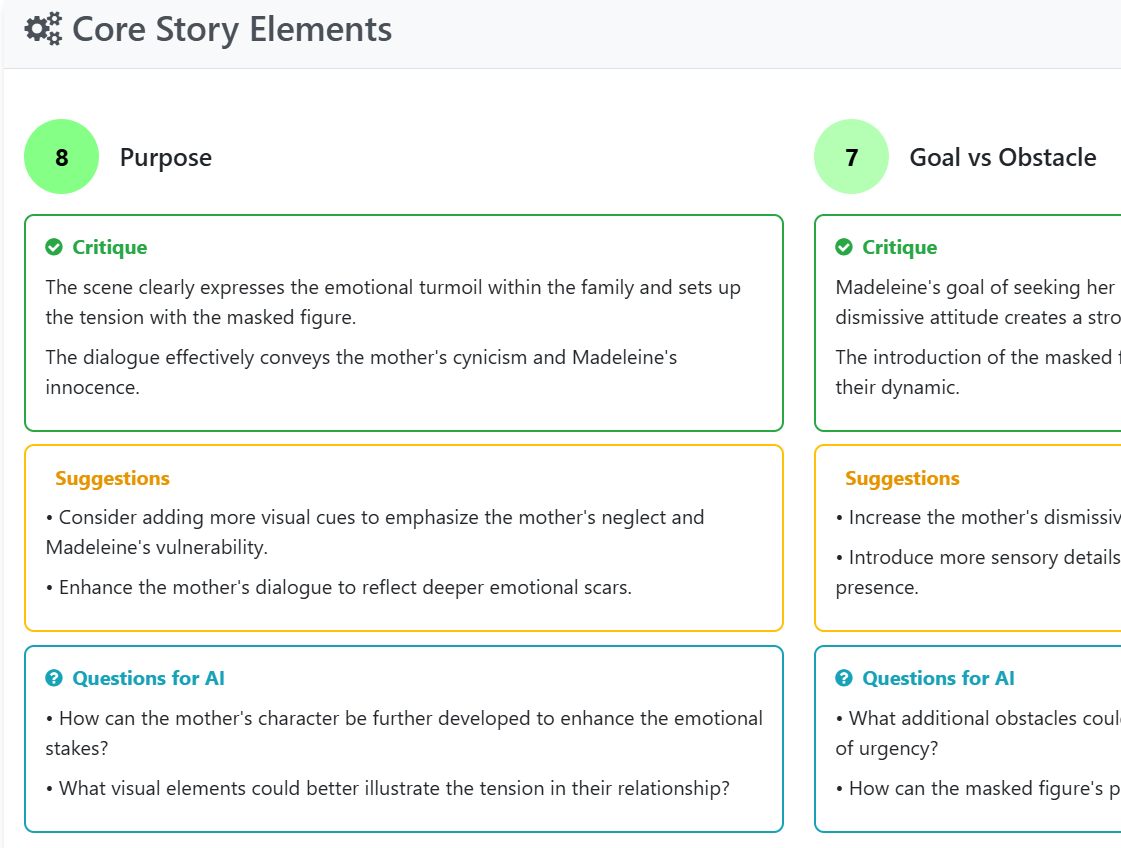
| Core Elements | Purpose |
9
|
| Goal vs Obstacle |
8
|
|
| Stakes |
10
|
|
| Progression |
9
|
|
| Turn Potency |
10
|
|
| Supporting | Exposition |
7
|
| Subtext |
9
|
|
| Setups & Payoffs |
8
|
|
| Beat Clarity |
9
|
|
| Quality | Scene Necessity |
10
|
| Thematic Resonance |
10
|
Hook Out: The Girl's death serves as a shocking transition to the next scene, heightening tension.
Energy UPThis scene is essential for establishing the film's tone and themes, serving as a catalyst for the narrative.
Character Delta: The Girl transitions from a state of reckless abandon to tragic finality.
“Grab ‘em by the throat and never let ‘em go.”
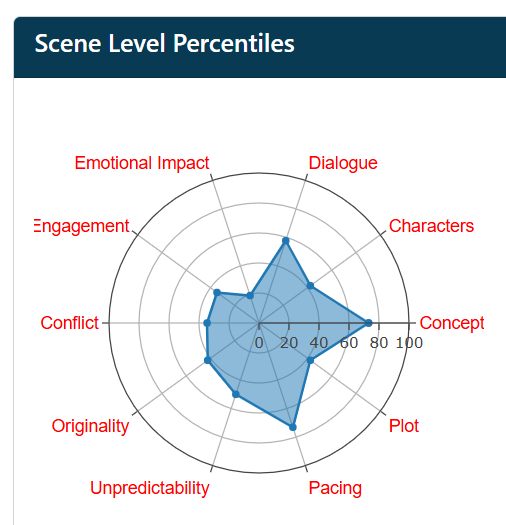
The scene level score is the impact on the reader or audience to continue reading.
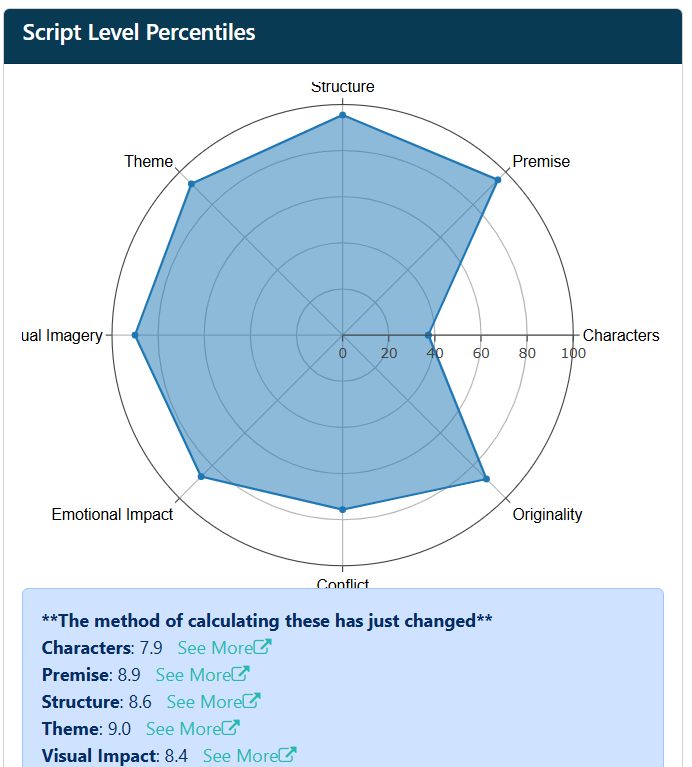
The Script score is how compelled they are to keep reading based on the rest of the script so far.
This scene is a powerful and shocking opening that immediately grabs the reader's attention. The stark contrast between the opulent setting and the girl's tragic demise creates a strong sense of mystery and unease. The precise, almost ritualistic way she destroys the cars and then herself leaves the reader with numerous questions: Who is she? Why is she doing this? Who are the soldiers in the photograph? The abruptness of her death, juxtaposed with the beauty of the setting and her person, is deeply unsettling and compels the reader to seek answers.
The opening scene has set an incredibly high bar for immediate engagement. The mystery of the girl's death, the opulent yet unsettling setting, and the hint of past trauma (the photograph) all contribute to a powerful hook. The introduction of specific details like the Sam Cooke music, the drugs, and the destruction of cars suggests a thematic depth that the reader will want to explore. The scene doesn't offer immediate answers but rather poses profound questions about the characters and their world, making the reader eager to see how these elements will unfold.
Scene Objective: Introduce Riggs and establish his unpredictable nature while foreshadowing the violence to come.
Setting: Beneath the pier at night.
POV: Riggs' perspective, showcasing his interactions with the dock workers and the dog.
Emotional Arc: − vulnerability → + confidence
| Group | Category | Score |
|---|---|---|
| Overall | Overall Score | 7.7 |
| Core Elements | Purpose |
8
|
| Goal vs Obstacle |
7
|
|
| Stakes |
6
|
|
| Progression |
7
|
|
| Turn Potency |
8
|
|
| Supporting | Exposition |
7
|
| Subtext |
8
|
|
| Setups & Payoffs |
6
|
|
| Beat Clarity |
7
|
|
| Quality | Scene Necessity |
9
|
| Thematic Resonance |
8
|
Hook In: The girl's jump from the balcony sets a dark tone that carries into the dock scene.
Energy FLATHook Out: Riggs' victory over the dock workers leads to a sense of empowerment and foreshadows future conflicts.
Energy UPThis scene is crucial for establishing Riggs' character and setting the tone for the film.
Character Delta: Riggs transitions from a detached observer to an active participant in violence.
“Grab ‘em by the throat and never let ‘em go.”
The scene level score is the impact on the reader or audience to continue reading.
The Script score is how compelled they are to keep reading based on the rest of the script so far.
This scene provides an immediate and visceral hook following the tragic and somber opening. The shift in tone to action and dark humor is jarring but effective. Riggs' unconventional methods, his bizarre ability to 'talk' to the dog, and his quick, brutal dismantling of the dock workers create a compelling spectacle. The revelation of his police badge at the end introduces a mystery about his character and his role, making the reader eager to understand who this man is and what he's capable of.
The script has established a high-stakes, tragic opening with the girl's suicide, and then immediately pivoted to intense, character-driven action. This contrast creates a strong sense of forward momentum. The introduction of Riggs as a capable, unpredictable, and seemingly unhinged law enforcement officer, juxtaposed with the tragic death in the previous scene, sets up a compelling narrative. The audience is now invested in understanding Riggs and how he fits into the larger picture, especially in relation to the grim tone established earlier.
Scene Objective: To introduce Detective Murtaugh's family life and set the stage for his character's internal and external conflicts.
Setting: Murtaugh's house, pre-dawn.
POV: The narrative lens is primarily through Detective Murtaugh's perspective, showcasing his interactions with his family.
Emotional Arc: + belonging → − tension
| Group | Category | Score |
|---|---|---|
| Overall | Overall Score | 7.2 |
| Core Elements | Purpose |
8
|
| Goal vs Obstacle |
7
|
|
| Stakes |
6
|
|
| Progression |
7
|
|
| Turn Potency |
5
|
|
| Supporting | Exposition |
8
|
| Subtext |
7
|
|
| Setups & Payoffs |
6
|
|
| Beat Clarity |
7
|
|
| Quality | Scene Necessity |
8
|
| Thematic Resonance |
8
|
Hook In: The chaotic aftermath of Riggs' confrontation with dock workers.
Energy FLATHook Out: Murtaugh's birthday celebration hints at the impending conflict.
Energy UPThis scene is essential for establishing Murtaugh's character and setting up future conflicts.
Character Delta: Murtaugh's internal conflict about aging and his job becomes more pronounced.
“Grab ‘em by the throat and never let ‘em go.”
The scene level score is the impact on the reader or audience to continue reading.
The Script score is how compelled they are to keep reading based on the rest of the script so far.
This scene provides a welcome shift in tone and setting after the intense and tragic opening. The domestic, familial atmosphere of Murtaugh's birthday celebration, juxtaposed with the prominent display of his police badge and weapon, offers a glimpse into his personal life and professional identity. The scene sets up Murtaugh's character as a family man nearing a milestone birthday, and the introduction of his wife and children creates immediate relatability. While not ending on a cliffhanger, the scene offers a moment of warmth and humor before the narrative likely moves back to the darker elements of the story.
The script has successfully established a stark contrast between the opening scene of suicide and drug abuse and the current scene of domestic celebration. This juxtaposition creates a dynamic narrative, hinting at different layers of life and struggle within the city. The introduction of Detective Murtaugh and his family provides a new focal point and potential emotional anchor for the story. The presence of his police badge and the looming 'BIG 50' also suggest future developments related to his career and personal life, creating forward momentum.
Scene Objective: Introduce Riggs in a vulnerable state, highlighting his isolation and the impact of his past.
Setting: Simi Valley, morning
POV: The audience sees through Riggs' eyes, experiencing his disorientation and emotional turmoil.
Emotional Arc: − despair → + determination
| Group | Category | Score |
|---|---|---|
| Overall | Overall Score | 7.7 |
| Core Elements | Purpose |
8
|
| Goal vs Obstacle |
7
|
|
| Stakes |
6
|
|
| Progression |
7
|
|
| Turn Potency |
8
|
|
| Supporting | Exposition |
7
|
| Subtext |
8
|
|
| Setups & Payoffs |
6
|
|
| Beat Clarity |
7
|
|
| Quality | Scene Necessity |
9
|
| Thematic Resonance |
8
|
Hook In: The transition from Murtaugh's birthday celebration to Riggs' desolate morning creates a stark contrast.
Energy FLATHook Out: Riggs' awakening sets the stage for his upcoming challenges and interactions.
Energy UPThis scene is crucial for establishing Riggs' character and emotional state, setting the tone for his journey.
Character Delta: Riggs begins to confront his past and consider a path forward.
“Grab ‘em by the throat and never let ‘em go.”
The scene level score is the impact on the reader or audience to continue reading.
The Script score is how compelled they are to keep reading based on the rest of the script so far.
This scene immediately plunges the reader into a visceral and unsettling world. The stark contrast between the desolate landscape and the rattling trailer, combined with Riggs' abrupt, sweat-drenched awakening to Christmas music, creates a sense of unease and mystery. The introduction of his dog, Sam, and Riggs' peculiar dialogue with it, adds a layer of bizarre characterization. The scene ends on a note of physical discomfort (coughing) and auditory disturbance (the train), leaving the reader curious about Riggs' state of mind and his relationship with the dog, and eager to see what happens next with this troubled character.
After the domestic warmth of Murtaugh's birthday, this scene jarringly shifts focus to Martin Riggs and his volatile, disassociated existence. The introduction of his harsh living conditions and internal turmoil, hinted at by his sweat and coughing, establishes him as a complex and potentially dangerous character. The dog, Sam, also serves as a point of interest, suggesting a capacity for connection even in Riggs's bleak world. This stark contrast in character and environment from the previous scene heightens the overall intrigue of the narrative, setting up a dynamic partnership and hinting at the underlying tensions in Riggs's life.
Scene Objective: To showcase the hectic family life of Detective Murtaugh and introduce the theme of familial responsibility amidst chaos.
Setting: Murtaugh's home, morning.
POV: The narrative lens is primarily through Roger Murtaugh's perspective, highlighting his frustrations and interactions with his family.
Emotional Arc: - frustration → + humor
| Group | Category | Score |
|---|---|---|
| Overall | Overall Score | 7.8 |
| Core Elements | Purpose |
8
|
| Goal vs Obstacle |
7
|
|
| Stakes |
6
|
|
| Progression |
8
|
|
| Turn Potency |
7
|
|
| Supporting | Exposition |
8
|
| Subtext |
7
|
|
| Setups & Payoffs |
6
|
|
| Beat Clarity |
8
|
|
| Quality | Scene Necessity |
9
|
| Thematic Resonance |
8
|
Hook In: The chaotic energy from Riggs' awakening transitions smoothly into Murtaugh's chaotic family life.
Energy FLATHook Out: Murtaugh's departure sets the stage for Riggs' subsequent actions.
Energy UPThis scene is essential for establishing Murtaugh's character and the family dynamics that will play a significant role throughout the film.
Character Delta: Murtaugh's frustration shifts to a humorous acceptance of his chaotic family life.
“Grab ‘em by the throat and never let ‘em go.”
The scene level score is the impact on the reader or audience to continue reading.
The Script score is how compelled they are to keep reading based on the rest of the script so far.
This scene is a whirlwind of domestic chaos and personal reflection, effectively establishing Roger Murtaugh's character and his family life while introducing a new, intriguing element with the call from Dick Lloyd. The rapid-fire dialogue, the endearing but exasperating family interactions, and the poignant moment with the birthday cake and the cat all contribute to a rich tapestry of Murtaugh's world. The unexpected call from a Vietnam buddy immediately sparks curiosity, hinting at a past that will undoubtedly intersect with the present narrative, making the reader eager to see how this old connection will play out.
The script continues to build momentum by juxtaposing the grounded reality of Murtaugh's family life with the implied intensity of Riggs' solitary existence. Murtaugh's 50th birthday celebration, while lighthearted, also hints at his desire for a peaceful life, which is immediately contrasted by the introduction of Dick Lloyd and the Vietnam connection. Meanwhile, Riggs' scene, though brief, showcases his isolation and volatile nature, leaving the reader to wonder how these two disparate personalities will possibly mesh as partners. The overarching mystery of the initial suicide and the emerging plot threads surrounding Lloyd and Riggs' past are compelling the reader forward.
Scene Objective: To reveal Murtaugh's character traits and foreshadow his struggles with aging and his role as a detective.
Setting: INT. POLICE FIRING RANGE - MORNING
POV: The audience sees through Murtaugh's perspective, focusing on his internal conflicts and professional pride.
Emotional Arc: − insecurity → + confidence
| Group | Category | Score |
|---|---|---|
| Overall | Overall Score | 7.5 |
| Core Elements | Purpose |
8
|
| Goal vs Obstacle |
7
|
|
| Stakes |
6
|
|
| Progression |
8
|
|
| Turn Potency |
7
|
|
| Supporting | Exposition |
7
|
| Subtext |
8
|
|
| Setups & Payoffs |
6
|
|
| Beat Clarity |
8
|
|
| Quality | Scene Necessity |
8
|
| Thematic Resonance |
8
|
Hook In: Murtaugh's birthday celebration sets a contrasting tone for the seriousness of the firing range.
Energy FLATHook Out: Murtaugh's successful shot leads directly into Riggs' urgent response to a dispatch call.
Energy UPThis scene is essential for establishing Murtaugh's character and foreshadowing his struggles, making it a crucial part of the narrative.
Character Delta: Murtaugh gains confidence in his abilities despite underlying insecurities about aging.
“Grab ‘em by the throat and never let ‘em go.”
The scene level score is the impact on the reader or audience to continue reading.
The Script score is how compelled they are to keep reading based on the rest of the script so far.
This scene is compelling because it immediately shifts focus to Murtaugh's internal conflict and professional skill, creating a strong immediate hook. The subtle reveal of his hand tremor and his subsequent perfect shot, followed by his softly sung 'Happy birthday to me,' adds layers of intrigue about his character and his emotional state. The swift transition to Riggs, who is immediately thrust into a high-stakes situation with a shooting in progress, creates a sense of urgency and propels the reader forward. The juxtaposition of Murtaugh's personal ritual and Riggs' chaotic start to his day sets up a dynamic contrast that makes the reader want to see how their paths will intersect.
The screenplay continues to build momentum effectively by introducing key character elements and escalating the narrative. Scene 5 ended with Murtaugh leaving for work after a chaotic family morning, and this scene immediately places him in a professional setting, highlighting a personal concern (his birthday and a slight tremor) before quickly pivoting to Riggs being dispatched to a violent crime. This establishes the duality of the protagonists' lives and immediately introduces action. The script is successfully balancing personal character moments with the procedural and action elements, making the reader eager to see how these two disparate characters will be brought together and what challenges they will face.
Scene Objective: Introduce Dixie and set the stage for the investigation into the suicide jump.
Setting: Century City parking lot, morning.
POV: The audience observes through the lens of the police officers and Dixie.
Emotional Arc: - frustration → + urgency
| Group | Category | Score |
|---|---|---|
| Overall | Overall Score | 7 |
| Core Elements | Purpose |
8
|
| Goal vs Obstacle |
7
|
|
| Stakes |
6
|
|
| Progression |
7
|
|
| Turn Potency |
5
|
|
| Supporting | Exposition |
7
|
| Subtext |
6
|
|
| Setups & Payoffs |
5
|
|
| Beat Clarity |
7
|
|
| Quality | Scene Necessity |
8
|
| Thematic Resonance |
7
|
Hook In: The urgency of the shooting at Venice Beach sets a tense tone that carries into this scene.
Energy FLATHook Out: Dixie's reluctance sets the stage for Murtaugh's arrival and the unfolding investigation.
Energy UPThis scene is essential for establishing the investigation's context and introducing key characters.
Character Delta: Dixie transitions from frustration to reluctant engagement with the police.
“Grab ‘em by the throat and never let ‘em go.”
The scene level score is the impact on the reader or audience to continue reading.
The Script score is how compelled they are to keep reading based on the rest of the script so far.
This scene introduces a new mystery and a compelling witness in Dixie, who provides crucial details about a suicide jump. Her frustration and the police's insistence on questioning her create immediate tension. The setting of a crime scene being cordoned off also adds an element of intrigue. However, the scene ends on a note of not-yet-resolved inquiry, leaving the reader with questions about the victim and the circumstances of the jump, but not a burning desire to immediately know the outcome.
The script is building momentum with the introduction of seemingly disparate events that hint at a larger conspiracy. The contrast between Murtaugh's birthday and Riggs' troubled life, along with the burgeoning investigation into Amanda Lloyd's death, are all threads that keep the reader engaged. The introduction of the police psychologist's concerns about Riggs in Scene 10, and Murtaugh's own burgeoning issues (trembling hand in Scene 6), suggest personal stakes for the main characters that will likely intersect with the unfolding criminal plot. The mystery of Amanda Lloyd and the mention of Dick Lloyd in Scene 5 (though not yet explored) also serve as hooks.
Scene Objective: To reveal Murtaugh's connection to the victim and establish the emotional stakes of the investigation.
Setting: Century City parking lot, rainy morning.
POV: Murtaugh's perspective, highlighting his cynicism and personal connections.
Emotional Arc: - detachment → + urgency
| Group | Category | Score |
|---|---|---|
| Overall | Overall Score | 8 |
| Core Elements | Purpose |
8
|
| Goal vs Obstacle |
7
|
|
| Stakes |
9
|
|
| Progression |
8
|
|
| Turn Potency |
7
|
|
| Supporting | Exposition |
8
|
| Subtext |
7
|
|
| Setups & Payoffs |
6
|
|
| Beat Clarity |
8
|
|
| Quality | Scene Necessity |
9
|
| Thematic Resonance |
8
|
Hook In: Dixie's frustration and the mention of the jumper set a tense tone.
Energy FLATHook Out: Murtaugh's stunned reaction to Amanda's name propels the narrative into deeper personal stakes.
Energy UPThis scene is crucial for establishing Murtaugh's emotional stakes and connection to the victim, driving the narrative forward.
Character Delta: Murtaugh transitions from detachment to a personal investment in the case.
“Grab ‘em by the throat and never let ‘em go.”
The scene level score is the impact on the reader or audience to continue reading.
The Script score is how compelled they are to keep reading based on the rest of the script so far.
This scene masterfully weaves together the mundane (a police call on a rainy morning) with the deeply personal and the dramatically significant. The introduction of Dixie, a witness to the suicide, and her brief, sarcastic interactions with Murtaugh and the cops immediately grounds the scene in a gritty reality. Murtaugh's gruff but ultimately dismissive treatment of Dixie, followed by the revelation that the victim is Amanda Lloyd, a name he clearly recognizes and connects to a past acquaintance (her father), creates a powerful hook. This personal connection instantly raises the stakes and introduces a mystery that Murtaugh himself is now personally invested in. The scene ends with a profound shock for Murtaugh, leaving the reader desperate to know who Amanda Lloyd was to him and how this case will affect him.
The overall script has been building a strong momentum with the introduction of Riggs' volatile nature and Murtaugh's personal struggles (his 50th birthday, his hand tremor). This scene effectively injects a new, deeply personal mystery into the narrative by revealing Murtaugh's connection to the victim, Amanda Lloyd. This revelation not only adds a layer of emotional complexity to Murtaugh's character but also promises to drive the plot forward in a more significant way, moving beyond a routine case. The abrupt introduction of this personal stake for Murtaugh creates a strong desire to see how it unfolds and if it will impact his partnership with Riggs.
Scene Objective: To depict Riggs' undercover negotiation with drug dealers, highlighting his reckless behavior and the stakes involved.
Setting: Christmas tree lot during the day.
POV: Riggs' perspective, showcasing his internal conflict and determination.
Emotional Arc: - tension → + chaos
| Group | Category | Score |
|---|---|---|
| Overall | Overall Score | 8.2 |
| Core Elements | Purpose |
8
|
| Goal vs Obstacle |
9
|
|
| Stakes |
7
|
|
| Progression |
8
|
|
| Turn Potency |
9
|
|
| Supporting | Exposition |
6
|
| Subtext |
7
|
|
| Setups & Payoffs |
8
|
|
| Beat Clarity |
8
|
|
| Quality | Scene Necessity |
9
|
| Thematic Resonance |
8
|
Hook In: Murtaugh's realization of the victim's identity sets a tone of urgency.
Energy FLATHook Out: Riggs' violent confrontation leads directly into the chaotic police response.
Energy UPThis scene is crucial for establishing Riggs' character and the film's central conflict.
Character Delta: Riggs embraces his chaotic nature while confronting his past.
“Grab ‘em by the throat and never let ‘em go.”
The scene level score is the impact on the reader or audience to continue reading.
The Script score is how compelled they are to keep reading based on the rest of the script so far.
This scene is a masterclass in escalating action and character development for Riggs. The initial setup of an undercover drug buy, complete with humorous 'Three Stooges' antics and Riggs's seemingly reckless negotiation, quickly turns into a tense, violent shootout. The introduction of multiple dealers, shotguns, automatic rifles, and the final standoff with the last dealer at gunpoint creates a thrilling, edge-of-your-seat experience. The scene ends with Riggs disarming the final dealer and the stark visual of blood on his hand, leaving the reader desperate to know what happens next and how Riggs will process the violence he just enacted.
After a series of more grounded scenes introducing Murtaugh's home life and Riggs's volatile nature, this scene throws the audience into a high-octane, action-packed scenario. It's a significant escalation of Riggs's character, showcasing his combat effectiveness and his willingness to engage in extreme violence. The earlier hints of his recklessness and potential for danger are now fully realized, making the reader eager to see how this new level of intensity will impact his partnership with Murtaugh and the overall trajectory of the story. The organized nature of the drug operation and the introduction of Mr. Joshua in later scenes suggest a larger, more dangerous criminal element at play, building suspense for what's to come.
Scene Objective: To establish the urgency of Riggs' situation and the differing perspectives on his mental health within the police department.
Setting: INT. METRO SQUAD ROOM - MORNING
POV: The audience sees the events through the lens of the police psychologist and Captain Murphy.
Emotional Arc: − tension → + urgency
| Group | Category | Score |
|---|---|---|
| Overall | Overall Score | 7.7 |
| Core Elements | Purpose |
8
|
| Goal vs Obstacle |
7
|
|
| Stakes |
8
|
|
| Progression |
7
|
|
| Turn Potency |
6
|
|
| Supporting | Exposition |
8
|
| Subtext |
7
|
|
| Setups & Payoffs |
6
|
|
| Beat Clarity |
7
|
|
| Quality | Scene Necessity |
9
|
| Thematic Resonance |
8
|
Hook In: The previous scene ends with Riggs' bloodied hand, hinting at his volatile state.
Energy FLATHook Out: The scene ends with the psychologist's ominous warning about Riggs' mental state.
Energy UPThis scene is crucial for establishing the stakes surrounding Riggs' mental health and sets up future conflicts.
Character Delta: Murphy's dismissive attitude begins to show cracks as the stakes for Riggs become clearer.
“Grab ‘em by the throat and never let ‘em go.”
The scene level score is the impact on the reader or audience to continue reading.
The Script score is how compelled they are to keep reading based on the rest of the script so far.
This scene directly addresses the escalating psychological state of Martin Riggs, presenting him as a ticking time bomb. Captain Murphy's dismissive attitude towards the psychologist's warnings creates immediate dramatic tension, implying a dangerous situation is being ignored. The psychologist's insistence, citing Riggs' wife's death and his suicidal tendencies, clearly establishes a high-stakes threat. The scene ends with Murphy's fatalistic agreement to wait and see if Riggs self-destructs, leaving the reader in suspense about what will happen next.
This scene significantly raises the stakes by delving into Riggs' profound psychological instability and suicidal ideation, directly linking it to his wife's death. This personal tragedy, coupled with his recklessness in the previous drug bust, paints a picture of a deeply troubled individual. Captain Murphy's cynical dismissal of these concerns, prioritizing departmental procedure and pension claims over Riggs' well-being, creates a powerful internal conflict within the police department. This adds a layer of dramatic irony and foreshadows potential future problems and the consequences of ignoring such warnings, compelling the reader to see how this situation will unfold.
Scene Objective: To depict Riggs' isolation and his contemplation of life and death, highlighting his emotional state.
Setting: Riggs' trailer at night
POV: Riggs' perspective, showcasing his internal conflict and loneliness.
Emotional Arc: - despair → + fleeting hope
| Group | Category | Score |
|---|---|---|
| Overall | Overall Score | 7.9 |
| Core Elements | Purpose |
8
|
| Goal vs Obstacle |
7
|
|
| Stakes |
6
|
|
| Progression |
8
|
|
| Turn Potency |
7
|
|
| Supporting | Exposition |
7
|
| Subtext |
8
|
|
| Setups & Payoffs |
6
|
|
| Beat Clarity |
8
|
|
| Quality | Scene Necessity |
9
|
| Thematic Resonance |
9
|
Hook In: The previous scene ends with a discussion about Riggs' mental state, leading directly into his solitary reflection.
Energy FLATHook Out: The scene ends with Riggs contemplating the pills, setting up a moment of potential crisis.
Energy UPThis scene is crucial for understanding Riggs' character and his internal struggles, making it essential to the narrative.
Character Delta: Riggs begins to confront his emotional turmoil, hinting at a desire for change.
“Grab ‘em by the throat and never let ‘em go.”
The scene level score is the impact on the reader or audience to continue reading.
The Script score is how compelled they are to keep reading based on the rest of the script so far.
This scene masterfully escalates the tension by bringing together the two protagonists in a chaotic and violent manner. The initial introduction of Riggs as a disheveled, lost figure, combined with the bombshell revelation about the Amanda Lloyd case and the introduction of his 'burnout' persona, immediately grabs the reader's attention. The subsequent misunderstanding and physical altercation between Riggs and Murtaugh, culminating in Burke's explanation, create a highly compelling moment. The reader is left wanting to see how this volatile partnership will function, especially given their immediate, explosive introduction.
The introduction of Riggs and Murtaugh as reluctant partners, juxtaposed with the increasingly grim revelations about Amanda Lloyd's death, raises the stakes significantly. Riggs' apparent instability and Murtaugh's cynical weariness create a dynamic that promises conflict and intrigue. The reveal that Amanda's pills were tampered with drain cleaner, and that someone was in bed with her, solidifies the murder aspect of the case, while Riggs' erratic behavior and the introduction of his 'burnout' status suggest a deeper psychological element. This scene effectively consolidates the plot threads and sets up a compelling partnership for the audience to follow.
Scene Objective: Introduce Mr. Joshua and establish the stakes of the criminal operation.
Setting: Dimly lit back office at night.
POV: The audience experiences the scene through the perspective of Mendez, who is caught off guard by the situation.
Emotional Arc: − fear → + tension
| Group | Category | Score |
|---|---|---|
| Overall | Overall Score | 7.6 |
| Core Elements | Purpose |
8
|
| Goal vs Obstacle |
7
|
|
| Stakes |
8
|
|
| Progression |
7
|
|
| Turn Potency |
8
|
|
| Supporting | Exposition |
7
|
| Subtext |
6
|
|
| Setups & Payoffs |
6
|
|
| Beat Clarity |
7
|
|
| Quality | Scene Necessity |
8
|
| Thematic Resonance |
8
|
Hook In: The chaotic energy from the previous scene transitions into a tense atmosphere as Mendez is confronted.
Energy FLATHook Out: The scene ends with Mendez being led away, setting up anticipation for the next confrontation.
Energy UPThis scene is crucial for establishing the antagonist and the stakes of the criminal operation, making it essential for the narrative.
Character Delta: Mendez shifts from a position of ignorance to one of acute awareness of danger.
“Grab ‘em by the throat and never let ‘em go.”
The scene level score is the impact on the reader or audience to continue reading.
The Script score is how compelled they are to keep reading based on the rest of the script so far.
This scene immediately hooks the reader with a sense of unease and mystery. The cold, deliberate cocking of a gun and the ominous threat from an unseen voice create instant tension. The reveal of three armed men and the introduction of the enigmatic Mr. Joshua, who is polite yet menacing, build intrigue. Mendez's sarcastic response and bewildered questioning, coupled with Joshua's dismissive demeanor and oddly pleasant demeanor about the holiday season, heighten the suspense about who these men are and what they want. The scene ends with them moving toward a hidden door, leaving the reader desperate to know what lies beyond and what will happen to Mendez.
The script continues to build momentum with this scene, introducing a new layer of organized crime and a powerful, enigmatic antagonist in Mr. Joshua. This scene effectively deepens the mystery surrounding the larger operation that Riggs and Murtaugh are investigating, moving beyond individual drug busts or suicides. The contrast between Joshua's polite demeanor and the implied violence is chilling and makes him a compelling figure. The personal connection Murtaugh discovered with Amanda Lloyd feels increasingly relevant, and the introduction of this new criminal element suggests these threads will soon converge.
Scene Objective: Introduce the General and establish the dangerous nature of the drug deal.
Setting: Dimly-lit back office, night.
POV: Mendez's perspective as he navigates the tense negotiation.
Emotional Arc: - tension → + urgency
| Group | Category | Score |
|---|---|---|
| Overall | Overall Score | 8 |
| Core Elements | Purpose |
8
|
| Goal vs Obstacle |
7
|
|
| Stakes |
9
|
|
| Progression |
8
|
|
| Turn Potency |
7
|
|
| Supporting | Exposition |
6
|
| Subtext |
7
|
|
| Setups & Payoffs |
8
|
|
| Beat Clarity |
8
|
|
| Quality | Scene Necessity |
9
|
| Thematic Resonance |
8
|
Hook In: Mendez's skepticism about the mercenaries sets the tone for the negotiation.
Energy FLATHook Out: The General's threat and Mendez's reluctant agreement propel the narrative forward.
Energy UPThis scene is crucial for establishing the stakes of the drug deal and the ruthlessness of the General, which are central to the plot.
Character Delta: Mendez shifts from skepticism to reluctant acceptance of the deal.
“Grab ‘em by the throat and never let ‘em go.”
The scene level score is the impact on the reader or audience to continue reading.
The Script score is how compelled they are to keep reading based on the rest of the script so far.
This scene masterfully ratchets up the tension. The introduction of the General and his chilling demonstration of loyalty with Joshua's hand immediately establishes a new, formidable level of menace. Mendez's palpable shock and forced agreement to the heroin deal leave the reader desperate to know if he'll survive, if he'll be caught, and what the consequences of this deal will be for the protagonists. The explicit threat of extreme violence against Mendez, coupled with the unsettling atmosphere, creates a strong compulsion to see how this dangerous transaction unfolds.
The introduction of the General and his mercenary group significantly expands the scope of the criminal operation. This scene introduces a new, overtly sinister antagonistic force that feels more organized and dangerous than the previous drug dealers. The established threats from the earlier drug bust (scene 9) and the mysterious figures met by Mendez (scene 12) are now coalescing into a clear, high-stakes plotline involving international drug smuggling. This elevates the overall stakes of the narrative, promising further conflict and danger.
Scene Objective: To establish the dynamic between Riggs and Murtaugh as they navigate their new partnership.
Setting: Inside an unmarked police car during the day.
POV: The audience experiences the scene through the lens of both Riggs and Murtaugh, highlighting their differing perspectives.
Emotional Arc: - tension → + reluctant camaraderie
| Group | Category | Score |
|---|---|---|
| Overall | Overall Score | 7.7 |
| Core Elements | Purpose |
8
|
| Goal vs Obstacle |
7
|
|
| Stakes |
6
|
|
| Progression |
7
|
|
| Turn Potency |
8
|
|
| Supporting | Exposition |
7
|
| Subtext |
6
|
|
| Setups & Payoffs |
7
|
|
| Beat Clarity |
8
|
|
| Quality | Scene Necessity |
9
|
| Thematic Resonance |
8
|
Hook In: Riggs and Murtaugh's previous interactions set the stage for their partnership.
Energy FLATHook Out: The scene ends with Riggs and Murtaugh's reluctant acceptance of their partnership.
Energy UPThis scene is crucial for establishing the partnership dynamic that drives the narrative.
Character Delta: Riggs begins to show vulnerability while Murtaugh starts to lower his defenses.
“Grab ‘em by the throat and never let ‘em go.”
The scene level score is the impact on the reader or audience to continue reading.
The Script score is how compelled they are to keep reading based on the rest of the script so far.
This scene effectively establishes the reluctant partnership between Riggs and Murtaugh, and it does so through engaging dialogue and subtle action. The banter about their pasts and their contrasting weaponry hints at deeper character complexities. Murtaugh's concern about Riggs being a 'lethal weapon' and Riggs' open admission of his perceived suicidal tendencies or malingering create immediate tension and a sense of foreboding. The scene ends with them pulling up to a bank, which feels like a natural transition point, but it doesn't end on a strong cliffhanger, making the reader slightly less desperate to know what happens next, but still very curious.
The script is doing a good job of building tension and character arcs. Riggs' psychological state and Murtaugh's personal life (his 50th birthday, his family) have been established, creating stakes for their interactions. The introduction of the 'Phoenix Project' and Vietnam pasts adds a layer of mystery to Riggs' character. The developing friction and grudging respect between Riggs and Murtaugh are a strong driving force. The ongoing mystery of Amanda Lloyd's death and the hints of larger criminal operations (heroin smuggling) provide a clear plot objective. The scene's arrival at a bank suggests the plot is moving towards a significant location or event, maintaining momentum.
Scene Objective: To reveal Dick Lloyd's desperation and his demand for vengeance, setting up a moral dilemma for Murtaugh.
Setting: INT. BANK BUILDING - DAY
POV: The scene is primarily viewed through Murtaugh's perspective, allowing the audience to empathize with his conflict.
Emotional Arc: − despair → + determination
| Group | Category | Score |
|---|---|---|
| Overall | Overall Score | 7.7 |
| Core Elements | Purpose |
8
|
| Goal vs Obstacle |
7
|
|
| Stakes |
8
|
|
| Progression |
7
|
|
| Turn Potency |
6
|
|
| Supporting | Exposition |
7
|
| Subtext |
8
|
|
| Setups & Payoffs |
6
|
|
| Beat Clarity |
7
|
|
| Quality | Scene Necessity |
9
|
| Thematic Resonance |
8
|
Hook In: Murtaugh's lament about aging and feeling cursed sets a somber tone.
Energy FLATHook Out: Lloyd's final demand for revenge leaves a lingering tension as Murtaugh exits.
Energy UPThis scene is crucial for establishing Murtaugh's internal conflict and the stakes of the investigation.
Character Delta: Murtaugh grapples with his sense of duty versus personal loyalty.
“Grab ‘em by the throat and never let ‘em go.”
The scene level score is the impact on the reader or audience to continue reading.
The Script score is how compelled they are to keep reading based on the rest of the script so far.
This scene immediately raises the stakes by revealing the victim, Amanda Lloyd, was involved in pornography and was likely murdered rather than having committed suicide. Dick Lloyd's emotional breakdown and desperate plea for vengeance, coupled with Murtaugh's acknowledgment of a past debt, create a powerful emotional hook. The unresolved nature of Lloyd's demand for revenge, juxtaposed with Murtaugh's professional obligation, leaves the reader wanting to know how Murtaugh will handle this complex situation and if he will succumb to the pressure.
The script is building momentum with the deepening mystery of Amanda Lloyd's death and the introduction of complex personal stakes for Murtaugh. The connection between Lloyd's past and the current investigation, along with Riggs' continued erratic behavior and Murtaugh's newfound personal obligation, creates a compelling narrative. However, some earlier plot points, like Riggs' suicidal tendencies, have been somewhat sidelined in favor of the immediate case, though they still linger as underlying character concerns.
Scene Objective: To highlight the developing partnership between Riggs and Murtaugh while setting up the urgency of their next mission.
Setting: Exterior of a car during the day.
POV: The scene is primarily viewed through Murtaugh's perspective, reflecting his skepticism and concern about Riggs.
Emotional Arc: - tension → + urgency
| Group | Category | Score |
|---|---|---|
| Overall | Overall Score | 7.5 |
| Core Elements | Purpose |
8
|
| Goal vs Obstacle |
7
|
|
| Stakes |
6
|
|
| Progression |
8
|
|
| Turn Potency |
7
|
|
| Supporting | Exposition |
7
|
| Subtext |
8
|
|
| Setups & Payoffs |
6
|
|
| Beat Clarity |
7
|
|
| Quality | Scene Necessity |
8
|
| Thematic Resonance |
8
|
Hook In: The emotional weight of Murtaugh's past with Lloyd sets the stage for the urgency of the police call.
Energy FLATHook Out: The urgency of the police call propels the narrative into the next scene.
Energy UPThis scene is essential for establishing the partnership dynamics and setting up the urgency of the next mission.
Character Delta: Murtaugh begins to accept Riggs as a partner despite his reservations.
“Grab ‘em by the throat and never let ‘em go.”
The scene level score is the impact on the reader or audience to continue reading.
The Script score is how compelled they are to keep reading based on the rest of the script so far.
This scene effectively moves the plot forward by revealing more about Riggs' past and his relationship with Murtaugh. The discussion about the Vietnam War and the bayonet wound adds depth to their dynamic, making the reader invested in their evolving partnership. The introduction of the "last cigarette" ritual for Riggs hints at his internal struggles, creating immediate questions about his mindset and future actions. The dispatch call for a potential jumper provides a concrete hook, promising immediate action and a shift in focus, thereby compelling the reader to see how this new situation unfolds.
The overall script continues to build momentum through the deepening relationship between Riggs and Murtaugh, which is further explored in this scene with the Vietnam backstory. The introduction of Riggs' self-destructive tendencies through the "last cigarette" adds a significant layer to his character, raising stakes for his future actions and his partnership. The immediate dispatch call to a jumper provides a classic procedural hook, ensuring the reader wants to see how the main characters, now reluctantly partnered, handle this new crisis. The unresolved mystery of Amanda Lloyd's death and the implication of a larger conspiracy are still present, creating underlying tension that encourages continued reading.
Scene Objective: To depict Riggs' attempt to talk down a suicidal man, showcasing his skills and emotional state.
Setting: City intersection during the day.
POV: The scene is primarily viewed through Murtaugh's perspective, highlighting his concerns for Riggs and the situation.
Emotional Arc: - tension → + hope
| Group | Category | Score |
|---|---|---|
| Overall | Overall Score | 7.7 |
| Core Elements | Purpose |
8
|
| Goal vs Obstacle |
7
|
|
| Stakes |
8
|
|
| Progression |
7
|
|
| Turn Potency |
6
|
|
| Supporting | Exposition |
7
|
| Subtext |
8
|
|
| Setups & Payoffs |
6
|
|
| Beat Clarity |
7
|
|
| Quality | Scene Necessity |
9
|
| Thematic Resonance |
8
|
Hook In: Murtaugh's concern for Riggs as he allows him to handle the jumper.
Energy FLATHook Out: Riggs' determination to save the jumper sets up the next scene's emotional stakes.
Energy UPThis scene is crucial for establishing Riggs' character and the overarching theme of redemption.
Character Delta: Riggs shows growth by stepping up to save a life, reflecting his struggle for redemption.
“Grab ‘em by the throat and never let ‘em go.”
The scene level score is the impact on the reader or audience to continue reading.
The Script score is how compelled they are to keep reading based on the rest of the script so far.
This scene introduces a clear, immediate conflict: a man on the verge of suicide. The ticking clock of his potential jump provides inherent suspense and a compelling reason to see how the situation is resolved. Riggs' immediate offer to handle it, despite Murtaugh's reservations, creates a character-driven hook. Murtaugh's reluctance and the instruction to avoid guns or kung fu suggest a nuanced approach to the problem, making the reader curious about Riggs' methods and whether he can succeed without resorting to his usual destructive tendencies.
The script continues to build momentum by introducing a new, high-stakes scenario with the potential jumper. This scene adds to the overall tension of the narrative, showcasing the precinct's chaotic environment and the partnership dynamics between Riggs and Murtaugh. Murtaugh's continued unease about Riggs' methods and Riggs' own history with such situations suggest that this will be more than a simple arrest, potentially revealing more about Riggs' character and his internal struggles.
Scene Objective: To depict Riggs' attempt to connect with the jumper and prevent a suicide.
Setting: Rooftop during the day.
POV: Riggs' perspective, highlighting his calmness and determination.
Emotional Arc: - despair → + hope
| Group | Category | Score |
|---|---|---|
| Overall | Overall Score | 8.1 |
| Core Elements | Purpose |
8
|
| Goal vs Obstacle |
9
|
|
| Stakes |
8
|
|
| Progression |
7
|
|
| Turn Potency |
8
|
|
| Supporting | Exposition |
6
|
| Subtext |
7
|
|
| Setups & Payoffs |
7
|
|
| Beat Clarity |
8
|
|
| Quality | Scene Necessity |
9
|
| Thematic Resonance |
9
|
Hook In: Murtaugh's concern about Riggs' decision to handle the jumper alone.
Energy FLATHook Out: Riggs' determination to connect with MacCleary amidst the chaos.
Energy UPThis scene is crucial for character development and advancing the plot, as it highlights Riggs' struggles and sets up future conflicts.
Character Delta: Riggs shows growth by confronting his own demons while trying to save another.
“Grab ‘em by the throat and never let ‘em go.”
The scene level score is the impact on the reader or audience to continue reading.
The Script score is how compelled they are to keep reading based on the rest of the script so far.
This scene immediately escalates the tension from the previous one, placing Riggs in direct and immediate peril. The visual of him on the narrow ledge, with a ten-story drop below and the agitated jumper nearby, creates a palpable sense of danger. Riggs's calm demeanor and insistence on engaging MacCleary, despite MacCleary's hostility and threats, builds immense suspense. The dialogue efficiently reveals MacCleary's name and confirms his intention, while Riggs's physical proximity and calm persistence create a strong urge to see how he will resolve this standoff. The scene ends with Riggs stepping onto the ledge, directly challenging MacCleary's threat and leaving the reader desperate to know what happens next.
The script continues to build momentum by showcasing Riggs's unique and reckless approach to dangerous situations. This scene directly follows Murtaugh's apprehension about Riggs, proving his volatile nature but also his effectiveness. The introduction of MacCleary's suicide attempt adds another layer of dramatic peril and allows Riggs to demonstrate his psychological capabilities under extreme pressure, which is crucial for establishing his character for the audience and for Murtaugh. The ongoing plot regarding the investigation and the potential danger posed by the criminals behind Amanda Lloyd's death is still in the background, but the immediate, life-or-death situation with Riggs is a powerful driver for continuing to read.
Scene Objective: To depict Riggs' risky attempt to save MacCleary from suicide while revealing his own vulnerabilities.
Setting: On the ledge of a ten-story building during the day.
POV: The scene is primarily viewed through Riggs' perspective, highlighting his internal struggles and motivations.
Emotional Arc: - despair → + connection
| Group | Category | Score |
|---|---|---|
| Overall | Overall Score | 9 |
| Core Elements | Purpose |
9
|
| Goal vs Obstacle |
8
|
|
| Stakes |
9
|
|
| Progression |
8
|
|
| Turn Potency |
10
|
|
| Supporting | Exposition |
7
|
| Subtext |
8
|
|
| Setups & Payoffs |
8
|
|
| Beat Clarity |
9
|
|
| Quality | Scene Necessity |
10
|
| Thematic Resonance |
9
|
Hook In: Riggs' determination to save MacCleary is set against the backdrop of his own trauma.
Energy FLATHook Out: The scene ends with Riggs and MacCleary falling off the ledge, leading to a dramatic resolution.
Energy UPThis scene is crucial for character development, revealing Riggs' trauma and establishing his relationship with Murtaugh.
Character Delta: Riggs shows vulnerability and a willingness to connect, revealing his internal struggles.
“Grab ‘em by the throat and never let ‘em go.”
The scene level score is the impact on the reader or audience to continue reading.
The Script score is how compelled they are to keep reading based on the rest of the script so far.
This scene is a masterclass in escalating tension and character revelation, making it incredibly compelling to continue reading. Riggs's daring, almost suicidal negotiation with MacCleary, culminating in the handcuff stunt and their shared fall into the fireman's net, is visually striking and highly suspenseful. The subsequent confrontation between Riggs and Murtaugh is the scene's true hook. Riggs's raw admission of his suicidal ideation and Murtaugh's extreme test with his own gun push the narrative into deeply compelling territory. The scene doesn't resolve anything externally, but it profoundly changes the dynamic between the two leads, leaving the reader desperate to see how this unstable partnership will unfold.
The script has been building significant momentum, and this scene dramatically amplifies it. Riggs's extreme actions and raw vulnerability confirm him as a deeply troubled but effective protagonist, while his volatile dynamic with Murtaugh, now cemented by Murtaugh's own drastic test, creates an undeniable narrative drive. The introduction of the "Phoenix Project" and hints of Riggs's military past in earlier scenes now feel more integral to understanding his current state. The unresolved mystery of the initial drug dealers and the increasing sense of danger surrounding the main characters promise further escalation. The emotional depth and high stakes established here make the reader invested in the outcome of Riggs's psychological state and the ongoing investigation.
Scene Objective: To convey the psychological instability of Riggs and the urgency of Murtaugh's situation as he grapples with the implications of having a volatile partner.
Setting: INT. POLICE LINEUP - DAY
POV: Murtaugh's perspective, reflecting his growing anxiety about Riggs' mental state.
Emotional Arc: - anxiety → + urgency
| Group | Category | Score |
|---|---|---|
| Overall | Overall Score | 7.9 |
| Core Elements | Purpose |
8
|
| Goal vs Obstacle |
7
|
|
| Stakes |
8
|
|
| Progression |
7
|
|
| Turn Potency |
8
|
|
| Supporting | Exposition |
7
|
| Subtext |
8
|
|
| Setups & Payoffs |
6
|
|
| Beat Clarity |
7
|
|
| Quality | Scene Necessity |
9
|
| Thematic Resonance |
8
|
Hook In: Murtaugh's realization of Riggs' instability leads directly into the psychologist's warnings.
Energy FLATHook Out: Murtaugh's realization of the gravity of Riggs' situation propels him into action.
Energy UPThis scene is crucial for establishing the psychological stakes surrounding Riggs and sets the tone for Murtaugh's growing concern.
Character Delta: Murtaugh becomes increasingly aware of the dangers posed by Riggs' instability.
“Grab ‘em by the throat and never let ‘em go.”
The scene level score is the impact on the reader or audience to continue reading.
The Script score is how compelled they are to keep reading based on the rest of the script so far.
This scene directly addresses the immediate aftermath of Riggs's instability, as highlighted in the previous scene. The conversation with the Police Psychologist, confirming Riggs's dangerous nature, immediately raises the stakes and makes the reader want to know how this information will affect Murtaugh and the ongoing investigation. Murtaugh's weary reaction, "I'm too old for this shit," sets up a potential conflict or a moment of vulnerability, compelling the reader to see how he will navigate this dangerous partnership.
The script has been building a consistent narrative thread around Riggs's volatile nature and Murtaugh's exasperation with it. This scene provides a crucial validation of Murtaugh's concerns and offers a clear indication of the danger Riggs poses, not just to himself, but to those around him, including his partner. The introduction of the 'time bomb' metaphor directly links back to the escalating concerns about Riggs's mental state and past violent incidents, promising future conflict and dramatic turns.
Scene Objective: To reveal Murtaugh's internal conflict about aging and his new partner while establishing a moment of connection between him and Riggs.
Setting: Inside Murtaugh's car during the day.
POV: Murtaugh's perspective, reflecting his frustrations and vulnerabilities.
Emotional Arc: − frustration → + camaraderie
| Group | Category | Score |
|---|---|---|
| Overall | Overall Score | 7.7 |
| Core Elements | Purpose |
8
|
| Goal vs Obstacle |
7
|
|
| Stakes |
6
|
|
| Progression |
8
|
|
| Turn Potency |
7
|
|
| Supporting | Exposition |
6
|
| Subtext |
7
|
|
| Setups & Payoffs |
6
|
|
| Beat Clarity |
8
|
|
| Quality | Scene Necessity |
9
|
| Thematic Resonance |
8
|
Hook In: Murtaugh's weariness from the psychologist's warning about Riggs sets the tone for his emotional outburst.
Energy FLATHook Out: Murtaugh's decision to head to Beverly Hills sets up the next scene's investigation.
Energy UPThis scene is crucial for establishing the emotional stakes of Murtaugh's character and his relationship with Riggs.
Character Delta: Murtaugh begins to soften towards Riggs, recognizing their shared struggles.
“Grab ‘em by the throat and never let ‘em go.”
The scene level score is the impact on the reader or audience to continue reading.
The Script score is how compelled they are to keep reading based on the rest of the script so far.
This scene is a fantastic character-building moment that effectively breaks the tension from the previous scene while simultaneously setting up future plot points. Murtaugh's explosive outburst is cathartic and reveals his deep-seated fears about Riggs' instability affecting his own life, while Riggs' genuine, albeit delivered with a playful glint, birthday wish and sincere hope of surviving long enough to buy a present provides a surprising moment of connection. This emotional arc, combined with the shift in direction towards Beverly Hills for a new lead, creates a strong desire to see how this newly forged, albeit rocky, partnership will handle the next stage of their investigation.
The script continues to build momentum with this scene. The established tension around Riggs' volatility and Murtaugh's approaching 50th birthday is addressed and momentarily resolved with humor and a surprising moment of genuine connection. The introduction of a new lead in Beverly Hills regarding Amanda Hunsecker injects fresh narrative drive, suggesting a direct progression of the case. The deepening understanding between the two protagonists, coupled with the promise of new challenges, significantly compels the reader to continue.
Scene Objective: Introduce a wealthy antagonist involved in drug trafficking and set the stage for a police confrontation.
Setting: EXT. POSH BEVERLY HILLS HOME - TWILIGHT
POV: The scene is primarily viewed through the eyes of Riggs and Murtaugh as they approach the house.
Emotional Arc: − tension → + urgency
| Group | Category | Score |
|---|---|---|
| Overall | Overall Score | 8.1 |
| Core Elements | Purpose |
8
|
| Goal vs Obstacle |
7
|
|
| Stakes |
8
|
|
| Progression |
9
|
|
| Turn Potency |
8
|
|
| Supporting | Exposition |
7
|
| Subtext |
6
|
|
| Setups & Payoffs |
7
|
|
| Beat Clarity |
8
|
|
| Quality | Scene Necessity |
9
|
| Thematic Resonance |
8
|
Hook In: Murtaugh's mention of questioning a person connected to Amanda Hunsecker sets the stage for this encounter.
Energy FLATHook Out: The scene ends with the confrontation, leading directly into the action of the next scene.
Energy UPThis scene is crucial for establishing the antagonist and setting up the conflict that drives the narrative forward.
Character Delta: Riggs shows a more serious side as he prepares for the confrontation.
“Grab ‘em by the throat and never let ‘em go.”
The scene level score is the impact on the reader or audience to continue reading.
The Script score is how compelled they are to keep reading based on the rest of the script so far.
This scene immediately throws the reader into an action-packed situation. The arrival of Riggs and Murtaugh at a luxurious home, the discovery of cocaine and an inviting blonde, and the immediate decision to kick down the door create a strong sense of urgency and anticipation. The dialogue, though brief, is punchy and sets up a potential raid or confrontation, making the reader eager to see what happens next.
The script continues to build momentum with the introduction of another opulent setting and a hint at the drug trade, connecting back to the initial death of Amanda Lloyd and potentially other criminal elements. The partnership between Riggs and Murtaugh is solidifying, characterized by their contrasting but complementary styles. The scene raises questions about who the 'rich guy' is and his connection to the drugs and the victim, keeping the reader invested in unraveling the central mystery.
Scene Objective: To depict the consequences of Riggs and Murtaugh's approach to law enforcement, highlighting the thin line between control and chaos.
Setting: Inside a luxurious solarium during the evening.
POV: The scene is primarily viewed through Murtaugh's perspective, emphasizing his moral stance and emotional reactions.
Emotional Arc: - tension → + urgency
| Group | Category | Score |
|---|---|---|
| Overall | Overall Score | 8.4 |
| Core Elements | Purpose |
8
|
| Goal vs Obstacle |
7
|
|
| Stakes |
9
|
|
| Progression |
8
|
|
| Turn Potency |
9
|
|
| Supporting | Exposition |
7
|
| Subtext |
8
|
|
| Setups & Payoffs |
8
|
|
| Beat Clarity |
8
|
|
| Quality | Scene Necessity |
9
|
| Thematic Resonance |
9
|
Hook In: Murtaugh's determination to avoid killing sets the stage for the confrontation.
Energy FLATHook Out: Murtaugh's realization of the consequences of their actions leads to a moment of vulnerability.
Energy UPThis scene is crucial for illustrating the consequences of Riggs and Murtaugh's approach to law enforcement, reinforcing the theme of survival amidst chaos.
Character Delta: Murtaugh's trust in Riggs deepens as he confronts the consequences of their actions.
“Grab ‘em by the throat and never let ‘em go.”
The scene level score is the impact on the reader or audience to continue reading.
The Script score is how compelled they are to keep reading based on the rest of the script so far.
This scene masterfully ramps up the tension and then delivers a shocking, darkly comedic twist. The initial police procedural elements of the drug bust quickly devolve into a violent confrontation, showcasing the escalating danger. Riggs' brutal, albeit accidental, killing of the rich guy on the pool cover is a shocking moment that immediately makes the reader question the protagonists' methods and the consequences of their actions. Murtaugh's subsequent exasperation and Riggs' flippant 'Oops' create a unique blend of dark humor and suspense, leaving the reader eager to see how this will impact their partnership and the larger investigation.
The script has been building a strong momentum with the introduction of various plot threads: the investigation into Amanda Lloyd's death, Riggs' suicidal tendencies, Murtaugh's personal life and birthday, and the shadowy figures orchestrating larger criminal enterprises. This scene, with its unexpected death and the detectives' contrasting reactions, significantly raises the stakes. The underlying threat from the higher-ups (Joshua, the General) feels more potent now that the police have directly intervened in a high-profile drug operation. The established tension between Riggs and Murtaugh, coupled with the unresolved mysteries surrounding the drug ring, makes the reader desperate to see what happens next.
Scene Objective: To showcase the familial dynamics of Murtaugh's home and introduce Riggs as a new partner within that context.
Setting: Murtaugh's home, later that night.
POV: The scene is primarily viewed through Murtaugh's perspective, with Riggs as an outsider.
Emotional Arc: + isolation → + belonging
| Group | Category | Score |
|---|---|---|
| Overall | Overall Score | 7.9 |
| Core Elements | Purpose |
8
|
| Goal vs Obstacle |
7
|
|
| Stakes |
6
|
|
| Progression |
8
|
|
| Turn Potency |
7
|
|
| Supporting | Exposition |
7
|
| Subtext |
8
|
|
| Setups & Payoffs |
6
|
|
| Beat Clarity |
8
|
|
| Quality | Scene Necessity |
9
|
| Thematic Resonance |
9
|
Hook In: Murtaugh's apology to Riggs sets a tone of reconciliation.
Energy FLATHook Out: Riggs' genuine smile serves as a poignant moment of connection.
Energy UPThis scene is essential for establishing the emotional stakes and character dynamics that will drive the narrative forward.
Character Delta: Riggs begins to feel a sense of belonging and connection.
“Grab ‘em by the throat and never let ‘em go.”
The scene level score is the impact on the reader or audience to continue reading.
The Script score is how compelled they are to keep reading based on the rest of the script so far.
This scene provides a much-needed moment of domestic calm and character development after intense action. The humor and warmth of the Murtaugh family setting, particularly Riggs' interaction with the children and Trish, offer a compelling contrast to his usual turmoil. The scene ends with a genuinely warm interaction between Riggs and Trish, hinting at a growing comfort and even a potential connection between them, leaving the reader curious about how this new dynamic will play out.
The script continues to build momentum by showcasing the developing partnership between Riggs and Murtaugh, not just through their professional interactions but also through this intimate glimpse into Murtaugh's home life. Riggs' vulnerability, seen in his interaction with Trish about his deceased wife, adds depth. The contrast between the violence they've experienced and this domestic scene creates a strong desire to see how these characters will navigate their personal lives alongside their dangerous profession. The underlying tension of Riggs' instability, hinted at in earlier scenes, still looms, making the reader eager to see if this newfound peace can last.
Scene Objective: To showcase the Murtaugh family's domestic life and highlight Rianne's fascination with Riggs.
Setting: Murtaugh's home, during mealtime.
POV: The scene is primarily viewed through Murtaugh's perspective, reflecting his protective instincts as a father.
Emotional Arc: + belonging → + tension
| Group | Category | Score |
|---|---|---|
| Overall | Overall Score | 7.4 |
| Core Elements | Purpose |
8
|
| Goal vs Obstacle |
7
|
|
| Stakes |
6
|
|
| Progression |
7
|
|
| Turn Potency |
6
|
|
| Supporting | Exposition |
7
|
| Subtext |
8
|
|
| Setups & Payoffs |
7
|
|
| Beat Clarity |
8
|
|
| Quality | Scene Necessity |
8
|
| Thematic Resonance |
8
|
Hook In: Riggs' genuine smile after Trish's comment about not picking food.
Energy FLATHook Out: Rianne's gaze lingering on Riggs, hinting at future complications.
Energy UPThis scene is essential for establishing family dynamics and foreshadowing future conflicts.
Character Delta: Murtaugh becomes increasingly aware of the potential threat posed by Riggs' presence in his family.
“Grab ‘em by the throat and never let ‘em go.”
The scene level score is the impact on the reader or audience to continue reading.
The Script score is how compelled they are to keep reading based on the rest of the script so far.
This scene masterfully balances domestic warmth with simmering tension, making the reader eager to see how these dynamics play out. The initial light-hearted banter between Murtaugh and Rianne about her expensive shoes establishes a familiar family dynamic, but the introduction of Riggs observing Nick watching 'Charlie Brown Christmas' introduces an outsider's perspective that is both humorous and slightly poignant. The real hook, however, is the subtle but potent tension established by Rianne's obvious fascination with Riggs. This creates an intriguing interpersonal conflict that demands further exploration, leaving the reader wondering about the implications of this attraction and how Murtaugh will react.
The script continues to build momentum by weaving together character development and escalating interpersonal conflicts. Riggs's integration into the Murtaugh family, while initially awkward, offers a glimpse into his past vulnerability and his developing connection with Murtaugh. The introduction of Rianne's infatuation with Riggs adds a significant new layer of tension that promises future complications. This scene expertly balances moments of domestic comfort with the underlying dangers and complex relationships established earlier in the film, ensuring the reader remains invested in the unfolding narrative.
Scene Objective: To illustrate the familial tensions and Riggs' outsider status while deepening the bond between Murtaugh and Riggs.
Setting: Murtaugh's driveway at night.
POV: The narrative lens primarily follows Murtaugh, with Riggs as a secondary focus.
Emotional Arc: + belonging → - tension
| Group | Category | Score |
|---|---|---|
| Overall | Overall Score | 7.3 |
| Core Elements | Purpose |
8
|
| Goal vs Obstacle |
7
|
|
| Stakes |
6
|
|
| Progression |
7
|
|
| Turn Potency |
6
|
|
| Supporting | Exposition |
8
|
| Subtext |
7
|
|
| Setups & Payoffs |
6
|
|
| Beat Clarity |
7
|
|
| Quality | Scene Necessity |
8
|
| Thematic Resonance |
8
|
Hook In: Murtaugh's reflection on his family and Riggs' chaotic life sets the stage for this domestic scene.
Energy FLATHook Out: Riggs' final comment about Murtaugh's family dynamics leads into the next scene.
Energy UPThis scene is essential for establishing the familial dynamics and Riggs' outsider status, which are crucial for character development.
Character Delta: Murtaugh begins to recognize the complexities of his relationship with his daughter and Riggs.
“Grab ‘em by the throat and never let ‘em go.”
The scene level score is the impact on the reader or audience to continue reading.
The Script score is how compelled they are to keep reading based on the rest of the script so far.
This scene provides a blend of character development, familial interaction, and foreshadowing, which compels the reader to continue. Riggs's initial skepticism about the Amanda Hunsacker case and Murtaugh's insistence on its simplicity creates a subtle investigative hook. The domestic argument between Murtaugh and Rianne over smoking pot, with Riggs subtly siding with Rianne, adds depth to their relationship and hints at future conflicts or alliances. Riggs's revelation about his past lethal skills and Murtaugh's conditional trust sets up high stakes for their partnership. The scene ends with Murtaugh turning on the Christmas lights, providing a moment of respite but also a poignant visual before the next dramatic events.
The overall script continues to build momentum by deepening the audience's understanding of Riggs and Murtaugh's complex dynamic. Riggs's unsettling past and his dangerous proficiency are juxtaposed with Murtaugh's grounded family life and his growing unease about Riggs. The unresolved nature of the Amanda Hunsacker case, despite Murtaugh's dismissal, suggests there's more to uncover. Rianne's defiance and her subtle attraction to Riggs also add a layer of potential drama. The scene effectively balances the ongoing investigation with character arcs, leaving the reader eager to see how these elements will collide.
Scene Objective: To illustrate Riggs' emotional state and his desire for connection amidst his trauma.
Setting: Sunset Strip at night
POV: Martin Riggs
Emotional Arc: − isolation → + fleeting connection
| Group | Category | Score |
|---|---|---|
| Overall | Overall Score | 7.2 |
| Core Elements | Purpose |
8
|
| Goal vs Obstacle |
7
|
|
| Stakes |
6
|
|
| Progression |
7
|
|
| Turn Potency |
6
|
|
| Supporting | Exposition |
5
|
| Subtext |
8
|
|
| Setups & Payoffs |
6
|
|
| Beat Clarity |
7
|
|
| Quality | Scene Necessity |
8
|
| Thematic Resonance |
9
|
Hook In: Riggs reflects on his past skills as a sniper, hinting at his emotional turmoil.
Energy FLATHook Out: Riggs invites the hooker to watch TV, signaling a moment of connection.
Energy UPThis scene is essential for understanding Riggs' emotional state and his need for connection, which is central to his character arc.
Character Delta: Riggs shows a moment of vulnerability, seeking connection despite his trauma.
“Grab ‘em by the throat and never let ‘em go.”
The scene level score is the impact on the reader or audience to continue reading.
The Script score is how compelled they are to keep reading based on the rest of the script so far.
This scene introduces a new and unexpected dynamic with Riggs picking up a young hooker and offering her a place to watch TV instead of engaging in typical services. This immediately creates intrigue and a sense of Riggs's unconventional nature, making the reader curious about his motives and what will happen next. The contrast with Murtaugh's domestic scene, where he receives a humorous birthday gift and a mysterious "Police Evidence" package, adds another layer of anticipation.
The script continues to build momentum by juxtaposing Riggs's increasingly erratic and sympathetic behavior with Murtaugh's grounding domestic life. The introduction of the mysterious package for Murtaugh, coupled with Riggs's peculiar encounter, suggests that these seemingly separate events might converge. The earlier conflicts and character introductions (Riggs's suicidal tendencies, Murtaugh's family life, the introduction of Amanda Lloyd) are still present, but these new scene elements are creating fresh hooks for the reader.
Scene Objective: To illustrate Riggs' emotional state and his inability to connect with others, highlighting his isolation.
Setting: Riggs' trailer at night.
POV: Riggs' perspective, focusing on his feelings of melancholy and detachment.
Emotional Arc: - isolation → + fleeting connection
| Group | Category | Score |
|---|---|---|
| Overall | Overall Score | 7.4 |
| Core Elements | Purpose |
8
|
| Goal vs Obstacle |
7
|
|
| Stakes |
6
|
|
| Progression |
7
|
|
| Turn Potency |
8
|
|
| Supporting | Exposition |
5
|
| Subtext |
7
|
|
| Setups & Payoffs |
6
|
|
| Beat Clarity |
7
|
|
| Quality | Scene Necessity |
8
|
| Thematic Resonance |
8
|
Hook In: Murtaugh's reflections on family and connection set the stage for Riggs' contrasting isolation.
Energy FLATHook Out: Riggs' decision to take the hooker back hints at his ongoing struggle with connection.
Energy UPThis scene is crucial for understanding Riggs' emotional state and sets the stage for his character development.
Character Delta: Riggs shows a moment of vulnerability but ultimately retreats into isolation.
“Grab ‘em by the throat and never let ‘em go.”
The scene level score is the impact on the reader or audience to continue reading.
The Script score is how compelled they are to keep reading based on the rest of the script so far.
This scene masterfully interweaves two compelling narrative threads, creating immediate intrigue and a desire to see how they converge. Riggs' interaction with the hooker, while unconventional, offers a glimpse into his complex and empathetic, yet still troubled, psyche. His willingness to offer solace and companionship over exploitation, albeit through a surreal Christmas carol duet, leaves the audience wondering about his true motivations and emotional state. Simultaneously, Murtaugh's discovery of Amanda Lloyd's yearbook photo juxtaposed with her explicit video is a powerful and disturbing revelation, immediately raising questions about her life, her death, and the true nature of the case. The scene ends on a deeply personal and shocking note with Murtaugh's realization about Rianne, creating a powerful emotional cliffhanger.
The script continues to build momentum by deepening the emotional complexity of both protagonists and weaving in darker, more disturbing elements. Riggs' continued vulnerability and his unusual interaction with the hooker hint at his ongoing struggle with loss and isolation, while Murtaugh's discovery regarding Amanda Lloyd directly connects to the central mystery and introduces a grimly personal dimension. The shocking revelation about Rianne's awakening sexuality and Murtaugh's protective paternal shock provides a significant emotional beat that resonates with the film's themes of innocence and corruption. The juxtaposition of these intimate, character-driven moments with the underlying criminal investigation promises further escalation and intertwined consequences.
Scene Objective: To illustrate Murtaugh's emotional turmoil and foreshadow the challenges he faces as a father.
Setting: Murtaugh's bedroom, late at night.
POV: Murtaugh's perspective, reflecting his fears and realizations.
Emotional Arc: − innocence → + awareness
| Group | Category | Score |
|---|---|---|
| Overall | Overall Score | 7.5 |
| Core Elements | Purpose |
8
|
| Goal vs Obstacle |
7
|
|
| Stakes |
6
|
|
| Progression |
8
|
|
| Turn Potency |
7
|
|
| Supporting | Exposition |
7
|
| Subtext |
8
|
|
| Setups & Payoffs |
6
|
|
| Beat Clarity |
7
|
|
| Quality | Scene Necessity |
8
|
| Thematic Resonance |
8
|
Hook In: Murtaugh's realization about Rianne's maturity sets a somber tone.
Energy FLATHook Out: Murtaugh's emotional turmoil leads directly into the next scene's exploration of his relationship with Riggs.
Energy UPThis scene is crucial for establishing Murtaugh's character depth and the stakes surrounding his family.
Character Delta: Murtaugh shifts from naivety about Rianne's life to a protective awareness.
“Grab ‘em by the throat and never let ‘em go.”
The scene level score is the impact on the reader or audience to continue reading.
The Script score is how compelled they are to keep reading based on the rest of the script so far.
This scene immediately follows a shocking revelation about Murtaugh's daughter, leaving the reader eager to see how he processes this and what the immediate consequences will be. The abrupt appearance of Riggs in Murtaugh's bedroom, combined with Riggs' ominous statement about thinking about Amanda Hunsaker's death, creates immediate intrigue and suspense. The dialogue is brief and punchy, serving to move the plot forward quickly by establishing a new, urgent investigative direction.
The script continues to build momentum with a series of escalating personal crises for the main characters. Murtaugh is reeling from the revelation about Rianne and now faces Riggs' cryptic musings about Amanda Hunsaker's death, suggesting a deeper connection or a new lead. Riggs' own internal struggles, hinted at by his melancholy in previous scenes and now his focus on Hunsaker's death, suggest he is on the verge of either a breakdown or a breakthrough. The narrative is expertly weaving together personal drama with an unfolding mystery, keeping the reader invested in both individual character arcs and the overarching plot.
Scene Objective: Establish Riggs' investigative instincts and deepen the partnership dynamic with Murtaugh.
Setting: Murtaugh's kitchen, morning.
POV: The scene is primarily viewed through Murtaugh's perspective, reflecting his skepticism and gradual acceptance of Riggs' hunch.
Emotional Arc: + skepticism → + collaboration
| Group | Category | Score |
|---|---|---|
| Overall | Overall Score | 7.3 |
| Core Elements | Purpose |
8
|
| Goal vs Obstacle |
7
|
|
| Stakes |
6
|
|
| Progression |
7
|
|
| Turn Potency |
6
|
|
| Supporting | Exposition |
7
|
| Subtext |
8
|
|
| Setups & Payoffs |
6
|
|
| Beat Clarity |
7
|
|
| Quality | Scene Necessity |
8
|
| Thematic Resonance |
8
|
Hook In: Murtaugh's reflective sigh as he contemplates the weight of the investigation.
Energy FLATHook Out: Riggs' determination to pursue his hunch, setting the stage for the next investigation.
Energy UPThis scene is essential for establishing the partnership dynamic and advancing the investigation.
Character Delta: Murtaugh begins to trust Riggs' instincts, marking a shift in their partnership.
“Grab ‘em by the throat and never let ‘em go.”
The scene level score is the impact on the reader or audience to continue reading.
The Script score is how compelled they are to keep reading based on the rest of the script so far.
This scene successfully transitions from the previous morning's tension into a domestic setting, offering a moment of respite and character interaction. The humor with the ketchup and eggs, coupled with Trish's witty interjection, provides a lighthearted counterpoint to the underlying seriousness of their work. Riggs's hunch about Dixie's presence in Century City injects a new investigative thread, immediately raising questions about the nature of Amanda Hunsaker's death and Dixie's potential involvement. This mystery, combined with the playful but probing dialogue between Riggs and Murtaugh, creates enough intrigue to make the reader want to see how this hunch plays out.
The script continues to build momentum by introducing a new investigative angle concerning Amanda Hunsaker's death, stemming from Riggs's hunch about Dixie. This adds another layer to the mystery, suggesting the initial explanation of suicide might be incomplete. The ongoing dynamic between Riggs and Murtaugh, characterized by their banter and contrasting approaches, remains a strong draw. The presence of Christmas themes and family interactions, like Carrie's question about 'hooker,' ground the narrative in a relatable, albeit dramatic, reality, making the audience invested in their personal lives as well as the case. The script is effectively weaving multiple plot threads, keeping the reader engaged with both the overarching mystery and character development.
Scene Objective: To explore the implications of their investigation into Amanda Lloyd's death and the potential involvement of Dixie.
Setting: Outdoor firing range during the day.
POV: The narrative lens is primarily through Murtaugh's perspective, reflecting his skepticism and concern.
Emotional Arc: − frustration → + camaraderie
| Group | Category | Score |
|---|---|---|
| Overall | Overall Score | 7.7 |
| Core Elements | Purpose |
8
|
| Goal vs Obstacle |
7
|
|
| Stakes |
6
|
|
| Progression |
8
|
|
| Turn Potency |
7
|
|
| Supporting | Exposition |
7
|
| Subtext |
6
|
|
| Setups & Payoffs |
7
|
|
| Beat Clarity |
8
|
|
| Quality | Scene Necessity |
9
|
| Thematic Resonance |
8
|
Hook In: Murtaugh's skepticism about the investigation leads into their discussion.
Energy FLATHook Out: Riggs' shooting demonstration leads into their next investigation.
Energy UPThis scene is essential for developing the investigation and deepening the partnership between Riggs and Murtaugh.
Character Delta: Murtaugh begins to see Riggs as a valuable partner despite his unpredictability.
“Grab ‘em by the throat and never let ‘em go.”
The scene level score is the impact on the reader or audience to continue reading.
The Script score is how compelled they are to keep reading based on the rest of the script so far.
This scene pushes the narrative forward by directly engaging with the central mystery of Amanda Lloyd's death. The dialogue between Riggs and Murtaugh, while filled with their characteristic banter, grapples with the flimsy evidence and theorizes about potential suspects and motives, specifically Dixie. This direct confrontation with the case, even with their humorous skepticism, creates a desire to see how they will proceed with such thin leads. The scene ends with a demonstration of their skills, immediately followed by Murtaugh's annoyance at Riggs' superior marksmanship, which sets up their competitive dynamic and hints at future collaboration despite their differences.
The script continues to build momentum by actively pursuing the Amanda Lloyd case. The scene introduces a new development by proposing Dixie as a potential accomplice or perpetrator, linking her to the initial suicide jump witness scene. Riggs and Murtaugh's established dynamic, balancing humor with professional competence, remains a strong hook. The demonstration of their shooting skills, particularly Riggs' seemingly effortless feat, reinforces the idea that they are formidable investigators, even when dealing with murky cases. The ongoing character development, such as Murtaugh's exasperation with Riggs and Riggs' detached demeanor, keeps the reader invested in their partnership and how they will tackle future challenges.
Scene Objective: To illustrate the dangers of the investigation and the immediate threat to Riggs and Murtaugh.
Setting: West L.A. street in the morning.
POV: The scene is primarily viewed through Riggs' perspective, emphasizing his protective nature.
Emotional Arc: − safety → + chaos
| Group | Category | Score |
|---|---|---|
| Overall | Overall Score | 8 |
| Core Elements | Purpose |
8
|
| Goal vs Obstacle |
7
|
|
| Stakes |
9
|
|
| Progression |
8
|
|
| Turn Potency |
9
|
|
| Supporting | Exposition |
6
|
| Subtext |
7
|
|
| Setups & Payoffs |
5
|
|
| Beat Clarity |
8
|
|
| Quality | Scene Necessity |
9
|
| Thematic Resonance |
8
|
Hook In: Murtaugh's successful shot creates a moment of confidence before the chaos.
Energy FLATHook Out: Riggs' protective instinct is highlighted as he shields the kid.
Energy UPThis scene is crucial for establishing the dangers of the investigation and the stakes involved, making it essential to the narrative.
Character Delta: Riggs demonstrates his protective instincts, reinforcing his role as a guardian.
“Grab ‘em by the throat and never let ‘em go.”
The scene level score is the impact on the reader or audience to continue reading.
The Script score is how compelled they are to keep reading based on the rest of the script so far.
This scene is a masterclass in escalating tension and immediate peril, making it impossible for a reader to stop. The seemingly mundane lead-in with the detectives discussing their 'thin' lead and the innocent interaction with the child is brutally interrupted by a massive, unexpected explosion. The sheer violence and destruction immediately create questions: Who caused this? Why? And more importantly, are Riggs and Murtaugh okay? The scene ends with the immediate aftermath of chaos, with Riggs on fire and the detectives exchanging ironic remarks about their previous dismissal of the lead, all while standing amidst utter devastation. This explosive cliffhanger demands the reader knows what happens next.
The script has maintained an incredibly high level of engagement. The previous scenes have introduced significant character development for both Riggs and Murtaugh, exploring their contrasting personalities, troubled pasts, and developing partnership. The overarching mystery surrounding Amanda Lloyd's death and the escalating threat from the shadowy organization (now hinted at with mercenary involvement and sophisticated bomb-making) have been building relentlessly. This scene’s devastating explosion not only provides a shocking immediate hook but also directly links back to their investigation and the potential danger they are in, implying a much larger, more dangerous operation is at play. The reader is now deeply invested in seeing how Riggs and Murtaugh will survive this and uncover the truth.
Scene Objective: To reveal the consequences of the explosion and deepen the investigation into the criminal activities surrounding Amanda Lloyd's death.
Setting: EXT. BURNED-OUT COTTAGE - LATER
POV: The narrative lens is primarily through Murtaugh's perspective as he grapples with the implications of the explosion and its connection to the case.
Emotional Arc: - despair → + determination
| Group | Category | Score |
|---|---|---|
| Overall | Overall Score | 8.2 |
| Core Elements | Purpose |
8
|
| Goal vs Obstacle |
7
|
|
| Stakes |
9
|
|
| Progression |
8
|
|
| Turn Potency |
7
|
|
| Supporting | Exposition |
8
|
| Subtext |
9
|
|
| Setups & Payoffs |
7
|
|
| Beat Clarity |
8
|
|
| Quality | Scene Necessity |
9
|
| Thematic Resonance |
8
|
Hook In: Murtaugh's realization that Riggs is on fire serves as a dramatic lead-in.
Energy FLATHook Out: Murtaugh's whisper of 'Bye-bye, Dixie' serves as a poignant exit.
Energy UPThis scene is crucial for establishing the emotional stakes and advancing the investigation's narrative.
Character Delta: Murtaugh becomes more determined to uncover the truth despite the emotional toll.
“Grab ‘em by the throat and never let ‘em go.”
The scene level score is the impact on the reader or audience to continue reading.
The Script score is how compelled they are to keep reading based on the rest of the script so far.
This scene masterfully builds suspense and introduces new narrative threads that compel the reader to continue. The immediate aftermath of the explosion, with the identification of Dixie's body and the analysis of the bomb's sophisticated construction, directly raises the stakes. The mention of "real pro stuff" and C.I.A. mercenaries immediately elevates the threat beyond a simple street crime. The cryptic message from the Patrol Cop at the end, signaling that Murtaugh and Riggs need to move, creates an urgent need to know what information they've uncovered and what will happen next.
The script maintains a very high level of engagement. The shift from a seemingly simple lead to a complex mercenary operation, hinted at by the bomb's sophistication and Riggs's war experience, is a significant escalation. This adds a new layer of danger and mystery to the ongoing investigation into Amanda Lloyd's death and Dixie's involvement. The recent violent deaths and the introduction of professional mercenaries suggest a much larger, organized criminal enterprise at play, driving the reader to want to understand the scope of this threat and how Murtaugh and Riggs will navigate it.
Scene Objective: To gather vital information from a child witness that could lead to a breakthrough in the case.
Setting: EXT. STREET - BACK OF FIRE TRUCK, DAY
POV: Murtaugh's perspective as he interacts with the child.
Emotional Arc: + innocence → + urgency
| Group | Category | Score |
|---|---|---|
| Overall | Overall Score | 7.7 |
| Core Elements | Purpose |
8
|
| Goal vs Obstacle |
7
|
|
| Stakes |
6
|
|
| Progression |
7
|
|
| Turn Potency |
8
|
|
| Supporting | Exposition |
7
|
| Subtext |
6
|
|
| Setups & Payoffs |
7
|
|
| Beat Clarity |
8
|
|
| Quality | Scene Necessity |
9
|
| Thematic Resonance |
8
|
Hook In: Murtaugh and Riggs exchange glances as they prepare to interview the child.
Energy FLATHook Out: The child's drawing reveals a crucial detail, leading to a moment of realization for Murtaugh and Riggs.
Energy UPThis scene is crucial for advancing the investigation and deepening Murtaugh's character development.
Character Delta: Murtaugh grows more invested in the case, realizing the importance of every witness.
“Grab ‘em by the throat and never let ‘em go.”
The scene level score is the impact on the reader or audience to continue reading.
The Script score is how compelled they are to keep reading based on the rest of the script so far.
This scene masterfully escalates the investigation from a vague hunch to a concrete, explosive lead. The sudden, violent destruction of the cottage immediately injects high stakes and proves the danger of their current path. The immediate aftermath, with Riggs shielding the child and their subsequent sarcastic banter, not only demonstrates their resilience but also provides crucial exposition about the bomb's professional nature. The real hook, however, is the shocking revelation from the child's drawing—the tattoo—which directly links their case to Riggs' past and elevates the mystery from a local crime to something with potentially military or clandestine origins. This twist ending opens up a wealth of new questions and propels the reader forward with intense curiosity.
The script has been steadily building tension through the investigation into Amanda Lloyd's death, the introduction of mysterious antagonists, and the personal struggles of Riggs and Murtaugh. This scene represents a significant turning point, transforming a weak lead into a potentially explosive connection to Riggs' past and a more dangerous criminal element. The previous scenes have established the shadowy nature of the antagonists and the detectives' dogged pursuit. The introduction of the tattoo clue, a personal element for Riggs, adds a layer of intrigue that makes the overall story feel much more personal and dangerous, compelling the reader to see how this new development will unfold.
Scene Objective: To confront Dick Lloyd about the circumstances surrounding his daughter's death and to extract crucial information.
Setting: Cliffside house during the day.
POV: Roger Murtaugh's perspective, highlighting his frustration and determination.
Emotional Arc: − confusion → + clarity
| Group | Category | Score |
|---|---|---|
| Overall | Overall Score | 8.2 |
| Core Elements | Purpose |
8
|
| Goal vs Obstacle |
7
|
|
| Stakes |
9
|
|
| Progression |
8
|
|
| Turn Potency |
7
|
|
| Supporting | Exposition |
8
|
| Subtext |
9
|
|
| Setups & Payoffs |
7
|
|
| Beat Clarity |
8
|
|
| Quality | Scene Necessity |
9
|
| Thematic Resonance |
8
|
Hook In: Murtaugh's determination to uncover the truth about Amanda's death.
Energy FLATHook Out: Murtaugh's insistence on getting answers from Lloyd.
Energy UPThis scene is crucial for advancing the plot and deepening character motivations.
Character Delta: Murtaugh becomes more resolute in his pursuit of justice.
“Grab ‘em by the throat and never let ‘em go.”
The scene level score is the impact on the reader or audience to continue reading.
The Script score is how compelled they are to keep reading based on the rest of the script so far.
This scene immediately ratchets up the tension by placing Murtaugh in a direct, aggressive confrontation with Dick Lloyd. The dialogue is sharp and accusatory, and the stakes are crystal clear: Lloyd's daughter is dead because of Lloyd's hidden dealings. The scene ends with Murtaugh demanding information and Lloyd's desperate, fearful glance at his other daughter, leaving the reader desperate to know if he will crack and what the consequences will be. The reveal of the hooker being involved in the poisoning also adds a shocking layer to the investigation.
The script continues to maintain a high level of engagement. The personal stakes for Murtaugh have been significantly elevated with the murder of Amanda Lloyd, and his increasingly desperate and aggressive pursuit of the truth, as demonstrated in this scene, propels the narrative forward. The introduction of Dick Lloyd's fear for his other daughter also introduces a ticking clock element, suggesting that more danger is imminent. The hints of a larger criminal operation involving a 'hooker' and 'poison' connect back to earlier mysteries, while the potential involvement of 'mercenaries' as suggested by Riggs in a prior scene adds a sinister layer that the audience is eager to see further explored.
Scene Objective: To expose Lloyd's dark past and the stakes surrounding the heroin operation while escalating the tension leading to a violent confrontation.
Setting: Inside Lloyd's house during the day.
POV: Murtaugh's perspective as he confronts Lloyd.
Emotional Arc: - tension → + urgency
| Group | Category | Score |
|---|---|---|
| Overall | Overall Score | 9.2 |
| Core Elements | Purpose |
9
|
| Goal vs Obstacle |
8
|
|
| Stakes |
10
|
|
| Progression |
9
|
|
| Turn Potency |
10
|
|
| Supporting | Exposition |
8
|
| Subtext |
9
|
|
| Setups & Payoffs |
8
|
|
| Beat Clarity |
9
|
|
| Quality | Scene Necessity |
10
|
| Thematic Resonance |
9
|
Hook In: Murtaugh's confrontation with Lloyd sets the stage for the explosive revelations.
Energy FLATHook Out: Murtaugh's desperate call for Riggs heightens the urgency and sets up the next action sequence.
Energy UPThis scene is crucial for revealing the depth of the criminal operation and the personal stakes for Murtaugh.
Character Delta: Murtaugh transitions from a determined investigator to a man grappling with the consequences of his choices.
“Grab ‘em by the throat and never let ‘em go.”
The scene level score is the impact on the reader or audience to continue reading.
The Script score is how compelled they are to keep reading based on the rest of the script so far.
This scene delivers a massive payoff, resolving the lingering mystery of Amanda Lloyd's death and escalating the central conflict to an extreme degree. The reveal of Dick Lloyd's deep involvement in a heroin smuggling operation, the betrayal and murder of his daughter, and his subsequent sacrifice to save Murtaugh creates immediate high stakes. The sudden, violent ambush dramatically raises the tension, leaving the reader desperate to know if Murtaugh, and by extension Riggs, will survive and what the fallout will be.
The script has been masterfully building towards this climax. The investigation into Amanda Lloyd's death, initially seemingly straightforward, has unraveled into a vast criminal conspiracy with roots in the Vietnam War. The introduction of the 'Shadow Company,' CIA fronts, and mercenary tactics in previous scenes now pays off with the violent, professional execution of the ambush on Lloyd. This scene solidifies the primary antagonists and their ruthless methods, making the overall threat feel immense and personal to both Murtaugh and Riggs. The death of Lloyd and Murtaugh's immediate plea to Riggs signal that the stakes have been raised exponentially, driving the reader to see how the heroes will navigate this newly revealed, dangerous world.
Scene Objective: To depict the frantic pursuit of Mr. Joshua and the chaos that ensues during the confrontation.
Setting: Exterior lawn during the day.
POV: The scene is primarily viewed through Riggs' perspective as he reacts to the unfolding chaos.
Emotional Arc: - tension → + urgency
| Group | Category | Score |
|---|---|---|
| Overall | Overall Score | 8.1 |
| Core Elements | Purpose |
8
|
| Goal vs Obstacle |
9
|
|
| Stakes |
8
|
|
| Progression |
7
|
|
| Turn Potency |
8
|
|
| Supporting | Exposition |
6
|
| Subtext |
7
|
|
| Setups & Payoffs |
7
|
|
| Beat Clarity |
8
|
|
| Quality | Scene Necessity |
9
|
| Thematic Resonance |
9
|
Hook In: Murtaugh screams for Riggs, indicating immediate danger.
Energy UPHook Out: Riggs' determination to pursue Joshua sets up the next confrontation.
Energy UPThis scene is crucial for escalating the conflict and showcasing the characters' resolve.
Character Delta: Riggs shows a fierce determination to protect Murtaugh and confront his past.
“Grab ‘em by the throat and never let ‘em go.”
The scene level score is the impact on the reader or audience to continue reading.
The Script score is how compelled they are to keep reading based on the rest of the script so far.
This scene is a masterclass in escalating action and tension. It starts with Murtaugh's desperate call for Riggs and immediately throws the audience into a frantic chase. The introduction of Mr. Joshua, the clear antagonist, running towards a cliff, creates an immediate objective, and Riggs' pursuit, coupled with Murtaugh joining in, builds a powerful sense of urgency. The arrival of the helicopter is a sudden, dramatic shift that raises the stakes exponentially. Joshua's professional escape and Riggs' visceral, almost animalistic pursuit, firing until his magazine is empty, are incredibly compelling. The final lines from Riggs, "I haven't even started," deliver a punch that makes the reader desperately want to know what he'll do next.
The overall script has been building to this high-octane climax. The previous scenes have established the villains' ruthlessness (the bombing, the torture), the stakes (Rianne's kidnapping), and the protagonists' desperation. The reveal of Mr. Joshua as the direct threat pursuing Murtaugh and Riggs has solidified the antagonist. Lloyd's sacrifice in the previous scene directly led to this pursuit, providing strong emotional momentum. Riggs' raw, almost suicidal determination is at its peak, and Murtaugh's survival and immediate participation in the chase further cement their partnership under extreme duress. The introduction of the helicopter and the antagonist's escape on it creates a massive, unresolved threat that the reader needs to see addressed.
Scene Objective: To convey the gravity of the situation following Lloyd's death and the imminent threat to the police.
Setting: In a helicopter during the night.
POV: The audience experiences the scene through Joshua's perspective, highlighting his anxiety and determination.
Emotional Arc: − tension → + urgency
| Group | Category | Score |
|---|---|---|
| Overall | Overall Score | 8 |
| Core Elements | Purpose |
8
|
| Goal vs Obstacle |
7
|
|
| Stakes |
9
|
|
| Progression |
8
|
|
| Turn Potency |
7
|
|
| Supporting | Exposition |
8
|
| Subtext |
7
|
|
| Setups & Payoffs |
6
|
|
| Beat Clarity |
8
|
|
| Quality | Scene Necessity |
9
|
| Thematic Resonance |
8
|
Hook In: Riggs lying on the cliff, staring at the retreating helicopter.
Energy FLATHook Out: The General's ominous order to 'turn up the heat.'
Energy UPThis scene is crucial for establishing the stakes and consequences of the previous events, driving the narrative forward.
Character Delta: Joshua becomes increasingly anxious about the operation's failure.
“Grab ‘em by the throat and never let ‘em go.”
The scene level score is the impact on the reader or audience to continue reading.
The Script score is how compelled they are to keep reading based on the rest of the script so far.
This scene is a pivotal moment, shifting the focus to the antagonists and their reaction to the events. The dialogue between Joshua and the General reveals the stakes have been raised, and their plan is now at risk due to the police's involvement. The threat of "turning up the heat" creates a palpable sense of dread and anticipation for what the villains will do next. The concise nature of the exchange, coupled with the direct orders and the acknowledgment of potential exposure, efficiently builds suspense and compels the reader to see how the heroes will counter this escalation.
The screenplay has been building considerable momentum with the intense action sequences and the personal stakes for both Riggs and Murtaugh. The previous scene ended with Riggs' defiant declaration, setting up his relentless pursuit. This scene skillfully pivots to the antagonists' viewpoint, revealing that their operation is compromised and that they are now aware of the police's actions, particularly Lloyd's death and the potential for the police to know 'everything.' This discovery immediately raises the stakes for the entire operation and suggests a more aggressive and dangerous counter-offensive from the villains, making the reader eager to see how Riggs and Murtaugh will handle this new threat.
Scene Objective: To create a moment of tension and foreshadowing that connects Rianne's personal life with the overarching danger posed by the antagonists.
Setting: EXT. VIEWSITE - NIGHT
POV: The scene is primarily viewed through Rianne's perspective, capturing her youthful innocence and the tension of her situation.
Emotional Arc: - innocence → + danger
| Group | Category | Score |
|---|---|---|
| Overall | Overall Score | 8.1 |
| Core Elements | Purpose |
8
|
| Goal vs Obstacle |
7
|
|
| Stakes |
9
|
|
| Progression |
8
|
|
| Turn Potency |
9
|
|
| Supporting | Exposition |
6
|
| Subtext |
7
|
|
| Setups & Payoffs |
7
|
|
| Beat Clarity |
8
|
|
| Quality | Scene Necessity |
9
|
| Thematic Resonance |
8
|
Hook In: Rianne's light-hearted banter with Mark sets a contrasting tone to the impending danger.
Energy FLATHook Out: The abrupt appearance of Mr. Joshua creates a jarring transition that heightens tension.
Energy UPThis scene is crucial for establishing the personal stakes for Rianne and connecting her storyline to the larger conflict.
Character Delta: Rianne's innocence is shattered as she confronts the reality of danger.
“Grab ‘em by the throat and never let ‘em go.”
The scene level score is the impact on the reader or audience to continue reading.
The Script score is how compelled they are to keep reading based on the rest of the script so far.
This scene delivers an immediate and shocking jolt of suspense. The romantic intimacy between Rianne and Mark is abruptly shattered by the appearance of Mr. Joshua's face outside the car window. This sudden intrusion, coupled with the clear threat implied by Joshua's presence and demeanor, creates an intense cliffhanger. The reader is left with a desperate need to know what happens next: Will Joshua harm them? What is his intention? The abrupt cut to black after his menacing appearance leaves the audience hanging, demanding immediate resolution.
The screenplay continues to build immense momentum. The recent escalation of violence, the capture of Riggs and Murtaugh, and now the direct threat to Murtaugh's daughter have raised the stakes exponentially. The appearance of Joshua directly threatening Rianne and her boyfriend, immediately after the General ordered to 'turn up the heat,' suggests a direct link between the ongoing criminal operation and the personal lives of our protagonists. This makes the situation incredibly dire and personal, compelling the reader to see how Riggs and Murtaugh will navigate this dangerous escalation and rescue Rianne.
Scene Objective: To depict Riggs' confrontation with danger and his resilience in the face of violence.
Setting: Third Street at night
POV: The audience experiences the scene through Riggs' perspective, highlighting his emotional state and physical peril.
Emotional Arc: - vulnerability → + determination
| Group | Category | Score |
|---|---|---|
| Overall | Overall Score | 8.6 |
| Core Elements | Purpose |
9
|
| Goal vs Obstacle |
8
|
|
| Stakes |
9
|
|
| Progression |
8
|
|
| Turn Potency |
9
|
|
| Supporting | Exposition |
7
|
| Subtext |
8
|
|
| Setups & Payoffs |
8
|
|
| Beat Clarity |
9
|
|
| Quality | Scene Necessity |
9
|
| Thematic Resonance |
9
|
Hook In: Riggs' earlier conversation with Murtaugh about trust and survival sets the stage for this confrontation.
Energy FLATHook Out: Riggs' determination to confront danger leads directly into the next scene's action.
Energy UPThis scene is crucial for establishing the stakes and Riggs' character arc, reinforcing the themes of survival and redemption.
Character Delta: Riggs transitions from a vulnerable state to a determined fighter.
“Grab ‘em by the throat and never let ‘em go.”
The scene level score is the impact on the reader or audience to continue reading.
The Script score is how compelled they are to keep reading based on the rest of the script so far.
This scene immediately grabs the reader with high-octane action and a shocking twist. The sudden attack on Riggs and his apparent death, only for him to be revealed as alive due to a bulletproof vest, is a classic cliffhanger. The shift from the intimate, tense encounter in the car to this violent confrontation instantly raises the stakes. Riggs' subsequent declaration of being 'pissed' promises immediate retribution and further action, making the reader desperate to see what happens next.
The script has been building significant tension with the overarching criminal organization, the unresolved fate of Amanda Lloyd, and the escalating conflict between Riggs and the antagonists. This scene directly addresses the immediate threat posed by Mr. Joshua, confirming his ruthlessness. The fact that Riggs survives this brutal encounter, while still conveying a sense of extreme peril and anger, reinforces his character's recklessness and resilience, which has been a consistent hook. Murtaugh's presence and shared shock also amplify the dramatic impact, reminding the reader of their partnership and the stakes involved.
Scene Objective: Establish the connection between Riggs and Murtaugh while revealing critical information about their investigation.
Setting: Outside a store at night.
POV: The scene is primarily viewed through Murtaugh's perspective, reflecting his concern for Riggs and the gravity of their situation.
Emotional Arc: + tension → + determination
| Group | Category | Score |
|---|---|---|
| Overall | Overall Score | 8.1 |
| Core Elements | Purpose |
8
|
| Goal vs Obstacle |
7
|
|
| Stakes |
8
|
|
| Progression |
7
|
|
| Turn Potency |
8
|
|
| Supporting | Exposition |
7
|
| Subtext |
8
|
|
| Setups & Payoffs |
7
|
|
| Beat Clarity |
8
|
|
| Quality | Scene Necessity |
9
|
| Thematic Resonance |
9
|
Hook In: Riggs' near-death experience sets a tense tone.
Energy FLATHook Out: Murtaugh's realization about the victim propels them into action.
Energy UPThis scene is crucial for advancing the plot and deepening the characters' relationship.
Character Delta: Riggs embraces his role as a protector, while Murtaugh confronts his fears.
“Grab ‘em by the throat and never let ‘em go.”
The scene level score is the impact on the reader or audience to continue reading.
The Script score is how compelled they are to keep reading based on the rest of the script so far.
This scene masterfully balances intense action with character development and setup for future plot points, making the reader eager to see what happens next. Riggs' survival despite being shot, thanks to a bulletproof vest, is a thrilling twist that immediately hooks the reader and generates immediate curiosity about how he survived and who was behind the attack. The revelation that the shooter is connected to the Lloyd murder deepens the mystery and provides a clear objective for the detectives. The banter between Riggs and Murtaugh, especially Riggs' dark humor and desire for vengeance, makes their dynamic compelling. The scene culminates in a shocking radio call that introduces a personal connection to the next case, creating a strong desire to understand how this new development will impact the detectives.
The script has maintained a high level of engagement throughout, building a complex web of interconnected crimes and personal stakes. The introduction of the drug smuggling operation, its ties to Vietnam, and the subsequent murders of Amanda Lloyd and others have created a consistent sense of escalating danger. The volatile partnership between Riggs and Murtaugh, marked by both conflict and grudging respect, remains a core strength. Riggs' suicidal tendencies and Murtaugh's desire for a peaceful retirement have added layers of personal drama. The current scene with Riggs surviving a direct assassination attempt and the subsequent personal connection to the new homicide case creates immense momentum, making the reader desperate to see how these threads resolve.
Scene Objective: To reveal the immediate danger to Murtaugh's daughter and propel him into action.
Setting: Murtaugh's home at night.
POV: Murtaugh's perspective, reflecting his emotional turmoil and protective instincts.
Emotional Arc: - security → + dread
| Group | Category | Score |
|---|---|---|
| Overall | Overall Score | 9.2 |
| Core Elements | Purpose |
9
|
| Goal vs Obstacle |
8
|
|
| Stakes |
10
|
|
| Progression |
9
|
|
| Turn Potency |
9
|
|
| Supporting | Exposition |
8
|
| Subtext |
9
|
|
| Setups & Payoffs |
8
|
|
| Beat Clarity |
9
|
|
| Quality | Scene Necessity |
10
|
| Thematic Resonance |
9
|
Hook In: Murtaugh's realization of a personal connection to the homicide case.
Energy UPHook Out: Murtaugh's determination to act following the threat to his daughter.
Energy UPThis scene is crucial for establishing the stakes and emotional drive for Murtaugh's character.
Character Delta: Murtaugh shifts from a state of shock to one of fierce determination.
“Grab ‘em by the throat and never let ‘em go.”
The scene level score is the impact on the reader or audience to continue reading.
The Script score is how compelled they are to keep reading based on the rest of the script so far.
This scene is incredibly compelling due to its immediate escalation of the central conflict and the profound emotional stakes it introduces. The discovery of the threatening note and the Polaroid, followed by the phone call revealing Rianne's kidnapping, creates immense suspense and a desperate urgency to know what happens next. The stark contrast between the domestic setting and the brutal message, combined with Riggs' visceral reaction of hatred, primes the reader for immediate, high-octane revenge and rescue. The pacing is relentless, starting with the car crash and ending with the confirmation of the kidnapping, leaving no room for a reader to pause.
The screenplay has built significant momentum towards this pivotal point. The earlier scenes established the volatile dynamic between Riggs and Murtaugh, their individual traumas, and the overarching criminal enterprise they are dismantling. The introduction of Murtaugh's family and Rianne's potential involvement (from Scene 39) now pays off catastrophically. The stakes have been raised to their absolute highest: the personal lives and safety of the protagonists are directly threatened. This scene brilliantly pivots from an action-heavy investigation to a deeply personal and emotional crisis, ensuring the reader is invested in the resolution.
Scene Objective: To establish the dire situation regarding Murtaugh's daughter and the threat posed by the antagonists.
Setting: INT. MIDTOWN HOMICIDE - NIGHT
POV: The narrative lens is primarily through Murtaugh's perspective, reflecting his emotional turmoil and urgency.
Emotional Arc: - dread → + urgency
| Group | Category | Score |
|---|---|---|
| Overall | Overall Score | 8.8 |
| Core Elements | Purpose |
9
|
| Goal vs Obstacle |
8
|
|
| Stakes |
10
|
|
| Progression |
9
|
|
| Turn Potency |
8
|
|
| Supporting | Exposition |
7
|
| Subtext |
8
|
|
| Setups & Payoffs |
6
|
|
| Beat Clarity |
9
|
|
| Quality | Scene Necessity |
10
|
| Thematic Resonance |
9
|
Hook In: Murtaugh's emotional turmoil from the previous scene sets the stage for this urgent moment.
Energy UPHook Out: Murtaugh's determination to act sets up the next scene's urgency.
Energy UPThis scene is crucial for establishing the stakes and driving Murtaugh's motivations moving forward.
Character Delta: Murtaugh transitions from shock to a fierce determination to protect his daughter.
“Grab ‘em by the throat and never let ‘em go.”
The scene level score is the impact on the reader or audience to continue reading.
The Script score is how compelled they are to keep reading based on the rest of the script so far.
This scene masterfully escalates the stakes by confirming Riggs' supposed death and immediately revealing the villains' leverage: Murtaugh's daughter. The intercutting between the mundane police chatter and Joshua's sinister phone call creates a jarring contrast, amplifying the danger. The dialogue is sharp and economical, delivering crucial plot points with chilling efficiency. The scene ends on a terrifying note, with the confirmation of the kidnapping and the General's directive to take Murtaugh alive, leaving the reader desperate to know what happens next.
The script has been building immense tension with the escalating conflict between the detectives and the crime syndicate, culminating in the brutal torture and apparent death of Riggs and the kidnapping of Murtaugh's daughter. This scene is a pivotal turning point. It shifts the narrative from a dangerous investigation to a desperate rescue mission, ensuring the reader is deeply invested in the characters' fates. The meticulous setup of the villains' plan and their cold-blooded efficiency makes their eventual confrontation with the protagonists feel inevitable and highly anticipated.
Scene Objective: To depict the emotional strain on Murtaugh and Trish as they prepare for the impending danger to their daughter.
Setting: Rianne's bedroom at night
POV: The scene is primarily viewed through Murtaugh's perspective, reflecting his protective instincts and the weight of the situation.
Emotional Arc: − anxiety → + determination
| Group | Category | Score |
|---|---|---|
| Overall | Overall Score | 8.1 |
| Core Elements | Purpose |
8
|
| Goal vs Obstacle |
7
|
|
| Stakes |
9
|
|
| Progression |
8
|
|
| Turn Potency |
7
|
|
| Supporting | Exposition |
6
|
| Subtext |
8
|
|
| Setups & Payoffs |
7
|
|
| Beat Clarity |
8
|
|
| Quality | Scene Necessity |
9
|
| Thematic Resonance |
9
|
Hook In: Murtaugh's urgency from the previous scene transitions well into the emotional stakes of this moment.
Energy FLATHook Out: The scene ends with a strong emotional moment, setting up the urgency for the next scene.
Energy UPThis scene is crucial for establishing the emotional stakes and the lengths Murtaugh will go to protect his family.
Character Delta: Murtaugh shifts from anxiety to a determined resolve to protect his family.
“Grab ‘em by the throat and never let ‘em go.”
The scene level score is the impact on the reader or audience to continue reading.
The Script score is how compelled they are to keep reading based on the rest of the script so far.
This scene masterfully escalates the emotional stakes while simultaneously advancing the plot, creating a strong desire to know what happens next. The juxtaposition of Trish's profound fear and Murtaugh's quiet resolve, coupled with Riggs's unexpected moment of vulnerability with Carrie, sets a deeply human and gripping tone. The audience is desperate to see how these characters, pushed to their absolute limits, will confront the threat to Rianne and how Riggs, reeling from his own recent near-death experience, will rally. The scene ends on a powerful emotional note, leaving the reader eager to witness the impending action and the characters' reactions.
The script has built to a critical juncture where the protagonists' personal lives are brutally invaded, directly impacting their actions. The confirmation of Riggs's 'death' in the previous scene (though revealed to be false here) followed by the kidnapping of Murtaugh's daughter, creates an unparalleled level of investment. The interplay between Riggs's battle scars and his protective moment with Carrie, contrasted with Murtaugh's fierce protectiveness of his family, grounds the escalating danger in relatable human emotion. This scene capitalizes on all the established character arcs and plot threads, making the impending confrontation feel both inevitable and deeply personal, ensuring the reader is utterly compelled to see how it resolves.
Scene Objective: Establish the plan for a violent confrontation to rescue Murtaugh's daughter.
Setting: INT. LIVING ROOM - LATER
POV: The narrative lens is primarily through Riggs and Murtaugh's perspectives.
Emotional Arc: - despair → + determination
| Group | Category | Score |
|---|---|---|
| Overall | Overall Score | 8.5 |
| Core Elements | Purpose |
9
|
| Goal vs Obstacle |
8
|
|
| Stakes |
9
|
|
| Progression |
8
|
|
| Turn Potency |
9
|
|
| Supporting | Exposition |
7
|
| Subtext |
8
|
|
| Setups & Payoffs |
7
|
|
| Beat Clarity |
8
|
|
| Quality | Scene Necessity |
9
|
| Thematic Resonance |
9
|
Hook In: Riggs hugs Carrie, showcasing his emotional vulnerability.
Energy FLATHook Out: The ringing phone signals the impending action.
Energy UPThis scene is crucial for advancing the plot and deepening the emotional stakes, making it essential to the narrative.
Character Delta: Murtaugh transitions from despair to determination, ready to take action.
“Grab ‘em by the throat and never let ‘em go.”
The scene level score is the impact on the reader or audience to continue reading.
The Script score is how compelled they are to keep reading based on the rest of the script so far.
This scene is incredibly compelling, ending on a precipice of extreme violence and high stakes. The confirmation that Rianne will be killed if their demands aren't met immediately escalates the tension. Riggs' chilling assertion that 'No one can touch me' followed by his clear, almost mechanical anticipation of the upcoming fight, combined with Murtaugh's grim acceptance of the lethal mission, creates an overwhelming urge to know what happens next. The ringing phone at the end is a perfect cliffhanger, signaling the immediate commencement of their plan.
The script has built considerable momentum towards this critical confrontation. The kidnapping of Rianne has provided the ultimate personal stake for Murtaugh, and Riggs' own dangerous nature is now fully aligned with the mission's brutal requirements. The previous scenes have established the villains' ruthlessness and their willingness to inflict extreme violence. The culmination of these plot threads—Riggs' suicidal tendencies being weaponized, Murtaugh's desperation to save his daughter, and the villains' imminent threat—creates a powerful drive to see how this confrontation will play out.
Scene Objective: To depict Riggs' transformation into a combat-ready state as he prepares for the mission ahead.
Setting: Riggs' trailer during the day.
POV: Riggs' perspective, highlighting his emotional turmoil and readiness for violence.
Emotional Arc: - despair → + determination
| Group | Category | Score |
|---|---|---|
| Overall | Overall Score | 7.9 |
| Core Elements | Purpose |
8
|
| Goal vs Obstacle |
7
|
|
| Stakes |
6
|
|
| Progression |
8
|
|
| Turn Potency |
7
|
|
| Supporting | Exposition |
7
|
| Subtext |
8
|
|
| Setups & Payoffs |
6
|
|
| Beat Clarity |
8
|
|
| Quality | Scene Necessity |
9
|
| Thematic Resonance |
9
|
Hook In: Riggs' grim determination and anticipation for the upcoming confrontation.
Energy FLATHook Out: Riggs' readiness for action as he prepares to leave.
Energy UPThis scene is crucial for establishing Riggs' mindset and setting up the impending confrontation.
Character Delta: Riggs transitions from despair to determination, preparing for the fight ahead.
“Grab ‘em by the throat and never let ‘em go.”
The scene level score is the impact on the reader or audience to continue reading.
The Script score is how compelled they are to keep reading based on the rest of the script so far.
This scene powerfully propels the narrative forward by shifting from the emotional fallout of the previous scenes (the perceived death of Riggs, the kidnapping of Rianne) into a focused, tactical preparation for an all-out assault. Riggs' transformation into a desert-camouflaged operative, juxtaposed with Murtaugh's more conventional but equally determined approach, creates immediate intrigue. The detailed preparation with ammunition and specialized weaponry, coupled with Riggs' chilling "Forgive me" and the unspoken understanding between the two men, builds immense anticipation for the action to come. The dialogue about the thousand-yard range and the readiness to move injects a sense of urgency and high stakes.
The script has masterfully built a narrative of escalating danger and personal stakes. The apparent death of Riggs (later revealed to be a ruse, though the audience may not know this yet) and the kidnapping of Rianne have pushed Murtaugh to his breaking point. The current scene, with Riggs emerging in full combat gear and Murtaugh arriving with specialized ammunition, signifies a turning point where the protagonists are no longer reacting but actively initiating a counter-offensive. The established emotional arcs of both characters—Riggs' suicidal tendencies and Murtaugh's desperation to save his family—converge into a potent drive to see them confront their enemies and rescue Rianne.
Scene Objective: Murtaugh must negotiate with the mercenaries to ensure Rianne's safety while Riggs prepares for a tactical intervention.
Setting: Low desert, daytime.
POV: The audience experiences the scene primarily through Murtaugh's perspective, feeling his urgency and fear for his daughter's life.
Emotional Arc: - tension → + urgency
| Group | Category | Score |
|---|---|---|
| Overall | Overall Score | 8.6 |
| Core Elements | Purpose |
8
|
| Goal vs Obstacle |
9
|
|
| Stakes |
10
|
|
| Progression |
8
|
|
| Turn Potency |
9
|
|
| Supporting | Exposition |
7
|
| Subtext |
8
|
|
| Setups & Payoffs |
7
|
|
| Beat Clarity |
8
|
|
| Quality | Scene Necessity |
9
|
| Thematic Resonance |
9
|
Hook In: Murtaugh's urgency from the previous scene transitions well into this confrontation.
Energy FLATHook Out: Murtaugh's emotional turmoil as he confronts the mercenaries sets up the next scene's tension.
Energy UPThis scene is crucial for advancing the plot and deepening Murtaugh's character arc, as it directly ties to the stakes of his daughter's safety.
Character Delta: Murtaugh's determination to protect his daughter intensifies, showcasing his resilience.
“Grab ‘em by the throat and never let ‘em go.”
The scene level score is the impact on the reader or audience to continue reading.
The Script score is how compelled they are to keep reading based on the rest of the script so far.
This scene is incredibly compelling due to its immediate escalation of action and the introduction of a high-stakes standoff. The shift from the cautious preparation in the trailer to Murtaugh's determined confrontation with the mercenaries, juxtaposed with Riggs' dramatic emergence and immediate sprint into the desert, creates a powerful sense of momentum. The dialogue is sharp and purposeful, establishing clear objectives and immediate conflict. The revelation of the mercenaries and the impending arrival of a van heightens the suspense, leaving the reader desperate to know how Riggs and Murtaugh will navigate this dangerous situation.
The script has built significant tension through the kidnapping of Rianne and the confirmation of Riggs' 'death' (which the audience knows is a ruse). This scene masterfully unleashes the pent-up action, with Riggs and Murtaugh now fully committed to their high-risk mission. The previous scenes establishing their strategic preparations and Riggs' return from apparent death now pay off, making the reader invested in their success. The introduction of the mercenaries and the looming threat to the girl ensures that all earlier plot threads (kidnapping, the antagonists' plans) are now converging, creating a powerful drive to see the resolution.
Scene Objective: To establish the high stakes of Rianne's kidnapping and Murtaugh's determination to save her.
Setting: Outside in the desert, during the day.
POV: Murtaugh's perspective, emphasizing his emotional turmoil and protective instincts.
Emotional Arc: - fear → + determination
| Group | Category | Score |
|---|---|---|
| Overall | Overall Score | 8.9 |
| Core Elements | Purpose |
9
|
| Goal vs Obstacle |
8
|
|
| Stakes |
10
|
|
| Progression |
9
|
|
| Turn Potency |
8
|
|
| Supporting | Exposition |
7
|
| Subtext |
8
|
|
| Setups & Payoffs |
7
|
|
| Beat Clarity |
9
|
|
| Quality | Scene Necessity |
10
|
| Thematic Resonance |
9
|
Hook In: Murtaugh's determination to save Rianne is established in the previous scene.
Energy UPHook Out: The scene ends with Murtaugh's tense standoff, setting up Riggs' perspective.
Energy UPThis scene is crucial for establishing the stakes of Rianne's kidnapping and Murtaugh's emotional state.
Character Delta: Murtaugh shifts from a protective father to a desperate man willing to risk everything.
“Grab ‘em by the throat and never let ‘em go.”
The scene level score is the impact on the reader or audience to continue reading.
The Script score is how compelled they are to keep reading based on the rest of the script so far.
This scene is a masterclass in building immediate tension and suspense. The reveal of Rianne gagged and terrified, with Joshua holding a cocked pistol, instantly raises the stakes. Murtaugh's emotional reaction upon seeing his daughter alive, followed by his masterful use of a live grenade as a bluff, is a gripping moment. Joshua's calm dismissal of Murtaugh's threat and his order to 'take him' while asserting the grenade is a dud creates an unresolved cliffhanger, making the reader desperate to know if Murtaugh's bluff will work or if Joshua will proceed.
The overall script continues to maintain a high level of engagement due to the escalating danger and the personal stakes for both Murtaugh and Riggs. The previous scenes have established the characters' resilience and their commitment to rescuing Rianne. This scene directly confronts the antagonists with the protagonists' desperate plan, raising the question of whether their gamble will pay off. The introduction of Mr. Joshua as a calm, calculating threat, coupled with Murtaugh's willingness to use extreme measures, keeps the reader invested in the outcome of this dangerous mission.
Scene Objective: To create a high-stakes moment where Riggs prepares to save Rianne while Murtaugh confronts Joshua.
Setting: A hilltop during the day.
POV: The audience sees through Riggs' focused perspective as he aims to protect Rianne.
Emotional Arc: - tension → + urgency
| Group | Category | Score |
|---|---|---|
| Overall | Overall Score | 8.6 |
| Core Elements | Purpose |
9
|
| Goal vs Obstacle |
8
|
|
| Stakes |
9
|
|
| Progression |
8
|
|
| Turn Potency |
9
|
|
| Supporting | Exposition |
7
|
| Subtext |
8
|
|
| Setups & Payoffs |
8
|
|
| Beat Clarity |
9
|
|
| Quality | Scene Necessity |
9
|
| Thematic Resonance |
9
|
Hook In: Murtaugh's desperate confrontation with Joshua sets the stage for Riggs' intervention.
Energy FLATHook Out: The chaos of the gunfire and Rianne's escape leads directly into the next action sequence.
Energy UPThis scene is crucial for advancing the plot and character arcs, particularly Riggs' transformation.
Character Delta: Riggs embraces his role as protector, moving from isolation to action.
“Grab ‘em by the throat and never let ‘em go.”
The scene level score is the impact on the reader or audience to continue reading.
The Script score is how compelled they are to keep reading based on the rest of the script so far.
This scene is a masterclass in escalating action and tension. The sequence of events—Riggs' precise sniping, Murtaugh's daring gambit with the grenade, Rianne's desperate escape, and the introduction of the General and the helicopter—all combine to create a breathless, momentum-driving sequence. The scene ends with Rianne collapsing in fear and exhaustion, leaving the audience desperate to know what happens next, especially regarding Riggs' capture. The shift in focus from the ground action to Riggs' confrontation with the General on the hilltop is a clever way to build suspense across multiple fronts.
The screenplay has been building towards this massive confrontation, and Scene 49 delivers on that promise with relentless action. The introduction of the General as a direct antagonist, coupled with Riggs' capture and Rianne's harrowing escape, significantly raises the stakes. The previous scenes have established the core conflict, the characters' motivations, and the villains' ruthlessness. This scene pushes all those elements to a critical breaking point, leaving the reader invested in the immediate aftermath of these events and the fate of the protagonists, especially Riggs.
Scene Objective: To illustrate Riggs' physical and psychological torment while revealing the antagonist's motivations and the stakes of the drug operation.
Setting: Dingy basement room at night.
POV: Riggs, as he endures torture and maintains his defiance.
Emotional Arc: - hope → + despair
| Group | Category | Score |
|---|---|---|
| Overall | Overall Score | 8.2 |
| Core Elements | Purpose |
8
|
| Goal vs Obstacle |
9
|
|
| Stakes |
10
|
|
| Progression |
7
|
|
| Turn Potency |
8
|
|
| Supporting | Exposition |
6
|
| Subtext |
7
|
|
| Setups & Payoffs |
5
|
|
| Beat Clarity |
8
|
|
| Quality | Scene Necessity |
9
|
| Thematic Resonance |
9
|
Hook In: The tension from the previous scene's gunfire transitions into Riggs' dire situation.
Energy FLATHook Out: Riggs' defiance sets the stage for the next confrontation with the General.
Energy UPThis scene is crucial for establishing the stakes of Riggs' survival and the antagonist's motivations, making it essential to the narrative.
Character Delta: Riggs transitions from a state of physical vulnerability to a fierce determination to survive.
“Grab ‘em by the throat and never let ‘em go.”
The scene level score is the impact on the reader or audience to continue reading.
The Script score is how compelled they are to keep reading based on the rest of the script so far.
This scene is incredibly compelling due to its raw depiction of torture and Riggs' unwavering defiance. The introduction of the 'hummingbird treatment' and the visceral screams of Riggs immediately raise the stakes and create a desperate sense of dread for his fate. The dialogue between Riggs and Joshua is sharp and darkly humorous, highlighting Riggs' refusal to break even under extreme duress. The scene ends with Riggs still defiant, but the torture is clearly just beginning, leaving the reader desperate to know if he will break or if help will arrive.
This scene is a critical turning point in the script, showcasing the extreme methods the antagonists are willing to employ and Riggs' remarkable resilience. It escalates the danger significantly, not only for Riggs but also for Murtaugh and Rianne, who are presumably being held elsewhere. The established stakes are incredibly high, and the reader is deeply invested in the outcome of this dire situation. The introduction of this level of brutality makes the eventual resolution of the conflict feel even more critical. The earlier threads of the drug shipment and the identities of the higher-ups (Joshua and the General) are now directly tied to the immediate physical threat, ensuring the reader is desperate to see how these characters will escape.
Scene Objective: To depict Murtaugh's brutal interrogation and establish the stakes for his rescue.
Setting: Dingy back room, unspecified time of day.
POV: The audience experiences the scene primarily through Murtaugh's perspective, feeling his pain and defiance.
Emotional Arc: - hope → + desperation
| Group | Category | Score |
|---|---|---|
| Overall | Overall Score | 8.2 |
| Core Elements | Purpose |
8
|
| Goal vs Obstacle |
9
|
|
| Stakes |
10
|
|
| Progression |
7
|
|
| Turn Potency |
8
|
|
| Supporting | Exposition |
6
|
| Subtext |
7
|
|
| Setups & Payoffs |
5
|
|
| Beat Clarity |
8
|
|
| Quality | Scene Necessity |
9
|
| Thematic Resonance |
9
|
Hook In: Murtaugh's desperate situation is set up by Riggs' earlier pursuit of Joshua.
Energy FLATHook Out: Murtaugh's defiance sets the stage for Riggs' impending rescue.
Energy UPThis scene is crucial for establishing the stakes and the antagonist's ruthlessness, making it essential for the narrative.
Character Delta: Murtaugh's resolve strengthens despite physical pain.
“Grab ‘em by the throat and never let ‘em go.”
The scene level score is the impact on the reader or audience to continue reading.
The Script score is how compelled they are to keep reading based on the rest of the script so far.
This scene ratchets up the tension significantly by shifting focus to Murtaugh's brutal interrogation. The graphic depiction of his torture, combined with the General's cold demeanor and the sadistic actions of Mr. Larch, creates a visceral sense of dread and urgency. The audience is desperate to know if Murtaugh will break, and more importantly, if Riggs, who was just subjected to torture himself, will survive to rescue him. The unresolved nature of Murtaugh's pain and the General's satisfied smile at the end of the scene leave the reader with a strong desire to see the next development.
The overall script maintains a high level of momentum. The parallel torture of both protagonists (Riggs in the previous scene, Murtaugh in this one) significantly raises the stakes. The reveal of the General's sinister plans and the implication that Murtaugh's family is still leverage (though not explicitly shown in this scene) keeps the reader invested in the outcome of this dangerous mission. The earlier introduction of the large heroin shipment and the mercenaries provides a clear objective for the antagonists, and the heroes' current predicament makes the resolution of this objective critical.
Scene Objective: To illustrate Riggs' physical and psychological torment while setting the stage for his eventual escape and confrontation with the antagonists.
Setting: INT. BASEMENT - NIGHT
POV: The audience experiences the scene primarily through Riggs' perspective, feeling his pain and determination.
Emotional Arc: - despair → + defiance
| Group | Category | Score |
|---|---|---|
| Overall | Overall Score | 8.2 |
| Core Elements | Purpose |
8
|
| Goal vs Obstacle |
9
|
|
| Stakes |
9
|
|
| Progression |
7
|
|
| Turn Potency |
8
|
|
| Supporting | Exposition |
6
|
| Subtext |
7
|
|
| Setups & Payoffs |
7
|
|
| Beat Clarity |
8
|
|
| Quality | Scene Necessity |
9
|
| Thematic Resonance |
9
|
Hook In: Murtaugh's desperate situation and the stakes for his daughter create a seamless transition into Riggs' torture.
Energy FLATHook Out: Riggs' defiance sets the stage for the next scene's escalation of conflict.
Energy UPThis scene is crucial for establishing Riggs' character and the stakes of the narrative.
Character Delta: Riggs transitions from a state of vulnerability to one of defiance and determination.
“Grab ‘em by the throat and never let ‘em go.”
The scene level score is the impact on the reader or audience to continue reading.
The Script score is how compelled they are to keep reading based on the rest of the script so far.
This scene is incredibly compelling due to the immediate aftermath of extreme torture being depicted. The reader is left with the visceral image of Riggs in a near-death state, and the dialogue between Joshua and Kendo directly addresses the unresolved tension of Riggs's interrogation. The sadistic threat of further torture, "fry his nuts," creates a potent sense of dread and urgency, making the reader desperate to see what happens next. The scene directly builds on the previous one where Murtaugh was tortured, creating a parallel and escalating sense of peril for both protagonists. The confirmation that Riggs has been subjected to severe pain and remains uncooperative heightens the stakes and makes his potential escape or further suffering incredibly impactful.
The overall script maintains a very high continuation score. The current sequence of intense torture for both Riggs and Murtaugh, coupled with the escalating stakes of the drug shipment and the imminent danger to Murtaugh's family, creates an overwhelming sense of urgency. The narrative has expertly balanced action, character development (particularly Riggs's self-destructive tendencies and Murtaugh's growing concern), and the unraveling of a complex criminal enterprise. The earlier introduction of the 'General' and his connection to the mercenaries, along with the mysterious drug shipment, are now coming to a head. The mystery of Amanda Lloyd's death and its connection to Dick Lloyd's past in Vietnam and the drug trade has been compellingly woven into the current peril. The audience is deeply invested in seeing how Riggs and Murtaugh will overcome their current dire circumstances and expose the full extent of the operation, especially with the threat to Murtaugh's family still looming.
Scene Objective: To illustrate the dire situation Murtaugh faces as he is forced to confront the threats against his daughter.
Setting: Dingy back room, night.
POV: Murtaugh's perspective, highlighting his emotional turmoil and protective instincts.
Emotional Arc: - security → + desperation
| Group | Category | Score |
|---|---|---|
| Overall | Overall Score | 8.9 |
| Core Elements | Purpose |
9
|
| Goal vs Obstacle |
8
|
|
| Stakes |
10
|
|
| Progression |
9
|
|
| Turn Potency |
8
|
|
| Supporting | Exposition |
7
|
| Subtext |
8
|
|
| Setups & Payoffs |
8
|
|
| Beat Clarity |
9
|
|
| Quality | Scene Necessity |
10
|
| Thematic Resonance |
9
|
Hook In: Murtaugh's frantic search for Rianne after receiving the threatening note.
Energy UPHook Out: Riggs' impending confrontation with Kendo as he prepares for the next phase of the rescue.
Energy UPThis scene is crucial for escalating the stakes and deepening the emotional conflict, making it essential to the narrative.
Character Delta: Murtaugh's protective instincts are heightened, showcasing his desperation to save his daughter.
“Grab ‘em by the throat and never let ‘em go.”
The scene level score is the impact on the reader or audience to continue reading.
The Script score is how compelled they are to keep reading based on the rest of the script so far.
This scene is incredibly intense and compelling. The introduction of Rianne, Murtaugh's daughter, as a physical pawn in the interrogation immediately ratchets up the stakes to an almost unbearable level. Murtaugh's visceral rage and helplessness are palpable, and the General's cold, calculated threat, combined with Larch's sadism, creates a powerful sense of dread. The audience is desperate to know if Murtaugh will break, if Riggs will somehow intervene, or if Rianne will be harmed. This scene ends on a massive cliffhanger, forcing the reader to immediately want to see what happens next.
The screenplay has masterfully built tension towards this point. The prolonged torture of both Riggs and Murtaugh, coupled with the abduction of Rianne, has created a high-stakes, dire situation. The audience is deeply invested in the fate of these characters, especially given their established camaraderie and individual struggles. The introduction of the General and his ruthless mercenaries as the primary antagonists provides a clear and formidable threat that demands resolution. The narrative momentum is at its peak, driven by the immediate danger to the main characters and the unresolved conflict with the villains.
Scene Objective: To depict Riggs' escape from captivity and his fierce determination to rescue Murtaugh and Rianne.
Setting: INT. BASEMENT - NIGHT
POV: The audience experiences the scene primarily through Riggs' perspective, highlighting his physical and emotional struggle.
Emotional Arc: + helplessness → + empowerment
| Group | Category | Score |
|---|---|---|
| Overall | Overall Score | 9.2 |
| Core Elements | Purpose |
9
|
| Goal vs Obstacle |
8
|
|
| Stakes |
10
|
|
| Progression |
9
|
|
| Turn Potency |
10
|
|
| Supporting | Exposition |
7
|
| Subtext |
8
|
|
| Setups & Payoffs |
9
|
|
| Beat Clarity |
9
|
|
| Quality | Scene Necessity |
10
|
| Thematic Resonance |
9
|
Hook In: Murtaugh's desperate situation and Riggs' determination to save him create a seamless transition.
Energy UPHook Out: The explosive action and Riggs' decisive victory lead directly into the pursuit of Joshua.
Energy UPThis scene is crucial for the narrative, marking a turning point in Riggs' character arc and the overall plot.
Character Delta: Riggs transforms from a captive to a decisive force, reclaiming his agency.
“Grab ‘em by the throat and never let ‘em go.”
The scene level score is the impact on the reader or audience to continue reading.
The Script score is how compelled they are to keep reading based on the rest of the script so far.
This scene is a relentless and visceral action sequence that immediately pays off the build-up of torture and captivity. Riggs' brutal escape and subsequent elimination of the mercenaries is incredibly satisfying and visually dynamic. The scene ends with them escaping, but immediately facing another threat from Mr. Joshua, ensuring the reader is desperate to know if they get away. The high-octane action, coupled with the immediate threat of Joshua reappearing, creates a powerful urge to jump to the next scene to see the resolution of their escape and the confrontation with the antagonist.
The screenplay has reached a fever pitch of action and consequence. The previous scenes masterfully built the tension of Riggs and Murtaugh being tortured and the villains' escalating cruelty. This scene delivers a massive cathartic release with Riggs' escape and brutal efficiency, immediately followed by the escape of Murtaugh and Rianne. However, the fact that the primary antagonist, Joshua, has escaped again, and the implication of further conflict, means the reader is still invested in seeing the ultimate resolution of the story.
Scene Objective: To depict the frantic pursuit of Joshua while emphasizing the stakes of Rianne's safety.
Setting: Hollywood Boulevard at night
POV: The narrative lens primarily follows Riggs and Murtaugh as they navigate the chaos.
Emotional Arc: - desperation → + determination
| Group | Category | Score |
|---|---|---|
| Overall | Overall Score | 8.7 |
| Core Elements | Purpose |
8
|
| Goal vs Obstacle |
9
|
|
| Stakes |
10
|
|
| Progression |
8
|
|
| Turn Potency |
9
|
|
| Supporting | Exposition |
7
|
| Subtext |
8
|
|
| Setups & Payoffs |
8
|
|
| Beat Clarity |
9
|
|
| Quality | Scene Necessity |
9
|
| Thematic Resonance |
9
|
Hook In: The urgency of Murtaugh's discovery of Rianne's kidnapping sets the tone for the chase.
Energy UPHook Out: The scene ends with Riggs determinedly pursuing Joshua, setting up the next confrontation.
Energy UPThis scene is crucial for advancing the plot and heightening the stakes surrounding Rianne's kidnapping.
Character Delta: Riggs becomes more resolute and focused, channeling his pain into action.
“Grab ‘em by the throat and never let ‘em go.”
The scene level score is the impact on the reader or audience to continue reading.
The Script score is how compelled they are to keep reading based on the rest of the script so far.
This scene is an incredibly high-octane, action-packed sequence that immediately grabs the reader and propels them forward. The stakes are as high as they can possibly be: Riggs and Murtaugh are pursuing a dangerous antagonist, they are physically battered and nearly killed, and the entire chase culminates in a brutal, almost cinematic shootout and car crash. The sheer kinetic energy, the desperate fight for survival, and the unresolved escape of Joshua create an overwhelming urge to know what happens next. The abrupt disappearance of Murtaugh at the end is a particularly strong hook, adding an immediate mystery to the already intense action.
At this late stage in the script (scene 55 of 60), the story has built an immense momentum. The stakes have escalated dramatically with the kidnapping of Rianne, the torture of Riggs and Murtaugh, and the ongoing threat posed by Joshua and the General. This scene doesn't just continue that momentum; it amplifies it to an extreme. The ongoing conflict with Joshua, the survival of Riggs and Murtaugh against all odds, and the sudden disappearance of Murtaugh all create a powerful compulsion to see how these disparate threads will resolve. The emotional arcs of both Riggs (his survival despite near-death) and Murtaugh (his fierce paternal protection) are also at their peak, drawing the reader in.
Scene Objective: To depict Murtaugh's resolve and capability as he confronts the mercenaries to save his daughter.
Setting: An alley at night.
POV: The audience experiences the scene through Murtaugh's perspective, feeling his desperation and determination.
Emotional Arc: + despair → + empowerment
| Group | Category | Score |
|---|---|---|
| Overall | Overall Score | 9.1 |
| Core Elements | Purpose |
9
|
| Goal vs Obstacle |
8
|
|
| Stakes |
10
|
|
| Progression |
9
|
|
| Turn Potency |
9
|
|
| Supporting | Exposition |
7
|
| Subtext |
8
|
|
| Setups & Payoffs |
8
|
|
| Beat Clarity |
9
|
|
| Quality | Scene Necessity |
10
|
| Thematic Resonance |
9
|
Hook In: Murtaugh's emotional turmoil from the previous scene sets the stage for his decisive action.
Energy UPHook Out: Murtaugh's decisive action leads directly into the chaos of the van explosion.
Energy UPThis scene is crucial for Murtaugh's character development and the overarching narrative, providing a pivotal moment of action and emotional resonance.
Character Delta: Murtaugh transforms from a desperate father to a decisive protector.
“Grab ‘em by the throat and never let ‘em go.”
The scene level score is the impact on the reader or audience to continue reading.
The Script score is how compelled they are to keep reading based on the rest of the script so far.
This scene is a high-octane, action-packed climax. Murtaugh, despite his injuries, faces down a speeding van and takes out the driver with a single, perfect shot. The subsequent crash and explosion, followed by the General's implied demise within the burning van, provide a sense of visceral satisfaction and definitive resolution to a major antagonist. The audience is compelled to continue to see how Riggs, who was previously captured, will emerge from this chaos, and to understand the impact of these events on the overall narrative. The visual of the General's final moments, trapped and burning, is a grim but effective conclusion to his arc.
This scene provides a major turning point in the script. The elimination of the General, a key antagonist, and the intense, violent confrontation at the end of the previous sequence significantly raises the stakes and provides a powerful sense of catharsis. The earlier scenes of torture and capture have built immense tension, and this scene releases much of it in a spectacular fashion. The script has masterfully built towards this confrontation, weaving together the separate ordeals of Riggs and Murtaugh. The narrative momentum is immense, with the audience desperate to see how Riggs will recover and if Joshua, the other primary antagonist, will also be brought to justice. The survival of both protagonists through such extreme circumstances suggests a deep bond and a shared resilience that will likely be tested further.
Scene Objective: To depict the surreal aftermath of the explosion and the emotional state of Murtaugh and Riggs as they confront their reality.
Setting: A street in Hollywood at night, following an explosion.
POV: The narrative lens is primarily through Murtaugh's perspective, reflecting his physical and emotional exhaustion.
Emotional Arc: - despair → + absurdity
| Group | Category | Score |
|---|---|---|
| Overall | Overall Score | 8.2 |
| Core Elements | Purpose |
8
|
| Goal vs Obstacle |
7
|
|
| Stakes |
8
|
|
| Progression |
9
|
|
| Turn Potency |
8
|
|
| Supporting | Exposition |
7
|
| Subtext |
8
|
|
| Setups & Payoffs |
7
|
|
| Beat Clarity |
8
|
|
| Quality | Scene Necessity |
9
|
| Thematic Resonance |
9
|
Hook In: The explosion from the van sets the stage for the chaos that follows.
Energy UPHook Out: Murtaugh's determination to check on his house propels the narrative forward.
Energy UPThe scene is crucial for illustrating the aftermath of violence and the surreal nature of the drug trade, reinforcing the film's themes.
Character Delta: Murtaugh shifts from despair to determination as he confronts the chaos.
“Grab ‘em by the throat and never let ‘em go.”
The scene level score is the impact on the reader or audience to continue reading.
The Script score is how compelled they are to keep reading based on the rest of the script so far.
This scene delivers a spectacular and surreal climax with the van explosion and the bizarre "heroin snow." The immediate aftermath immediately raises the stakes as Joshua escapes and Murtaugh's house is targeted. The visual of the heroin falling from the sky is incredibly striking and memorable, immediately compelling the reader to see how this unbelievable event impacts the characters and the investigation. The shift from the explosive action to the quiet menace of Joshua infiltrating Murtaugh's home creates a palpable sense of dread and anticipation for the next confrontation.
The script has been building to a massive, all-encompassing confrontation. The previous scenes have intricately woven together the personal stakes for Murtaugh with the larger criminal enterprise. The death of the General and the escape of Joshua, coupled with the surreal visual of the heroin, brings the plot to a fever pitch. The introduction of Murtaugh's house as the next battleground, after the emotional and physical toll the characters have endured, adds a deeply personal layer to the impending climax, making the reader desperate to see how the heroes will deal with this final threat.
Scene Objective: To depict the climactic confrontation between Riggs and Joshua, emphasizing their skills and the high stakes involved.
Setting: Murtaugh's home, at night.
POV: The scene is primarily viewed through Riggs' perspective, showcasing his determination and tactical mindset.
Emotional Arc: - tension → + resolution
| Group | Category | Score |
|---|---|---|
| Overall | Overall Score | 8.9 |
| Core Elements | Purpose |
9
|
| Goal vs Obstacle |
8
|
|
| Stakes |
9
|
|
| Progression |
8
|
|
| Turn Potency |
9
|
|
| Supporting | Exposition |
7
|
| Subtext |
8
|
|
| Setups & Payoffs |
8
|
|
| Beat Clarity |
9
|
|
| Quality | Scene Necessity |
10
|
| Thematic Resonance |
10
|
Hook In: The tension builds as Murtaugh and Riggs prepare for the confrontation.
Energy UPHook Out: The scene ends with Riggs collapsing after defeating Joshua, setting up for the aftermath.
Energy DOWNThis scene is crucial for the climax of the narrative, resolving key character arcs and conflicts.
Character Delta: Riggs transitions from a state of vulnerability to one of empowerment and determination.
“Grab ‘em by the throat and never let ‘em go.”
The scene level score is the impact on the reader or audience to continue reading.
The Script score is how compelled they are to keep reading based on the rest of the script so far.
This scene is the culmination of the film's central conflict, delivering an explosive and brutal hand-to-hand fight between Riggs and Joshua. The visceral nature of the combat, coupled with the overwhelming injuries sustained by both characters, creates immense suspense. Riggs' ultimate victory, despite his seemingly insurmountable wounds, is incredibly satisfying. The scene ends with Riggs collapsing, leaving the reader desperate to know if he will survive and what the aftermath will be for both him and Murtaugh.
The script has built to an incredible climax, resolving the main antagonist conflict in a spectacular fashion. The fates of Riggs and Murtaugh are now uncertain, and the reader is invested in their survival and the potential consequences of their actions. The emotional resonance of their partnership, especially Murtaugh's concern for Riggs, adds significant weight to their future, making the reader eager to see how this intense chapter concludes and what lies ahead for them.
Scene Objective: To depict the bittersweet farewell between Riggs and Murtaugh, highlighting their bond and the uncertainty of their paths.
Setting: Long Beach bar, during the day.
POV: The narrative lens is primarily through Murtaugh's perspective, reflecting on his relationship with Riggs.
Emotional Arc: - uncertainty → + acceptance
| Group | Category | Score |
|---|---|---|
| Overall | Overall Score | 8.2 |
| Core Elements | Purpose |
9
|
| Goal vs Obstacle |
8
|
|
| Stakes |
7
|
|
| Progression |
8
|
|
| Turn Potency |
8
|
|
| Supporting | Exposition |
7
|
| Subtext |
8
|
|
| Setups & Payoffs |
7
|
|
| Beat Clarity |
8
|
|
| Quality | Scene Necessity |
9
|
| Thematic Resonance |
9
|
Hook In: Riggs' grim acceptance of his situation leads into their farewell.
Energy FLATHook Out: Murtaugh's confrontation with the punk serves as a powerful exit beat.
Energy UPThis scene is crucial for character development and emotional payoff, solidifying the bond between Riggs and Murtaugh.
Character Delta: Riggs embraces his uncertain future while Murtaugh confronts his own fears of change.
“Grab ‘em by the throat and never let ‘em go.”
The scene level score is the impact on the reader or audience to continue reading.
The Script score is how compelled they are to keep reading based on the rest of the script so far.
This scene provides a poignant and emotional farewell between Riggs and Murtaugh, offering a sense of closure for their tumultuous partnership. The dialogue is heartfelt, reflecting on their experiences and future paths. However, the abrupt reintroduction of the punk character and Murtaugh's violent response feels somewhat tacked on, serving more as a final display of his capabilities rather than a critical plot driver. While the emotional weight of their goodbye is compelling, the abrupt shift in tone and the less impactful resolution of the punk encounter leave the reader wanting to see how their individual stories will unfold, or if there's any lingering consequence from their intense journey.
This scene serves as a powerful emotional anchor, bringing the narrative arc of Riggs' character development and his volatile partnership with Murtaugh to a satisfying, albeit bittersweet, conclusion. The contrast between Riggs' profound grief at his wife's grave and his acceptance of a new, less volatile chapter, coupled with Murtaugh's acceptance of his own age and his fierce demonstration of continued capability, makes for a strong thematic resonance. The script has built a complex narrative filled with high-stakes action, personal demons, and unexpected camaraderie, culminating in a moment of genuine human connection. The lingering question of Riggs' future and the hint of Murtaugh's continued dedication to his role as a protector, even after facing such immense trauma, keeps the reader invested in their individual destinies.
Scene Objective: To illustrate Riggs' acceptance of his past and his commitment to moving forward, symbolized through his visit to his wife's grave and interaction with Rianne.
Setting: Cemetery at dusk, transitioning to Murtaugh's home at night.
POV: The audience experiences the scene through Riggs' perspective, highlighting his emotional state and reflections.
Emotional Arc: − grief → + hope
| Group | Category | Score |
|---|---|---|
| Overall | Overall Score | 8.9 |
| Core Elements | Purpose |
9
|
| Goal vs Obstacle |
8
|
|
| Stakes |
7
|
|
| Progression |
9
|
|
| Turn Potency |
8
|
|
| Supporting | Exposition |
8
|
| Subtext |
9
|
|
| Setups & Payoffs |
8
|
|
| Beat Clarity |
9
|
|
| Quality | Scene Necessity |
10
|
| Thematic Resonance |
10
|
Hook In: Riggs walks away from Murtaugh, reflecting on his journey.
Energy FLATThis scene is essential for Riggs' character development and the overall narrative arc, providing a resolution to his internal conflict.
Character Delta: Riggs moves from grief to acceptance and connection.
“Grab ‘em by the throat and never let ‘em go.”
The scene level score is the impact on the reader or audience to continue reading.
The Script score is how compelled they are to keep reading based on the rest of the script so far.
This scene serves as a powerful and emotional conclusion, effectively wrapping up the narrative arc for Riggs while setting a hopeful tone for his future. Riggs' visit to his wife's grave provides a poignant moment of closure, directly addressing his long-standing grief and suicidal ideations. The interaction with Rianne and the subsequent invitation from Murtaugh offer a tangible sense of belonging and connection for Riggs, directly countering his isolation. The final exchange between Murtaugh and Riggs is warm and humorous, solidifying their bond and hinting at a lasting friendship. This scene doesn't end with overt cliffhangers, but rather a profound sense of resolution and emotional catharsis, making the reader eager to see how these characters will navigate their lives moving forward, even if this is the end of the story.
The screenplay has masterfully woven together a complex narrative filled with intense action, personal tragedy, and profound character development. The resolution for Riggs, moving from suicidal despair to finding a sense of belonging and purpose with Murtaugh and his family, is incredibly rewarding. The subplot involving the drug cartel and Mr. Joshua has been effectively dismantled, providing a sense of justice. The overall arc of the partnership between Riggs and Murtaugh, from reluctant adversaries to true friends, is the heart of the story and has reached a beautiful conclusion. This final scene provides a perfect thematic and emotional closing, leaving the reader with a sense of fulfillment and satisfaction.
Latest Logline Winner (Dec 31): "A haunted World War I veteran turned Treasury agent goes undercover in Al Capone’s Chicago to 'follow the money' — but when he becomes the very thing he’s hunting, he must choose between the law and the fragile humanity he finds inside the mob."
Writers and Producers share their experiences with ScriptReader.ai
Upload Your Script"ScriptReader is as good as it gets. This platform is truly remarkable and it will save you a ton of money. It will break your script down in a professional way and lay it all on the table for you in about 1 hour. Give it a go, you will truly be impressed."
"This is the most revolutionary tool for screenwriters since screenwriting software was invented. It looks at things I never thought were even something to be paid attention to, and now I go back to every scene I thought was brilliant and realize it could still be better."
All your scenes are analyzed on many criteria. It's easy to spot weak scenes in any criteria.
Check out Coco's Scenes to see how it works.
Is it conflict? Originality? Are you a conceptual writer and your concept and plot are amazing but characters and dialogue lame? We compare all criteria to the scripts in our vault and you see what percentile you fall in.
.
Check out Coco's Analysis and scroll down to see it in action.
Industry veterans tell their success stories with ScriptReader.ai
Upload Your Script"If you can't make your script at least 30% better with ScriptReader.ai, you're not doing your job as a writer. In bang for the buck, there's nothing even close."
"Script AI is a brilliant use of AI for script writing. It's a terrific resource for script writers, and for those who have to evaluate scripts."
Check out some real analyses. The Hall of Fame scripts were submitted by writers on ScriptReader.ai.
When you score every scene and average the results, patterns don’t cancel out. They repeat.
This fingerprint only appears when scenes are scored individually and averaged. Traditional coverage can’t surface it.
Everything from Free sample plus:
Walkthrough of an analysis. You can also browse the Joker analysis yourself
Join thousands of writers who have improved their scripts with our AI analysis
ScriptReader.ai's depth of feedback is astounding. It's like having a scriptwriting course tailored specifically to your script. Absolutely invaluable!
As a former skeptic of AI in creative space, I found the analysis fascinating and insightful. It's incredibly comprehensive and has given me plenty to consider with my next edit.
I'm thoroughly impressed with ScriptReader.ai's non-biased and thorough analysis. It's like having a neutral, expert eye go over your work.
The affordability of ScriptReader.ai is a lifesaver for writers on a budget. Its quick and in-depth analysis has been an eye-opener for me, transforming my scripts significantly.
ScriptReader.ai's quick and honest feedback helped me refine my script faster than I ever thought possible. It's a must-have tool for every screenwriter.
Scriptreader.ai is like having a co-writer in my office. Love the real-time feedback and insights. Best value for the money in the script coverage industry.
This is the most revolutionary tool for screenwriters since screenwriting software was invented. It looks at things I never thought were even something to be paid attention to.
If you can't make your script at least 30% better with ScriptReader.ai, you're not doing your job as a writer. In bang for the buck, there's nothing even close.
Script AI is a brilliant use of AI for script writing. It's a terrific resource for script writers, and for those who have to evaluate scripts.
Join these satisfied writers today!
All scenes are analyzed on many criteria
Visualization of story beats and pacing
All scenes are analyzed on many criteria. You see how yours compare to the scripts in our vault.
Your script is analyzed on many criteria. You see how yours compare to the scripts in our vault.
See all emotions elicited and their proportions to one another
Each emotion is mapped to a scene
When you submit your screenplay to ScriptReader.ai, the Themes section provides an in-depth look at the key ideas that shape your story. These may range from grand concepts like greed, corruption, and power to more personal threads such as family dynamics, redemption, and loyalty. ScriptReader.ai identifies these core ideas and shows you how they interact to form the emotional and moral backbone of your script.
For example, a screenplay inspired by Wall Street might spotlight themes of greed and corruption, the allure of the American Dream, or redemption in a cutthroat financial world. The analysis could highlight how these themes interconnect—perhaps portraying how a young broker’s moral dilemma collides with the corrupt actions of a powerful tycoon.
Similarly, a story about systemic corruption might focus on power abuses, journalistic ethics, or personal loss driving a quest for justice. ScriptReader.ai pinpoints where each theme appears, suggests ways to strengthen it in dialogue or plot structure, and demonstrates how multiple themes can work together without overshadowing one another. By clarifying these thematic elements, ScriptReader.ai helps you craft a cohesive, resonant narrative that deeply engages your audience.
ScriptReader.ai’s Writer’s Craft section evaluates your screenplay’s strengths in language, style, pacing, and narrative structure. Whether your work conveys dark humor, philosophical undertones, or the high stakes of a financial drama, our analysis spotlights your unique voice and storytelling finesse, highlighting areas where you excel and where you can further refine your craft.
For instance, a Fight Club inspired script might excel at blending dark humor with introspective and philosophical elements, while still leaving room to expand character backstories or experiment with narrative structure. Similarly, a Wall Street-themed screenplay might feature sharp dialogue and tension, yet benefit from deeper thematic exploration and more robust character arcs.
ScriptReader.ai’s Loglines feature offers concise, one-sentence summaries that capture the heart of your story—its protagonist, central conflict, and stakes. From a writer’s perspective, having a range of logline options is invaluable for refining pitches, clarifying your narrative focus, and quickly conveying the essence of your screenplay to potential collaborators, producers, or agents.
By experimenting with different angles and emphases in multiple logline variations, you’ll discover new insights into your characters, theme, and plot structure. Each logline can highlight a unique facet of the story, helping you to identify what resonates most with your audience. Whether you’re honing your script for professional submission or simply seeking clarity on the core premise, well-crafted loglines serve as powerful storytelling tools.
ScriptReader.ai’s Video Narration feature allows you to transform your screenplay into a vivid, shareable video. Using curated images and narration derived from the script, this tool immerses viewers in the story’s aesthetic, tone, world—perfect for conveying your unique vision to collaborators, producers, or fans.
Our easy-to-use interface lets you replace images and voice overs, add frames, etc. This way, you can highlight crucial moments, set the mood, and maintain creative control over how your story is presented.
By customizing every element—from images and text overlays to audio narration—you can craft a compelling preview that perfectly captures your screenplay’s essence. Whether it’s to share with a focus group, pitch to industry professionals, or simply showcase your creative flair, ScriptReader.ai’s Video Narration feature is designed to bring your story to life in a dynamic and engaging way.
ScriptReader.ai’s Scene Improvements feature empowers writers to refine their work, one scene at a time. By setting custom parameters—such as desired tone, pacing, or character focus—you can guide the AI to suggest meaningful enhancements that align with your creative vision. Whether you want tighter dialogue, increased conflict, or a sharper plot twist, this interactive tool helps you identify the tweaks that can make a scene truly stand out.
After generating the revised scene, you’ll see a side-by-side comparison of how it scores across multiple criteria—plot coherence, conflict, originality, dialogue authenticity, unpredictability, and more—compared to your original draft. This transparent scoring gives you immediate insight into what’s working and where further improvements may be needed.
By experimenting with different parameters and reviewing the before-and-after scores, you can hone each scene’s impact without losing your unique voice. This iterative, data-driven approach streamlines the revision process, letting you focus on the creative aspects that matter most while leveraging AI to polish your writing for maximum effect.
ScriptReader.ai’s Similar Stories feature suggests existing films, books, or TV shows that share significant themes, tones, or narrative elements with your screenplay.
By familiarizing yourself with these comparable works, you can:
ScriptReader.ai’s Goals and Philosophical Conflict feature focuses on the driving forces behind your protagonist’s journey—both the personal ambitions (internal goals) and the outward objectives (external goals).
Beyond their goals, ScriptReader.ai also identifies the core philosophical tension that shapes your protagonist’s moral or existential dilemma.
By clarifying the interplay of internal goals (like self-discovery, redemption, or acceptance) and external goals (career achievement, family reunification, or saving a loved one), you can more effectively structure your script’s tension, plot progression, and character evolution.
ScriptReader.ai’s Brainstorm feature offers a variety of pre-created prompts and questions to jumpstart your creativity. Each brainstorm tackles your script from a unique angle—helping you delve deeper into character motivations, refine your central themes, or even reimagine entire scenes.
By selecting a brainstorm, you’ll be guided through an interactive process that prompts fresh ideas and strategies for improvement, ranging from tightening your story’s inciting incident to subverting overused tropes. Want to enhance a theme or discover new title suggestions? Our brainstorm modules help you explore these areas and more.
With each brainstorm, you can review suggestions, modify them, and see how they might align with your script. As you develop your story, these guided exercises ensure you’re continuously challenging your narrative choices and growing as a writer. More brainstorms are on the way—if you have ideas for new prompts, feel free to reach out or submit a feature request!
ScriptReader.ai’s Screenplay Poster feature offers a quick and creative way to encapsulate your screenplay’s essence in a single, eye-catching image. By blending thematic colors, fonts, and symbolic graphics, our tool produces a first-draft poster that captures the overall mood and style of your story—from a dystopian thriller to a feel-good comedy.
While it may not be production-ready, this initial design provides a jumping-off point for exploring your screenplay’s visual identity. It spotlights key elements such as setting, central characters, and tonal cues. Writers can then refine the look and make it truly their own.
Whether you’re showcasing your script at a pitch meeting, sharing it on social media, or simply honing your creative vision, this flexible tool makes it easy to create a visually cohesive representation of your screenplay. By experimenting with design elements, you’ll also gain deeper insight into what aspects of your story resonate most—helping you sharpen your pitch, elevate your marketing materials, and spark conversations about your work.
ScriptReader.ai’s World Building feature examines the physical environment, culture, and social structures that form the backdrop of your story.
For example, a screenplay reminiscent of Fight Club may present a grim, urban landscape peppered with abandoned houses, dimly lit dive bars, and industrial backdrops.
By illustrating how environments, cultural norms, and social dynamics influence your characters’ decisions and motivations, ScriptReader.ai helps you ensure every scene resonates with authenticity.
At ScriptReader.ai, we examine how your personal style, tone, and narrative techniques combine to create a one-of-a-kind voice.
For instance, a script with a voice defined by “sharp, witty dialogue often laced with sarcasm and irony, introspective narration, and vivid descriptions that create a sense of unease and absurdity” could introduce its distinct perspective from the very first scene.
By pinpointing which scenes best capture your distinct style—whether through dark humor, satirical dialogue, or vivid tension—ScriptReader.ai helps you refine and amplify your unique voice.
ScriptReader.ai’s Correlations feature identifies recurring patterns and connections within your screenplay’s scenes.
By understanding how elements like tension, stakes, dialogue, and character changes intersect, you can strategically craft scenes that amplify each other’s strengths.
ScriptReader.ai’s Emotions Elicited Analysis dives into how each scene in your screenplay resonates on an emotional level.
Beyond individual scenes, ScriptReader.ai aggregates the data to reveal overarching trends in your screenplay’s emotional journey.
With these insights, you can strategically adjust your script to ensure each scene resonates with the audience exactly as intended.
ScriptReader.ai’s Story Critique offers a holistic perspective on your screenplay.
By dissecting your script into key sections—Beginning, Middle, and Ending—we pinpoint strengths and areas for refinement.
Note: This section covers the broader narrative critique. For a more detailed, scene-by-scene breakdown, check your dashboard.
With Story Critique, you’ll gain a top-level understanding of your script’s strengths and opportunities.
ScriptReader.ai’s Market Analysis provides an overview of your screenplay’s potential position in the entertainment industry.
Think of it as a cursory look at whether your story aligns with current audience interests.
Note: This feature offers broad-strokes speculation rather than definitive forecasts.
ScriptReader.ai’s Scene Analysis provides a detailed breakdown of each moment in your screenplay—highlighting strengths, weaknesses, expert critiques, and targeted suggestions for improvement. By reviewing these insights, you can refine pacing, strengthen character interactions, and ensure every scene contributes effectively to the overall story arc.
Get an at-a-glance look at what happens in the scene: major actions, setting, and how it fits into your screenplay’s broader narrative. We also pinpoint the scene’s principal strengths—like rich character introspection or sharp dialogue—and potential weaknesses that may slow the plot or feel disconnected.
ScriptReader.ai presents critiques “from” industry veterans (like Syd Field, Linda Seger, or Robert McKee) tailored to the scene’s storytelling, structure, and character dynamics. These critiques illustrate:
Each critique includes pointed questions to spark further exploration with the AI—like how to add conflict or foreshadow future events. Answering these prompts helps you refine your scene until it hits the emotional and narrative notes you aim for.
In addition to qualitative feedback, ScriptReader.ai offers numerical scores for aspects such as:
These ratings let you track improvements across multiple revisions and see how changes affect the scene’s effectiveness.
Finally, each scene’s analysis wraps up with practical tips—ranging from dialogue refinements and tighter exposition to strategic scene openings/endings that amplify tension or emotion. This ensures you have a clear, step-by-step path to elevating your screenplay, scene by scene.
Whether your scene is an intense confrontation, a comedic interlude, or a turning point packed with subtext, ScriptReader.ai’s Scene Analysis breaks it down in detail—helping you polish every moment and keep audiences on the edge of their seats.
ScriptReader.ai’s Memorable Lines feature showcases the standout moments of dialogue that capture your story’s essence—whether they’re witty comebacks, philosophical observations, or iconic catchphrases. These lines often resonate deeply with audiences, becoming cultural touchstones or references that linger long after the film ends.
We list each memorable line alongside its scene number, so you can easily find the context in your screenplay. Additionally, ScriptReader.ai offers brief commentary on why certain lines work so well—be it their emotional weight, clever construction, or perfect timing in the scene. These insights help you:
By understanding why a particular line resonates—perhaps it’s a succinct expression of your protagonist’s core philosophy or a pivotal moment in a power struggle—you can apply those lessons throughout your script. Make each line work harder to reveal character, drive conflict, or provoke thought, and transform your screenplay into a quotable, lasting piece of cinema.
ScriptReader.ai’s Tropes feature highlights the recognizable storytelling devices and archetypes present in your script—such as “The Anti-Hero,” “Fish Out of Water,” or “The Corrupt Corporate Executive.” These shared patterns can help you quickly understand how readers and viewers might perceive certain characters, conflicts, or plot structures.
Each trope is broken down into its defining traits, its role in your narrative, and how it contributes to the themes or character arcs. By comparing your screenplay’s tropes to well-known examples, you can identify ways to subvert expectations, deepen complexity, or steer clear of cliché. Whether it’s refining a mentor figure or injecting fresh conflict into a rags-to-riches journey, these insights help you fine-tune your script.
With a clear overview of your screenplay’s tropes, you can decide how to amplify or subvert each one. Perhaps you’ll lean harder into a Fallen Hero theme to increase emotional stakes, or tweak the Moral Dilemma to create more internal tension for your protagonist. By recognizing these structural elements, ScriptReader.ai helps you strategically shape your story’s appeal and originality.
ScriptReader.ai’s Character Analysis feature breaks down each significant character in your screenplay, evaluating aspects like background, personality, goals, arcs, and emotional resonance. Whether you have a protagonist struggling with identity or an anti-hero juggling moral dilemmas, this tool provides a clear, data-driven snapshot of how effectively they function in your story.
You’ll see scores across key categories—like complexity, dialogue, arc progression, and thematic integration—along with suggestions and follow-up questions tailored to strengthen each aspect of the character. By referencing personality frameworks such as MBTI or the Enneagram, the analysis can also inspire fresh ideas for character depth and consistency.
Each character’s strongest and weakest scenes are highlighted to show where they shine and where there’s room for improvement. Additionally, an overview of how they contribute to the overall narrative—through pivotal choices, relationships, or thematic conflicts—ensures you have a complete picture of their role.
Armed with this insight, you’ll be able to refine character motivations, clarify arcs, and highlight the emotional beats that resonate most. From the slight nuances of everyday dialogue to the grand gestures that define a finale, ScriptReader.ai’s Character Analysis ensures your characters feel organic, compelling, and memorable.
When you submit your screenplay to ScriptReader.ai, our Inconsistencies feature highlights any discrepancies in character behavior, plot development, and overall story logic. This helps you pinpoint areas where motivations, actions, or events may not align with the established narrative or character arcs.
For instance, a character like Heidi may seem to shift personality traits or motivations unpredictably. The Inconsistencies section would call out specific scenes where this happens, noting how these sudden changes can confuse the audience and weaken the narrative. Similarly, characters such as Clive or Linden might exhibit unpredictable behaviors—oscillating between benevolent guidance and manipulative actions—without sufficient justification or a clear development arc.
ScriptReader.ai also flags story inconsistencies—such as unclear transitions between realities, unexplained plot devices (like sudden pixelation or virtual reality sequences), and unreliable psychic visions. In addition, if your script features abrupt shifts in tone or unexplained leaps in a character’s knowledge, the Inconsistencies section will guide you to these issues so you can refine and tighten your story for a more cohesive and engaging narrative.
When you submit your screenplay to ScriptReader.ai, the Unique Selling Proposition (USP) section highlights the elements that set your story apart from the rest. This includes the genre mix, setting, character motivations, themes, and any standout narrative twists that shape your screenplay’s overall appeal.
For instance, in a screenplay like Scores, the USP might highlight its unique blend of crime, drama, and dark humor set in 1990s New York. The analysis would call out how the story delves into the moral challenges faced by the protagonist, Michael Blutrich, as he confronts both the seedy elements of organized crime and the looming pressure from the FBI investigation.
The USP section might also note the screenplay’s rich character development, the well-paced plot, and the immersive setting that portrays the underbelly of the city’s entertainment industry. By spotlighting these unique attributes, ScriptReader.ai helps you understand and emphasize what makes your work truly stand out.
When you submit your script to ScriptReader.ai, the P/C/R/HR (Pass/Consider/Recommend/Highly Recommend) section offers a comprehensive breakdown of your screenplay’s strengths, areas for improvement, and key takeaways. This detailed analysis focuses on highlighting the elements that are working well in your script, such as strong character development, engaging plotlines, or impactful dialogue, while also identifying potential weaknesses like pacing issues, inconsistent character motivations, or underdeveloped themes.
For each area of feedback, you'll receive specific scene references to help you understand where these strengths or concerns appear in the script. The recommendations provide actionable steps for improvement, ensuring that your script reaches its full potential. Additionally, the Highlight Reel gives a snapshot of your standout moments—scenes that leave a lasting impression, which you can build on to elevate the overall narrative.
By offering a balanced mix of strengths, areas of concern, and recommendations, the P/C/R/HR section equips you with targeted feedback to refine your story, enhance your screenplay’s marketability, and improve your screenwriting skills.
Myers-Briggs Type Indicator (MBTI): The MBTI is a framework that describes how people perceive the world and make decisions. Understanding your MBTI type can help you identify how you naturally approach your work, collaborate, and create characters in your writing.
Enneagram: The Enneagram describes nine core personality types, often with variations known as "wings." It provides insight into motivations, fears, and growth paths—valuable for exploring character arcs or your own creative process.
Using both MBTI and the Enneagram can deepen your self-awareness and support more authentic and engaging character development in screenwriting.

To: